

Can hooked end steel fibers be used in concrete dams? This is a question that many in the construction industry, especially those involved in large - scale infrastructure projects like dam building, have been asking. As a supplier of Hooked End Steel Fibers, I've got a lot to say about this topic.


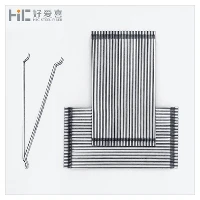
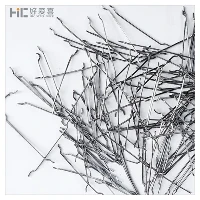
First off, let's understand what hooked end steel fibers are. These are basically steel fibers with hooks at their ends. They're used to enhance the mechanical properties of concrete, and you can find different types like the High Strength Hooked End Steel Fiber and Low Carbon Steel Fiber. The hooks are designed to anchor the fibers firmly within the concrete matrix, ensuring better bonding and reinforcement.
Now, why would we even consider using these fibers in concrete dams? Dams are massive structures that need to withstand a whole host of challenges. They have to bear the pressure of large volumes of water, deal with seismic activities, and resist environmental degradation over a long period. Traditional concrete for dams has its limitations. It can crack under stress, and these cracks can lead to serious problems like water leakage and structural damage.
Hooked end steel fibers can help address some of these issues. When added to the concrete mix, they act as tiny reinforcement bars. They distribute stress more evenly throughout the concrete, reducing the likelihood of crack formation. For example, in areas where the dam experiences high - pressure zones due to water flow, the fibers can prevent micro - cracks from developing into large fractures.
One of the key advantages of using hooked end steel fibers in concrete dams is their ability to improve the toughness of the concrete. Toughness is crucial in a dam because it determines how well the structure can absorb energy without failing. During an earthquake, a dam with fiber - reinforced concrete is better able to withstand the shockwaves. The fibers prevent the concrete from shattering and keep the structure intact, potentially saving lives and preventing environmental disasters.
Another benefit is the improved durability. Dams are often exposed to harsh environmental conditions, such as freezing and thawing cycles, chemical attacks from water and soil, and abrasion from sediment in the water. Hooked end steel fibers can increase the resistance of concrete to these factors. They reduce the permeability of the concrete, which means less water and harmful chemicals can penetrate the structure. This, in turn, extends the lifespan of the dam and reduces maintenance costs.
There are also some practical advantages in using hooked end steel fibers for dam construction. Mixing the fibers into the concrete is a relatively straightforward process. They can be added during the batching of the concrete, just like any other ingredient. This means that the construction process doesn't have to be significantly altered, and contractors can easily incorporate the fibers into their existing workflows.
However, it's not all sunshine and rainbows. There are some challenges to using hooked end steel fibers in concrete dams. One of the main concerns is the potential for corrosion. Steel is prone to rusting when exposed to moisture and oxygen. In a dam environment, where there's always water around, this can be a significant issue. To mitigate this, manufacturers often coat the fibers with a protective layer, but it still requires careful monitoring during the dam's lifespan.
Another challenge is the cost. Hooked end steel fibers are more expensive than traditional concrete additives. This can increase the overall cost of the dam construction project. But when you consider the long - term benefits, such as reduced maintenance and increased lifespan, the investment might be worth it in the long run.
In some real - world cases, the use of hooked end steel fibers in dam construction has shown promising results. For example, in some smaller dams where the budget allows for a more advanced concrete solution, the fiber - reinforced concrete has performed well. In these dams, there have been fewer cracks and less water seepage, which has translated into lower repair costs and better overall performance.
For larger dams, the decision to use hooked end steel fibers is more complex. Engineers need to conduct detailed cost - benefit analyses, taking into account factors like the dam's location, the expected lifespan, and the available budget. But as the technology improves and the cost of the fibers becomes more competitive, we might see more widespread use of these fibers in large - scale dam projects in the future.
If you're involved in a concrete dam project or any other construction project that could benefit from the use of hooked end steel fibers, we're here to help. We offer a wide range of products, including Steel Fiber for Industrial Flooring, and our team of experts can provide you with the best advice on which type of fiber is suitable for your specific needs. Whether you're looking for high - strength fibers for a demanding project or low - carbon options for a more environmentally - friendly approach, we've got you covered.
If you want to discuss your project requirements, get a quote, or just have some questions about our hooked end steel fibers, don't hesitate to reach out. We're always happy to have a chat and see how we can assist you in making your construction project a success.
References
- Neville, A.M. (1995). Properties of Concrete. Pearson Education.
- ACI Committee 544. (1996). State - of - the - Art Report on Fiber - Reinforced Concrete. American Concrete Institute.