

Hey there! I'm a supplier of Glued Steel Fibres, and today I want to chat about how these little guys disperse in recycled aggregate concrete. It's a topic that's pretty important in the construction industry, and I'm excited to share some insights with you.
What are Glued Steel Fibres?
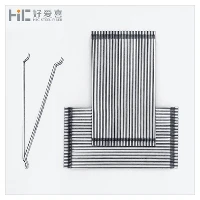
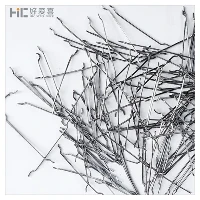
First off, let's talk a bit about glued steel fibres. These are basically small steel fibres that are bundled together with a special adhesive. The reason for gluing them is to make handling and dosing easier. When you add them to concrete, the glue dissolves, and the fibres separate, ready to do their job. You can learn more about Glued Type Steel Fiber.
The Need for Recycled Aggregate Concrete
Recycled aggregate concrete is becoming increasingly popular. It's a more sustainable option as it uses recycled materials, which helps reduce the demand for natural aggregates. However, it can have some challenges, like lower strength and durability compared to traditional concrete. That's where glued steel fibres come in. They can improve the mechanical properties of recycled aggregate concrete, making it a more viable option for construction projects. Check out FRC Steel Fibres for Concrete for more details.
How Do Glued Steel Fibres Disperse?
Now, let's get to the main question: how do glued steel fibres disperse in recycled aggregate concrete? There are a few factors that play a role in this process.
1. Mixing Process
The mixing process is crucial. You need to make sure that the concrete mixer is working properly and that the mixing time is adequate. Generally, a longer mixing time can help the glue to dissolve and the fibres to separate evenly. But be careful not to mix for too long, as that can damage the fibres.
When you start mixing, add the glued steel fibres at the right time. Usually, it's a good idea to add them after the aggregates and water have been mixed for a short while. This way, the fibres can disperse more easily through the concrete mixture.
2. Concrete Consistency
The consistency of the concrete also matters. If the concrete is too dry, the fibres may not disperse well because there isn't enough fluid to move them around. On the other hand, if it's too wet, the fibres might clump together. So, you need to find the right balance. Aim for a workable concrete mix that allows the fibres to move freely during mixing.
3. Aggregate Characteristics
The type and size of the recycled aggregates can affect fibre dispersion. Larger aggregates may create more voids in the concrete, which can interfere with the movement of the fibres. Smaller and more uniformly sized aggregates generally lead to better fibre dispersion. Also, the surface texture of the aggregates can impact how the fibres interact with them. Rough - textured aggregates may help the fibres to grip better, promoting a more even distribution.
Benefits of Good Fibre Dispersion
When the glued steel fibres disperse well in recycled aggregate concrete, there are some great benefits.
1. Improved Strength
Well - dispersed fibres can enhance the tensile, flexural, and impact strength of the concrete. They act as reinforcement, bridging cracks and preventing them from spreading. This is especially important in recycled aggregate concrete, which may be more prone to cracking due to its lower inherent strength.
2. Durability
Better fibre dispersion also improves the durability of the concrete. It can reduce the permeability of the concrete, making it more resistant to water, chemicals, and freeze - thaw cycles. This means that structures made from recycled aggregate concrete with well - dispersed fibres will last longer and require less maintenance.
3. Aesthetics
Yes, even aesthetics can be improved. A well - dispersed fibre concrete surface looks more uniform and can have a better finish. This is important for applications like Concrete Floor Steel Fiber floors, where a smooth and attractive surface is desired.
Testing Fibre Dispersion
To ensure that the glued steel fibres are dispersing properly in the recycled aggregate concrete, you can do some tests. One common method is to take samples of the fresh concrete and visually inspect them. You can also use microscopy techniques to get a closer look at how the fibres are distributed.
Another approach is to conduct mechanical tests on hardened concrete specimens. If the strength and other properties are in line with what's expected for a well - reinforced concrete, it's a good indication that the fibres have dispersed well.
Tips for Suppliers and Contractors
As a glued steel fibres supplier, I've got some tips for both suppliers and contractors.
For suppliers:


- Make sure the quality of the glue is consistent. If the glue doesn't dissolve properly, the fibres won't disperse.
- Provide clear instructions on how to handle and store the glued steel fibres. Improper storage can affect the performance of the adhesive.
For contractors:
- Follow the recommended mixing procedures carefully. Don't cut corners on the mixing time or the order of adding materials.
- Do some trial mixes before starting a big project. This way, you can adjust the mix design and ensure good fibre dispersion.
Conclusion
So, there you have it! Glued steel fibres have a lot of potential in recycled aggregate concrete, but proper dispersion is key. By paying attention to the mixing process, concrete consistency, and aggregate characteristics, you can achieve excellent fibre dispersion. This will lead to stronger, more durable, and better - looking concrete structures.
If you're in the construction industry and are interested in using our glued steel fibres for your projects, I'd love to have a chat with you. Whether you're working on a small renovation or a large - scale commercial building, our products can make a difference. Don't hesitate to reach out for a quote or to discuss your specific needs. Let's work together to make your construction projects more sustainable and successful!
References
- Brandt, A.M. (2008). Fibre reinforced concrete: new materials, new possibilities. Cem. Concr. Compos., 30(4), 219 - 223.
- Dehn, F., & Reinhardt, H.W. (1999). Fibre distribution in steel fibre reinforced concrete and its influence on the mechanical properties. Cement and Concrete Research, 29(6), 873 - 881.
- Naaman, A.E., & Reinhardt, H.W. (Eds.). (2003). Fibre - reinforced concrete: Design and Applications. CRC Press.