


What is the impact of steel fiber on the carbonation resistance of concrete floor?
As a supplier of steel fiber for concrete floors, I've witnessed firsthand the remarkable transformation that steel fiber brings to concrete performance. One of the most critical aspects in evaluating concrete durability is its carbonation resistance, especially for concrete floors that are often exposed to various environmental conditions. In this blog, I'll delve into how steel fiber impacts the carbonation resistance of concrete floors and why it matters for long - term infrastructure durability.
Understanding Carbonation in Concrete Floors
Carbonation is a chemical process that occurs when carbon dioxide (CO₂) from the atmosphere penetrates the concrete and reacts with calcium hydroxide (Ca(OH)₂) present in the cement paste. This reaction forms calcium carbonate (CaCO₃), which reduces the alkalinity of the concrete. The high alkalinity of normal concrete provides a protective layer for the embedded steel reinforcement, preventing corrosion. Once the carbonation front reaches the steel bars, the protective layer is destroyed, and corrosion can start, leading to cracking, spalling, and a significant reduction in the structural integrity of the concrete floor.

The rate of carbonation depends on several factors, including the porosity of the concrete, the permeability of the concrete, the CO₂ concentration in the environment, and the relative humidity. Concrete floors in urban areas with high CO₂ emissions or industrial environments are particularly vulnerable to carbonation.
How Steel Fiber Affects Carbonation Resistance
1. Reduction of Porosity and Permeability
Steel fibers act as a reinforcement within the concrete matrix. When properly dispersed, they fill the voids and micro - cracks in the concrete, reducing its porosity. A lower porosity means that there are fewer pathways for CO₂ to penetrate into the concrete. The fibers bridge the micro - cracks, preventing them from propagating and forming larger cracks that could serve as easy channels for CO₂ diffusion.
Research has shown that concrete floors with steel fibers have a more compact structure compared to plain concrete. For example, in a study conducted on laboratory - made concrete specimens, the addition of steel fibers at a volume fraction of 1% to 2% led to a significant reduction in the water absorption rate, which is closely related to the permeability of the concrete. A lower permeability directly translates to better carbonation resistance, as it restricts the entry of CO₂ into the concrete.
2. Crack Resistance
Cracks are the primary routes for CO₂ to enter the concrete. Steel fibers enhance the crack resistance of concrete floors. When the concrete is subjected to external loads such as traffic loads on a warehouse floor or thermal stresses due to temperature changes, the steel fibers absorb and distribute the stress, preventing the formation and propagation of cracks.
In a real - world scenario, a concrete floor in a busy manufacturing plant without steel fibers may develop cracks over time due to the heavy machinery moving on it. These cracks expose the inner layers of the concrete to CO₂, accelerating the carbonation process. On the other hand, a concrete floor reinforced with steel fibers can better withstand these loads without cracking, thus maintaining its carbonation resistance over a longer period.
3. Improved Durability and Long - term Performance
By reducing porosity, permeability, and crack formation, steel fibers contribute to the overall durability of the concrete floor. A concrete floor with better carbonation resistance has a longer service life. This is especially important for large - scale infrastructure projects such as commercial buildings, airports, and industrial facilities, where the cost of floor replacement can be extremely high.
Moreover, the use of steel fibers can also reduce the need for frequent maintenance. In a parking garage, for instance, a steel - fiber - reinforced concrete floor is less likely to require repair due to carbonation - induced damage, saving both time and money in the long run.
Types of Steel Fibers for Enhanced Carbonation Resistance
There are different types of steel fibers available for concrete floors, each with its own characteristics that can contribute to carbonation resistance.
1. Reinforced Concrete Steel Fiber
Reinforced Concrete Steel Fiber is designed to provide high - strength reinforcement to the concrete. These fibers are typically made of high - carbon steel and have a high tensile strength. They can effectively bridge cracks and improve the overall mechanical properties of the concrete, which in turn enhances its carbonation resistance. The shape of these fibers, such as hooked ends, helps to anchor them firmly in the concrete matrix, ensuring better stress transfer and crack control.
2. SFRC Steel Fiber
SFRC Steel Fiber (Steel Fiber Reinforced Concrete) is specifically formulated for use in concrete floors. These fibers are optimized for dispersion in the concrete, ensuring a uniform distribution throughout the matrix. A uniform distribution of fibers is crucial for achieving consistent carbonation resistance across the entire concrete floor. SFRC steel fibers can also improve the workability of the concrete during the construction process, which is important for ensuring proper placement and compaction, further enhancing the long - term performance of the floor.
3. Glued Type Steel Fiber
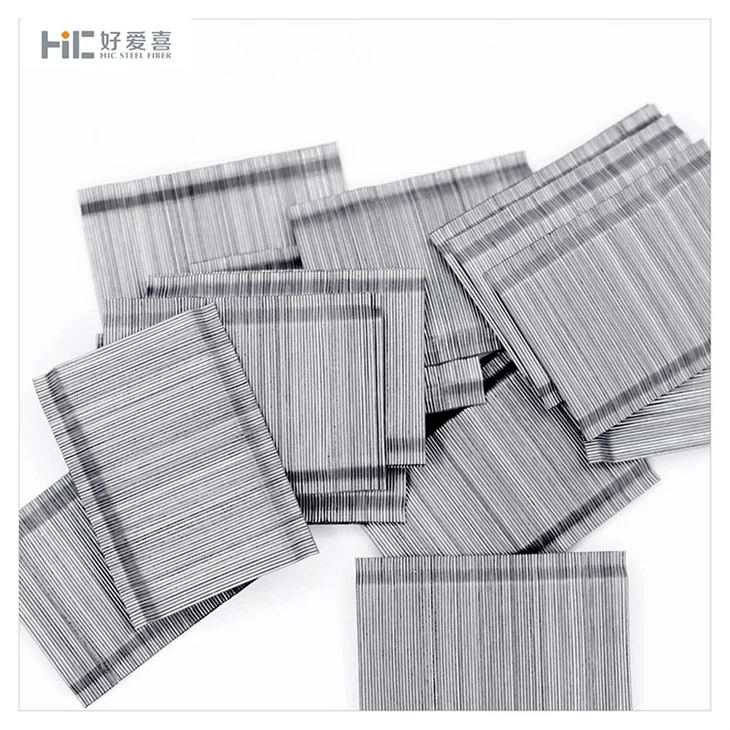
Glued Type Steel Fiber is a type of steel fiber that comes in bundles held together by a water - soluble glue. When added to the concrete mixer, the glue dissolves, and the fibers disperse evenly. This type of fiber is easy to handle and ensures a good dispersion, which is essential for maximizing the benefits of steel fibers in terms of carbonation resistance. The even distribution of fibers helps to create a more homogeneous concrete structure, reducing the likelihood of localized areas with poor carbonation resistance.
Case Studies
1. Commercial Building in an Urban Area
A commercial building in a busy city center was constructed with a steel - fiber - reinforced concrete floor. After 10 years of service, an inspection revealed that the carbonation depth in the floor was significantly lower compared to a similar building in the same area with a plain concrete floor. The steel - fiber - reinforced floor showed minimal signs of cracking, and the concrete structure remained intact. This not only saved the building owner from the cost of floor replacement but also maintained the aesthetic and functional integrity of the building.
2. Industrial Warehouse
An industrial warehouse with heavy traffic from forklifts and other machinery installed a concrete floor with steel fibers. The floor has been in use for 15 years, and there has been no significant carbonation - related damage. In contrast, a neighboring warehouse with a plain concrete floor had to undergo extensive floor repairs after just 5 years due to carbonation - induced corrosion of the steel reinforcement and cracking.
Conclusion and Call to Action
In conclusion, steel fibers have a profound impact on the carbonation resistance of concrete floors. They improve the durability of the concrete by reducing porosity, permeability, and crack formation, making the floors more resistant to the harmful effects of carbonation. Whether you are constructing a new commercial building, an industrial facility, or a residential driveway, using steel fibers in your concrete floors is a wise investment.
If you are interested in enhancing the carbonation resistance of your concrete floors and other concrete structures, we are here to assist you. As a leading supplier of steel fibers for concrete floors, we offer a wide range of high - quality steel fibers, including Reinforced Concrete Steel Fiber, SFRC Steel Fiber, and Glued Type Steel Fiber. Contact us to discuss your specific requirements and get a customized solution for your project. Let's work together to build more durable and long - lasting concrete structures.
References
- Neville, A. M. (2011). Properties of Concrete. Pearson Education.
- Mindess, S., Young, J. F., & Darwin, D. (2013). Concrete. Prentice Hall.
- ACI Committee 544. (1982). State - of - the - art report on fiber - reinforced concrete. American Concrete Institute.