


The use of fibers in concrete has been a significant development in the field of civil engineering, enhancing the material's performance in various aspects. Among the different types of fibers, copper plated steel fiber has emerged as a promising option due to its unique properties. As a supplier of copper plated steel fiber, I am well - versed in its applications and the effects it has on concrete, especially on the post - cracking behavior of concrete.
1. Understanding Post - Cracking Behavior of Concrete
Concrete is a brittle material, and cracking is an inevitable phenomenon. Once cracks start to form, the mechanical properties of concrete change significantly. The post - cracking behavior of concrete refers to how the material behaves after the initial crack has occurred. In traditional concrete, after cracking, the load - carrying capacity drops rapidly, and the structure may lose its integrity and functionality.
The post - cracking performance of concrete is crucial in many engineering applications. For example, in structures that are subjected to dynamic loads, such as bridges and industrial floors, the ability of concrete to maintain a certain level of strength and ductility after cracking can prevent sudden and catastrophic failures.
2. Properties of Copper Plated Steel Fiber
Copper plated steel fiber combines the advantages of steel and the protective properties of copper plating. Steel fibers have high tensile strength, which can effectively resist the propagation of cracks in concrete. The copper plating on the surface of the steel fiber provides several benefits. Firstly, it enhances the corrosion resistance of the steel fiber. In aggressive environments, such as those with high humidity or exposure to chemicals, the copper plating can prevent the steel from rusting, ensuring the long - term performance of the fiber - reinforced concrete.
Secondly, the copper plating improves the bond between the fiber and the concrete matrix. The smooth surface of the copper layer reduces the friction during the mixing process, allowing the fibers to disperse more evenly in the concrete. At the same time, the chemical interaction between the copper and the cement paste helps to form a stronger bond, which is essential for the transfer of stress from the concrete matrix to the fibers.

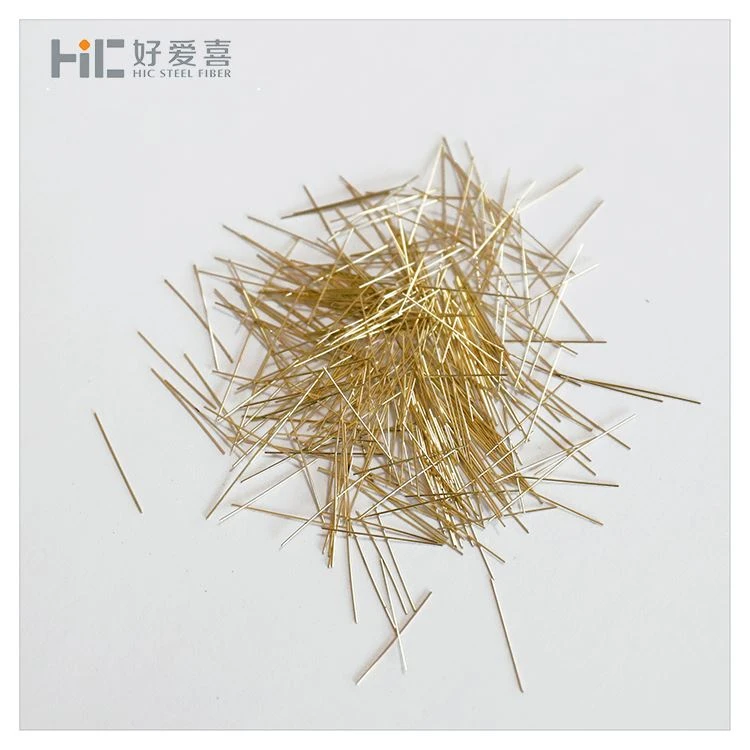
3. Effect of Copper Plated Steel Fiber on Post - Cracking Strength
One of the most significant effects of copper plated steel fiber on the post - cracking behavior of concrete is the improvement of post - cracking strength. When a crack forms in the concrete, the steel fibers bridge the crack faces. The high tensile strength of the fibers allows them to carry part of the load that would otherwise cause the crack to widen. As the load increases, the fibers gradually transfer the stress from the cracked concrete to themselves, preventing the crack from propagating rapidly.
Research has shown that the addition of copper plated steel fiber can significantly increase the residual strength of concrete after cracking. For example, in flexural tests, specimens with copper plated steel fiber can maintain a relatively high load - carrying capacity even after the first crack appears. This is because the fibers distribute the stress over a larger area, reducing the stress concentration at the crack tip.
The aspect ratio (length - to - diameter ratio) of the copper plated steel fiber also plays an important role in post - cracking strength. Fibers with a higher aspect ratio can provide better bridging effects, as they can span a larger crack width. However, very long fibers may cause problems during mixing, such as balling, which can reduce the effectiveness of the fiber reinforcement. Therefore, an optimal aspect ratio needs to be selected based on the specific application and the mixing conditions.
4. Impact on Post - Cracking Ductility
Ductility is another important aspect of the post - cracking behavior of concrete. Ductile materials can deform plastically before failure, which provides a warning sign and allows for the redistribution of stress. Copper plated steel fiber can enhance the ductility of concrete after cracking.
When the concrete is under load, the fibers can deform along with the concrete matrix, absorbing energy through plastic deformation. This energy absorption mechanism increases the toughness of the concrete, making it more resistant to impact and fatigue loads. In addition, the presence of fibers can also change the crack pattern in the concrete. Instead of a single large crack, multiple fine cracks may form, which is a characteristic of ductile behavior.
The amount of copper plated steel fiber added to the concrete also affects its ductility. Generally, a higher fiber content leads to greater ductility. However, there is a limit to the fiber content, as excessive fibers can cause workability problems and may not be cost - effective.
5. Applications in Different Engineering Projects
The improved post - cracking behavior of concrete with copper plated steel fiber makes it suitable for a wide range of engineering applications.
In the construction of industrial floors, where the concrete is subjected to heavy traffic and impact loads, the use of copper plated steel fiber can prevent the formation of large cracks and extend the service life of the floor. The enhanced post - cracking strength and ductility ensure that the floor can withstand the continuous wear and tear without significant damage.
In bridge decks, the post - cracking performance of concrete is crucial for the safety and durability of the structure. Copper plated steel fiber - reinforced concrete can resist the cracking caused by traffic loads, temperature changes, and environmental factors. The corrosion - resistant property of the copper plating also helps to protect the steel fibers from rusting, which is especially important in coastal areas where the bridge is exposed to saltwater.
In the construction of high - rise buildings, the use of copper plated steel fiber in the foundation and columns can improve the seismic performance of the structure. The enhanced ductility of the concrete can help the building to withstand earthquake forces by dissipating energy through plastic deformation.
6. Our Product Offerings
As a supplier of copper plated steel fiber, we offer a variety of products to meet different customer needs. Our Micro Steel Fiber for UHPC Concrete is specifically designed for ultra - high - performance concrete (UHPC), which requires high strength and excellent post - cracking behavior. The micro - sized fibers can effectively enhance the mechanical properties of UHPC, making it suitable for applications such as precast elements and structural components.
Our Rpc Micro Steel Fiber is used in reactive powder concrete (RPC), a type of high - strength concrete with a dense microstructure. The addition of our micro steel fiber can further improve the post - cracking strength and ductility of RPC, expanding its application scope in high - end construction projects.
We also provide Copper Coated Type Steel Fiber, which has a uniform copper coating on the surface of the steel fiber. This type of fiber offers excellent corrosion resistance and bond strength, ensuring the long - term performance of the fiber - reinforced concrete.
7. Contact for Purchase and Negotiation
If you are interested in our copper plated steel fiber products and want to learn more about how they can improve the post - cracking behavior of your concrete projects, we welcome you to contact us for purchase and negotiation. Our team of experts can provide you with detailed technical information and customized solutions based on your specific requirements.
References
- Naaman, A. E., & Reinhardt, H. W. (Eds.). (2003). Fibre reinforced concrete: Design and applications. CRC Press.
- ACI Committee 544. (1996). State - of - the - art report on fiber - reinforced concrete. American Concrete Institute.
- Balaguru, P., & Shah, S. P. (1992). Fiber reinforced cement composites. McGraw - Hill.