

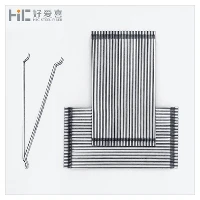
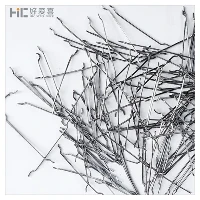
As a supplier of End Hook Glued Steel Fiber, I've witnessed firsthand the numerous benefits it brings to the concrete industry. End Hook Glued Steel Fiber is widely used to enhance the performance of concrete, offering improved toughness, crack resistance, and durability. However, like any material, it has its limitations. Understanding these limitations is crucial for both suppliers and consumers to ensure its appropriate use in various applications.
Cost Considerations
One of the primary limitations of using End Hook Glued Steel Fiber in concrete is the cost. The production process of these fibers involves specialized manufacturing techniques, including the gluing of end hooks, which adds to the overall expense. Compared to traditional concrete without fibers, the addition of End Hook Glued Steel Fiber can significantly increase the material cost. This cost factor can be a deterrent for projects with tight budgets, especially large - scale infrastructure projects where cost - effectiveness is a top priority.
For smaller projects or those with a high - end finish requirement, the cost may be more justifiable as the enhanced performance of the fiber - reinforced concrete can justify the additional expense. But for large - volume, low - margin construction projects, such as some residential foundations or basic road pavements, the high cost of the steel fibers may lead contractors to seek more economical alternatives.
Dispersion Challenges
Achieving uniform dispersion of End Hook Glued Steel Fiber in concrete is a significant challenge. The glued end hooks, while designed to improve the bonding between the fibers and the concrete matrix, can also cause the fibers to clump together during the mixing process. If the fibers are not properly dispersed, the effectiveness of the fiber - reinforced concrete is compromised.
Inadequate dispersion can result in areas of the concrete with a higher concentration of fibers, leading to local stress concentrations and potential cracking. On the other hand, areas with a low fiber concentration may not receive the intended strengthening benefits. To overcome this issue, additional mixing time and specialized mixing equipment may be required, which can increase the labor and equipment costs associated with the project. Additionally, the skills of the workers operating the mixing equipment are crucial. Inexperienced operators may not be able to achieve the desired level of dispersion, further affecting the quality of the final product.
Corrosion Risk
Although End Hook Glued Steel Fiber is designed to be durable, steel fibers are susceptible to corrosion when exposed to certain environmental conditions. In concrete structures that are in contact with aggressive substances such as seawater, de - icing salts, or acidic soils, the steel fibers may start to corrode over time.
Corrosion of the steel fibers can lead to expansion within the concrete matrix, causing cracking and spalling of the concrete. This not only reduces the aesthetic appeal of the structure but also weakens its structural integrity. To mitigate the corrosion risk, additional protective measures can be taken, such as using corrosion - resistant coatings on the steel fibers or adding corrosion inhibitors to the concrete mix. However, these additional measures increase the complexity and cost of the project.
Impact on Workability
The addition of End Hook Glued Steel Fiber can have a negative impact on the workability of concrete. As the fibers are added to the concrete mix, they increase the internal friction within the mixture, making it more difficult to place, consolidate, and finish. This is particularly evident in high - fiber content mixes.
In construction, good workability is essential for achieving a high - quality finish. Poor workability can lead to issues such as honeycombing, air voids, and an uneven surface. Contractors may need to adjust the mix design by increasing the water - cement ratio or using chemical admixtures to improve workability. However, increasing the water - cement ratio can negatively affect the strength and durability of the concrete, and the use of admixtures adds to the cost.
Limited Application in Thin - Section Elements
End Hook Glued Steel Fiber may have limited applicability in thin - section concrete elements. In thin sections, it can be challenging to ensure proper distribution of the fibers, and there is a higher risk of the fibers protruding from the surface of the concrete.
In applications such as thin - walled precast elements or decorative concrete panels, the presence of protruding fibers can be aesthetically unappealing. Additionally, the high fiber content required to achieve the desired strengthening effect in thin sections may further exacerbate the workability issues, making it difficult to produce high - quality products.
Difficulty in Quality Control
Quality control of End Hook Glued Steel Fiber in concrete is a complex task. Ensuring that the fibers meet the required specifications in terms of length, diameter, aspect ratio, and shape is crucial for the performance of the fiber - reinforced concrete. However, it can be difficult to monitor these parameters during the mixing and construction process.
Variations in the quality of the steel fibers, such as inconsistent end - hook shapes or improper gluing, can affect the bonding between the fibers and the concrete and ultimately the performance of the structure. Additionally, sampling and testing the fiber - reinforced concrete to assess its properties, such as strength and toughness, require specialized equipment and skills.
Environmental Impact
The production of steel fibers has significant environmental implications. Steel production is energy - intensive and generates a large amount of greenhouse gas emissions. As suppliers, we are increasingly under pressure to address the environmental concerns associated with our products.
In today's construction industry, there is a growing demand for sustainable building materials. The relatively high environmental impact of End Hook Glued Steel Fiber may make it less attractive to environmentally - conscious clients and projects. To remain competitive, suppliers need to invest in research and development to find more sustainable production methods or explore alternative fiber materials.
Conclusion
While End Hook Glued Steel Fiber offers many advantages in enhancing the performance of concrete, it also has several limitations that need to be carefully considered. Cost, dispersion challenges, corrosion risk, impact on workability, limited application in thin - section elements, difficulty in quality control, and environmental impact are all important factors to take into account when deciding whether to use this material.


As a supplier, I am committed to providing high - quality End Hook Glued Steel Fiber and working with clients to overcome these limitations. We offer SFRC Steel Fiber, FRC Steel Fibres for Concrete, and Simple Construction Glued Steel Fiber to meet different project requirements.
If you are considering using End Hook Glued Steel Fiber in your concrete projects, I encourage you to contact us for in - depth discussions. Our team of experts can provide you with detailed technical advice and help you make an informed decision. By understanding the limitations and working together, we can ensure the successful application of End Hook Glued Steel Fiber in your construction projects.
References
- ACI Committee 544. “State - of - the - Art Report on Fiber - Reinforced Concrete.” American Concrete Institute, 1996.
- Malhotra, V. M., and Mehta, P. K. “Concrete Technology: Properties, Materials, and Mix Design.” McGraw - Hill, 2014.
- Naaman, A. E., and Reinhardt, H. W. “Fiber - Reinforced Concrete: Fundamentals and Applications.” John Wiley & Sons, 2003.