

Hey there! As a supplier of low carbon steel fiber, I've had my fair share of experiences, and I know there are some challenges that come with using this material. In this blog, I'll share some of those challenges and how we, as a supplier, can help you navigate through them.


Compatibility Issues
One of the first challenges you might face when using low carbon steel fiber is compatibility with other materials. For instance, when it comes to concrete, not all types of low carbon steel fiber will work well. The concrete mix design, temperature, and curing conditions can all affect how the steel fiber interacts with the concrete. If the fiber doesn't bond properly with the concrete, it won't be able to provide the desired reinforcement.
Let's say you're working on a project that requires high - strength concrete. You need to make sure that the low carbon steel fiber you choose can withstand the high - stress environment. Some fibers may corrode over time, especially if the concrete has a high moisture content. This corrosion can weaken the fiber and reduce its effectiveness in reinforcing the concrete.
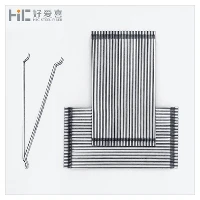
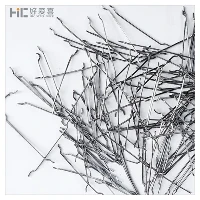
We, as a supplier, have a wide range of Loose Hooked End Steel Fiber and Hooked End Steel Fiber that are designed to be highly compatible with different concrete mixes. We can provide you with technical support to help you select the right type of fiber for your specific project. This way, you can avoid the headaches of compatibility issues and ensure that your project turns out great.
Dispersion Problems
Getting the low carbon steel fiber evenly dispersed throughout the concrete or other matrix material is another big challenge. If the fibers clump together, they won't be able to do their job of reinforcing the material effectively. Uneven dispersion can lead to weak spots in the final product, which can be a major problem, especially in applications like Steel Fiber for Industrial Flooring.
There are several reasons why dispersion issues might occur. One is the improper mixing process. If the mixing time is too short or the mixer is not powerful enough, the fibers won't get distributed evenly. Another factor is the shape and size of the fibers. Some fibers are more prone to clumping than others.
To tackle this problem, we offer fibers with a special design that promotes better dispersion. Our fibers are manufactured to have a uniform shape and size, which makes it easier for them to mix evenly with the concrete. We also provide guidelines on the proper mixing process. This includes the recommended mixing time, the type of mixer to use, and the order in which to add the ingredients. By following our guidelines, you can significantly reduce the chances of dispersion problems.
Cost - Benefit Analysis
Cost is always a concern when it comes to using low carbon steel fiber. Compared to some other materials, low carbon steel fiber can be relatively expensive. You need to figure out if the benefits of using the fiber outweigh the cost. In some cases, the added strength and durability provided by the fiber might justify the higher cost. But in other projects, the budget might be tight, and you need to find a more cost - effective solution.
For example, if you're working on a small - scale project where the structural requirements are not extremely high, you might be able to get away with using a lower - grade fiber or reducing the amount of fiber used. However, this needs to be balanced carefully to ensure that the quality of the project doesn't suffer.
As a supplier, we understand the importance of cost - effectiveness. We offer a variety of pricing options to meet different budgets. We can also help you analyze the cost - benefit of using our low carbon steel fiber for your specific project. Our goal is to help you find the best solution that provides the right balance between cost and performance.
Handling and Storage
Handling and storing low carbon steel fiber can also be a challenge. The fibers are small and can be easily scattered if not handled properly. They can also pose a safety hazard, as they can cause cuts if they come into contact with bare skin.
When it comes to storage, low carbon steel fiber needs to be kept in a dry place to prevent rusting. If the fibers rust, they lose their strength and become less effective as a reinforcement material.
We take care to pack our fibers in a way that makes them easy to handle and store. Our packaging is designed to prevent spillage and protect the fibers from environmental factors. We also provide safety instructions on how to handle the fibers properly. This way, you can ensure that the fibers remain in good condition from the time they leave our warehouse until they are used in your project.
Regulatory and Environmental Compliance
There are also regulatory and environmental issues to consider when using low carbon steel fiber. Depending on the location of your project, there may be specific regulations regarding the use of steel fibers in construction materials. These regulations can cover aspects such as the quality of the fibers, the amount that can be used, and the disposal of any waste materials.
In addition, there is an increasing focus on environmental sustainability. You need to ensure that the low carbon steel fiber you use is produced in an environmentally friendly way. For example, the manufacturing process should produce minimal waste and emissions.
We stay up - to - date with all the relevant regulations and environmental standards. Our products are manufactured in compliance with these requirements. We can provide you with all the necessary documentation to prove that our fibers meet the regulatory and environmental criteria for your project.
Conclusion
Using low carbon steel fiber comes with its fair share of challenges, but with the right supplier, you can overcome these challenges. We, as a low carbon steel fiber supplier, are committed to providing you with high - quality products, technical support, and cost - effective solutions. Whether you're working on a small DIY project or a large - scale industrial construction, we have the expertise and the products to meet your needs.
If you're interested in purchasing low carbon steel fiber for your project, don't hesitate to get in touch with us. We're here to answer any questions you might have and help you with your procurement process. Let's work together to make your project a success!
References
- Neville, A. M. (1995). Properties of Concrete. Pearson Education.
- Malhotra, V. M., & Mehta, P. K. (2002). Concrete: Microstructure, Properties, and Materials. McGraw - Hill Education.
- ACI Committee 544. (2001). State - of - the - Art Report on Fiber - Reinforced Concrete. American Concrete Institute.