

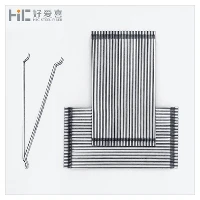
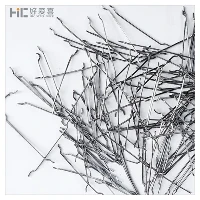
Concrete is one of the most widely used construction materials in the world, known for its strength and durability. However, traditional concrete has its limitations, such as low tensile strength and poor resistance to cracking. To overcome these drawbacks, the use of steel fibers in concrete has become increasingly popular. Among them, Concrete 4D Steel Fibre is a revolutionary product that has shown significant potential in enhancing the performance of concrete. As a supplier of Concrete 4D Steel Fibre, I have in - depth knowledge about the factors that affect its performance in concrete. In this blog, I will discuss these factors in detail.
1. Physical Properties of Steel Fibers
1.1 Fiber Length
The length of the steel fiber plays a crucial role in the performance of concrete. Longer fibers generally provide better reinforcement because they can bridge larger cracks and transfer stress more effectively. When the length of the Concrete 4D Steel Fibre is increased, the fiber - matrix interaction becomes stronger, which enhances the tensile and flexural strength of the concrete. However, if the fibers are too long, they may cause balling during the mixing process, leading to an uneven distribution in the concrete and reducing the overall performance. Therefore, an optimal fiber length needs to be determined based on the specific application of the concrete.


1.2 Fiber Diameter
The diameter of the steel fiber also affects the performance of concrete. Thinner fibers have a larger surface - area - to - volume ratio, which means they can have more contact with the concrete matrix. This increased contact area allows for better stress transfer between the fiber and the matrix, improving the mechanical properties of the concrete. On the other hand, thicker fibers are more rigid and can provide better resistance to pull - out, especially in high - stress situations. Our Concrete 4D Steel Fibre is designed with an appropriate diameter to balance these two aspects, ensuring optimal performance.
1.3 Aspect Ratio
The aspect ratio, which is the ratio of fiber length to diameter, is an important parameter. A higher aspect ratio generally leads to better reinforcement in concrete. Fibers with a high aspect ratio can effectively bridge cracks and resist crack propagation. Our Concrete 4D Steel Fibre has a carefully designed aspect ratio to maximize its reinforcing effect in concrete.
2. Chemical Composition of Steel Fibers
2.1 Carbon Content
The carbon content in steel fibers affects their strength and hardness. Higher carbon content usually results in stronger and harder fibers. However, excessive carbon content can make the fibers brittle, reducing their ductility and toughness. Our Concrete 4D Steel Fibre has an optimized carbon content to achieve a good balance between strength and ductility, ensuring that the fibers can effectively reinforce the concrete without being too brittle.
2.2 Alloying Elements
Alloying elements such as chromium, nickel, and manganese are often added to steel fibers to improve their corrosion resistance and mechanical properties. Chromium, for example, forms a passive oxide layer on the surface of the fiber, protecting it from corrosion. Nickel can enhance the toughness and ductility of the steel. Our Concrete 4D Steel Fibre contains appropriate amounts of these alloying elements to provide long - term performance and durability in various environmental conditions.
3. Mixing and Placement of Concrete
3.1 Mixing Process
The mixing process is critical for the uniform distribution of Concrete 4D Steel Fibre in the concrete. If the fibers are not properly mixed, they may clump together, resulting in a non - homogeneous concrete structure. To ensure a good dispersion, it is recommended to add the fibers gradually during the mixing process. Our company provides detailed guidelines on the mixing process to help our customers achieve the best results.
3.2 Placement Method
The placement method of the concrete also affects the performance of the steel fibers. For example, if the concrete is pumped, the fibers may be damaged or redistributed during the pumping process. Therefore, special attention should be paid to the pumping pressure and the diameter of the pumping pipe. When placing the concrete, it should be properly consolidated to ensure that the fibers are in good contact with the concrete matrix.
4. Concrete Mix Design
4.1 Water - Cement Ratio
The water - cement ratio is a key factor in concrete mix design. A lower water - cement ratio generally leads to higher strength and better durability of the concrete. When using Concrete 4D Steel Fibre, a proper water - cement ratio needs to be maintained to ensure that the fibers can work effectively. If the water - cement ratio is too high, the concrete may be more prone to cracking, and the reinforcing effect of the fibers may be reduced.
4.2 Aggregate Size and Gradation
The size and gradation of the aggregates in the concrete mix also affect the performance of the steel fibers. Larger aggregates may cause damage to the fibers during the mixing and placement process. A well - graded aggregate system can provide a better packing density, which is beneficial for the overall performance of the concrete. Our company can assist customers in optimizing the concrete mix design to ensure the best performance of our Concrete 4D Steel Fibre.
5. Environmental Factors
5.1 Temperature
Temperature can have a significant impact on the performance of concrete with steel fibers. High temperatures can accelerate the hydration process of the concrete, which may affect the bond between the fibers and the matrix. In cold temperatures, the setting time of the concrete is prolonged, and the strength development may be slower. Our Concrete 4D Steel Fibre is designed to perform well in a wide range of temperatures, but appropriate measures may need to be taken in extreme temperature conditions.
5.2 Humidity
Humidity also affects the performance of concrete. High humidity can slow down the drying process of the concrete, reducing the risk of cracking. On the other hand, low humidity can cause rapid drying and shrinkage of the concrete, leading to cracking. The presence of steel fibers can help mitigate the effects of humidity - related cracking, but proper curing conditions should still be maintained.
6. Comparison with Other Types of Steel Fibers
6.1 Glued Type Steel Fiber
Glued Type Steel Fiber Glued Type Steel Fiber is another common type of steel fiber used in concrete. Compared with our Concrete 4D Steel Fibre, Glued Type Steel Fiber has a different bonding mechanism. The glue in Glued Type Steel Fiber helps to prevent fiber balling during the mixing process. However, our Concrete 4D Steel Fibre has a more advanced design that provides better overall performance in terms of strength, toughness, and crack resistance.
6.2 Flexible Support Glued Steel Fiber
Flexible Support Glued Steel Fiber is designed to provide flexible support in concrete. While it has its advantages in certain applications, our Concrete 4D Steel Fibre offers a more comprehensive solution. It can effectively enhance the mechanical properties of concrete in various stress conditions, providing better long - term performance.
6.3 Steel Fiber for Concrete Floor
Steel Fiber for Concrete Floor is specifically designed for floor applications. Our Concrete 4D Steel Fibre can also be used for concrete floors and offers superior performance. It can improve the abrasion resistance and impact resistance of the floor, making it more durable and long - lasting.
In conclusion, the performance of Concrete 4D Steel Fibre in concrete is affected by multiple factors, including the physical and chemical properties of the fibers, the mixing and placement process, the concrete mix design, and environmental factors. As a supplier of Concrete 4D Steel Fibre, we are committed to providing high - quality products and technical support to our customers. If you are interested in our Concrete 4D Steel Fibre or have any questions about its application, please feel free to contact us for further discussion and procurement.
References
- ACI Committee 544. (1988). State - of - the - art report on fiber - reinforced concrete. American Concrete Institute.
- Naaman, A. E., & Reinhardt, H. W. (1996). Fibre reinforced concrete: proceedings of the international RILEM symposium, Weimar, Germany, 23 - 25 September 1996. E & FN Spon.
- Mindess, S., Young, J. F., & Darwin, D. (2003). Concrete. Prentice Hall.