


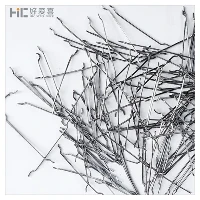
As a supplier of glued steel fibres, I've witnessed firsthand the growing popularity of these materials in large - scale construction projects. Glued steel fibres offer numerous benefits, such as enhancing the tensile strength and durability of concrete. However, their application in large - scale projects also comes with a set of unique challenges that need to be carefully considered.
1. Dispersion Challenges
One of the primary challenges in using glued steel fibres in large - scale projects is achieving uniform dispersion. Glued steel fibres are typically bundled together to ease handling and prevent clumping during transportation and storage. When added to the concrete mix, these bundles need to break apart so that the individual fibres can disperse evenly throughout the concrete.
In large - scale projects, where concrete is often mixed in large volumes, ensuring proper dispersion becomes even more critical. If the fibres do not disperse evenly, it can lead to areas of the concrete with a higher concentration of fibres, creating weak points and reducing the overall effectiveness of the reinforcement.
To address this issue, it is essential to use appropriate mixing techniques. High - energy mixers can be employed to break up the glued bundles and distribute the fibres uniformly. Additionally, pre - wetting the fibres before adding them to the concrete mix can also improve dispersion. However, these methods require careful calibration and monitoring, especially in large - scale operations where the concrete production rate is high.
2. Compatibility with Other Materials
Another challenge is the compatibility of glued steel fibres with other materials used in the concrete mix. In large - scale projects, a variety of additives and admixtures are often incorporated into the concrete to achieve specific properties, such as workability, setting time, and strength.
Some of these additives may interact with the glued coating on the steel fibres, affecting their performance. For example, certain chemical admixtures may cause the glue to dissolve prematurely or react with the steel surface, leading to corrosion. This can not only reduce the effectiveness of the fibres but also compromise the long - term durability of the concrete.
Before using glued steel fibres in a large - scale project, it is crucial to conduct compatibility tests with all the other materials that will be used in the concrete mix. These tests should evaluate the impact on fibre dispersion, concrete workability, and long - term performance. Based on the test results, appropriate adjustments can be made to the mix design to ensure compatibility.
3. Cost - Effectiveness
Cost is always a significant factor in large - scale projects. While glued steel fibres offer many advantages, they can be more expensive than traditional reinforcement methods, such as steel bars. The cost of the fibres themselves, as well as the additional equipment and labour required for proper mixing and installation, can add up quickly.
To make glued steel fibres a cost - effective option in large - scale projects, it is necessary to optimize their use. This may involve finding the right balance between the amount of fibres used and the desired performance improvement. Additionally, economies of scale can be achieved by purchasing the fibres in bulk and negotiating favourable pricing with suppliers.


However, it is important to note that the long - term cost savings associated with the enhanced durability and reduced maintenance requirements of concrete reinforced with glued steel fibres should also be considered. In the long run, these benefits may offset the initial higher costs.
4. Quality Control
Maintaining consistent quality is crucial in large - scale projects. For glued steel fibres, quality control encompasses several aspects, including the quality of the steel, the effectiveness of the glue, and the uniformity of the fibre dimensions.
In large - scale production, it can be challenging to ensure that every batch of glued steel fibres meets the required quality standards. Variations in the steel composition, glue formulation, or manufacturing process can lead to differences in the performance of the fibres. This can have a significant impact on the quality of the concrete and the overall success of the project.
To address this challenge, strict quality control measures should be implemented at every stage of the production process. This includes regular testing of the raw materials, in - process inspections during manufacturing, and final product testing before shipment. Suppliers should also provide detailed quality control reports to ensure transparency and accountability.
5. Installation and Handling
In large - scale projects, the installation and handling of glued steel fibres can also pose challenges. Unlike traditional reinforcement methods, which are relatively straightforward to install, glued steel fibres require careful handling to prevent damage to the bundles and ensure proper dispersion.
During transportation and storage, the glued steel fibres need to be protected from moisture, which can cause the glue to dissolve and the fibres to clump together. In addition, the installation process needs to be carefully planned to ensure that the fibres are added to the concrete mix at the right time and in the right amount.
In large - scale construction sites, where there are often multiple contractors and workers involved, coordinating the installation of glued steel fibres can be complex. Clear communication and training are essential to ensure that all personnel understand the proper handling and installation procedures.
6. Environmental Considerations
In today's construction industry, environmental considerations are becoming increasingly important. Glued steel fibres are typically made from steel, which is a recyclable material. However, the production of the glue and the energy required for manufacturing and transportation can have an environmental impact.
In large - scale projects, the environmental footprint of using glued steel fibres needs to be carefully evaluated. This includes considering the source of the steel, the type of glue used, and the energy efficiency of the manufacturing process. Suppliers should strive to use sustainable materials and production methods to minimize the environmental impact of their products.
Conclusion
Despite the challenges associated with using glued steel fibres in large - scale projects, their benefits in terms of enhancing concrete performance make them a valuable option. By addressing the issues of dispersion, compatibility, cost - effectiveness, quality control, installation, and environmental impact, it is possible to successfully incorporate glued steel fibres into large - scale construction projects.
If you are considering using glued steel fibres in your next large - scale project, we invite you to explore our product range. We offer a variety of high - quality glued steel fibres, including Steel Fibres for Precast Concrete, High Length Glued Type Steel Fiber, and Concrete 3D Steel Fiber. Our team of experts is ready to assist you in finding the right solution for your project and addressing any challenges you may encounter. Contact us to start a procurement discussion and discover how our glued steel fibres can enhance the performance of your concrete structures.
References
- ACI Committee 544. (2018). “State - of - the - Art Report on Fiber - Reinforced Concrete.” American Concrete Institute.
- Neville, A. M. (2011). “Properties of Concrete.” Pearson Education.
- Malhotra, V. M., & Carino, N. J. (2003). “Guide to Durable Concrete.” E & FN Spon.