

How do Hooked End Steel Fibers Enhance the Flexural Strength of Concrete?
Concrete is one of the most widely used construction materials globally, valued for its durability, strength, and versatility. However, traditional concrete has limitations, especially in terms of its flexural strength. Flexural strength refers to a material's ability to resist bending forces, and improving this property is crucial for many construction applications. This is where hooked end steel fibers come into play. As a leading supplier of Hooked End Steel Fiber, I will delve into how these fibers enhance the flexural strength of concrete.
Understanding the Basics of Concrete and Flexural Strength
Before we explore the role of hooked end steel fibers, it's essential to understand the nature of concrete and flexural strength. Concrete is a composite material made up of cement, aggregates (such as sand and gravel), and water. When these components are mixed, a chemical reaction called hydration occurs, which binds the materials together and forms a solid mass.
However, concrete is relatively weak in tension. When a concrete structure is subjected to bending forces, the bottom part of the structure is in tension while the top is in compression. Since concrete has low tensile strength, it can crack easily under these bending forces, leading to a reduction in its overall structural integrity. This is where the concept of flexural strength becomes crucial. Flexural strength is a measure of how well a material can withstand bending without cracking or breaking.
The Role of Hooked End Steel Fibers
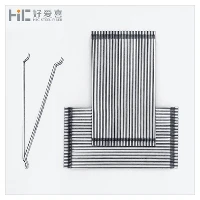
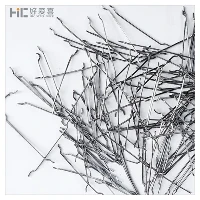
Hooked end steel fibers are small, discrete pieces of steel with hooked ends. These fibers are added to the concrete mix during the mixing process. Once the concrete hardens, the hooked end steel fibers are randomly distributed throughout the concrete matrix.
One of the primary ways hooked end steel fibers enhance the flexural strength of concrete is by bridging cracks. When a concrete structure starts to crack under bending forces, the hooked end steel fibers act as a bridge across the cracks. The hooked ends of the fibers provide an anchorage within the concrete, preventing the cracks from propagating further. This bridging effect helps to maintain the integrity of the concrete structure and increases its ability to resist bending forces.
In addition to crack bridging, hooked end steel fibers also improve the energy absorption capacity of concrete. When a concrete structure is subjected to bending, energy is absorbed by the structure. The presence of hooked end steel fibers increases the amount of energy that the concrete can absorb before failure. This is because the fibers deform and stretch as the concrete cracks, dissipating energy in the process. As a result, the concrete becomes more ductile, meaning it can undergo more deformation before breaking.
Another important factor is the reinforcement effect. The hooked end steel fibers act as a form of internal reinforcement within the concrete. They distribute the stress more evenly throughout the concrete matrix, reducing the concentration of stress at any one point. This helps to prevent the formation of large cracks and improves the overall strength and durability of the concrete.
Advantages of Using Hooked End Steel Fibers in Concrete
The use of hooked end steel fibers in concrete offers several advantages beyond enhancing flexural strength.
Improved Durability: The presence of hooked end steel fibers helps to reduce the permeability of concrete. This means that less water and harmful chemicals can penetrate the concrete, reducing the risk of corrosion and other forms of deterioration. As a result, concrete structures made with hooked end steel fibers have a longer service life.


Enhanced Impact Resistance: Hooked end steel fibers improve the impact resistance of concrete. In applications where concrete structures are likely to be subjected to impact loads, such as industrial floors and pavements, the use of hooked end steel fibers can significantly reduce the damage caused by impacts.
Ease of Installation: Adding hooked end steel fibers to the concrete mix is a relatively simple process. It does not require any special equipment or techniques, making it a cost - effective solution for improving the flexural strength of concrete.
Applications of Hooked End Steel Fibers in Concrete
Hooked end steel fibers are used in a wide range of concrete applications where high flexural strength is required.
Industrial Flooring: Steel Fiber for Industrial Flooring is a common application. Industrial floors are often subjected to heavy loads and traffic, which can cause significant bending and impact forces. By adding hooked end steel fibers to the concrete used for industrial floors, the flexural strength and impact resistance of the floors are greatly improved, reducing the risk of cracking and damage.
Shotcrete Applications: Shotcrete is a method of applying concrete where the concrete is sprayed onto a surface. Hooked end steel fibers are often added to shotcrete mixes to improve its flexural strength and adhesion. This is particularly useful in applications such as tunnel linings, slope stabilization, and swimming pool construction.
Precast Concrete Elements: Precast concrete elements, such as beams, columns, and panels, are often subjected to handling and transportation stresses, as well as in - service bending forces. The addition of hooked end steel fibers to precast concrete can improve its flexural strength and reduce the risk of cracking during these processes.
Quality and Standards
As a supplier of CE Steel Fibers for Concrete, we understand the importance of quality and standards. Our hooked end steel fibers meet the highest industry standards, ensuring that they provide reliable and consistent performance.
We use high - quality steel materials to manufacture our hooked end steel fibers. The manufacturing process is carefully controlled to ensure that the fibers have the correct dimensions and hooked end geometry. This is crucial for ensuring that the fibers can effectively bridge cracks and enhance the flexural strength of concrete.
Conclusion
Hooked end steel fibers play a vital role in enhancing the flexural strength of concrete. Through crack bridging, improved energy absorption, and reinforcement effects, these fibers significantly improve the ability of concrete to resist bending forces. The use of hooked end steel fibers also offers additional advantages such as improved durability, enhanced impact resistance, and ease of installation.
If you are looking for a reliable solution to improve the flexural strength of your concrete structures, our hooked end steel fibers are the ideal choice. We are committed to providing high - quality products and excellent customer service. Whether you are working on an industrial flooring project, a precast concrete element, or any other concrete application, our hooked end steel fibers can help you achieve the desired results. Contact us today to discuss your specific requirements and explore how our hooked end steel fibers can enhance the performance of your concrete structures.
References
- ACI Committee 544. (1982). State - of - the - Art Report on Fiber Reinforced Concrete. American Concrete Institute.
- Naaman, A. E., & Reinhardt, H. W. (1996). Fibre - Reinforced Concrete: Design and Applications. E & FN Spon.
- Swamy, R. N. (1983). Steel Fibre Reinforced Concrete. Granada Publishing Limited.