

As a supplier of Low Carbon Glued Steel Fibre, I've witnessed firsthand the growing interest in this innovative material across various industries. Low Carbon Glued Steel Fibre offers numerous advantages, such as enhanced durability, improved crack resistance, and increased tensile strength in concrete and other composite materials. However, like any emerging technology, its application is not without challenges. In this blog post, I'll explore some of the key challenges faced in the application of Low Carbon Glued Steel Fibre and discuss potential solutions.
1. Dispersion and Uniformity
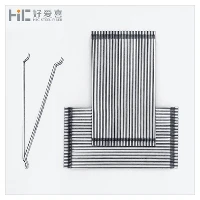
One of the primary challenges in using Low Carbon Glued Steel Fibre is achieving proper dispersion and uniformity within the matrix material, typically concrete. The glued steel fibres are designed to be bundled together to facilitate handling and dosing. However, during the mixing process, these bundles need to break apart, and the individual fibres must disperse evenly throughout the concrete.
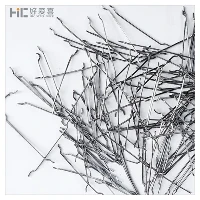
If the fibres do not disperse properly, they can form clumps or clusters, which can lead to weak spots in the concrete. These weak spots can compromise the overall strength and durability of the structure. Factors such as the mixing time, mixing method, and the type of mixer used can all affect the dispersion of the fibres.
To address this challenge, it is crucial to follow the manufacturer's recommendations regarding mixing procedures. In some cases, longer mixing times or the use of high - energy mixers may be required to ensure proper dispersion. Additionally, pre - wetting the fibres or using special admixtures can help improve the dispersion process.
2. Compatibility with Other Materials
Low Carbon Glued Steel Fibre is often used in combination with other materials, such as cement, aggregates, and chemical admixtures. Ensuring compatibility between the steel fibres and these other materials is essential for achieving the desired performance.
For example, some chemical admixtures used in concrete, such as superplasticizers, can interact with the steel fibres and affect their performance. These interactions can lead to issues such as reduced workability, increased air entrainment, or changes in the setting time of the concrete.
To overcome compatibility issues, thorough testing should be conducted before using Low Carbon Glued Steel Fibre in a particular application. This testing should involve evaluating the performance of the concrete mixture with different combinations of materials to identify any potential compatibility problems. Manufacturers can also provide guidance on the selection of compatible materials and the appropriate dosage rates.
3. Cost Considerations
The cost of Low Carbon Glued Steel Fibre can be a significant challenge for some applications. Compared to traditional reinforcement methods, such as steel bars or mesh, the cost of steel fibres can be relatively high. This can make it difficult for some projects to justify the use of steel fibres, especially in cost - sensitive markets.
However, it is important to consider the long - term benefits of using Low Carbon Glued Steel Fibre. The enhanced durability and performance of structures reinforced with steel fibres can lead to reduced maintenance costs and a longer service life. In some cases, the use of steel fibres can also allow for a reduction in the thickness of concrete sections, which can offset the initial cost of the fibres.
To make Low Carbon Glued Steel Fibre more cost - effective, suppliers can work with customers to optimize the dosage rate of the fibres. By using the minimum amount of fibres required to achieve the desired performance, the overall cost of the project can be reduced. Additionally, as the demand for steel fibres increases and production processes become more efficient, the cost of the fibres is likely to decrease over time.
4. Quality Control
Maintaining consistent quality in Low Carbon Glued Steel Fibre production is crucial for ensuring reliable performance in applications. Variations in the quality of the steel fibres, such as differences in diameter, length, or tensile strength, can have a significant impact on the properties of the concrete.
Quality control measures should be implemented at every stage of the production process, from the selection of raw materials to the final packaging of the product. This includes testing the steel fibres for physical and mechanical properties, such as diameter, length, tensile strength, and adhesion.
As a supplier, we have strict quality control procedures in place to ensure that our Low Carbon Glued Steel Fibre meets the highest standards. We use advanced testing equipment and techniques to monitor the quality of our products at every step of the production process.
5. Design and Engineering Challenges
Incorporating Low Carbon Glued Steel Fibre into structural design and engineering practices presents its own set of challenges. Traditional design codes and standards may not fully account for the unique properties of steel - fibre - reinforced concrete.
Engineers need to have a good understanding of the behavior of Low Carbon Glued Steel Fibre in concrete to accurately design structures. This includes knowledge of how the fibres affect the cracking behavior, the load - carrying capacity, and the durability of the structure.
To address these design challenges, research is being conducted to develop new design guidelines and standards for steel - fibre - reinforced concrete. These guidelines will help engineers make more informed decisions when using Low Carbon Glued Steel Fibre in their projects. Additionally, training programs and educational resources are available to help engineers and designers gain a better understanding of the material.
6. Market Awareness and Acceptance
Despite the many advantages of Low Carbon Glued Steel Fibre, there is still a lack of market awareness and acceptance in some regions. Many contractors, engineers, and architects are not familiar with the properties and benefits of steel - fibre - reinforced concrete, which can limit its use in construction projects.
To increase market awareness, suppliers need to engage in educational campaigns to promote the benefits of Low Carbon Glued Steel Fibre. This can include providing technical information, case studies, and demonstration projects. Additionally, participating in industry events and conferences can help to showcase the potential of steel - fibre - reinforced concrete and build trust among potential users.


Conclusion
In conclusion, while Low Carbon Glued Steel Fibre offers significant advantages in terms of enhancing the performance of concrete and other composite materials, its application is not without challenges. Dispersion and uniformity, compatibility with other materials, cost considerations, quality control, design and engineering challenges, and market awareness are all important factors that need to be addressed.
As a supplier of Low Carbon Glued Steel Fibre, we are committed to working with our customers to overcome these challenges. We offer a range of products, including High Density Glued Type Steel Fiber, High Tensile Strength Glued Steel Fiber, and SFRC Steel Fiber, and provide technical support to ensure the successful application of our products.
If you are interested in learning more about Low Carbon Glued Steel Fibre or are considering using it in your next project, we encourage you to contact us for a detailed discussion. Our team of experts can provide you with the information and guidance you need to make an informed decision.
References
- Neville, A. M. (1995). Properties of Concrete. Pearson Education.
- ACI Committee 544. (2007). State - of - the - Art Report on Fiber - Reinforced Concrete. American Concrete Institute.
- Mindess, S., Young, J. F., & Darwin, D. (2003). Concrete: Microstructure, Properties, and Materials. Prentice Hall.