

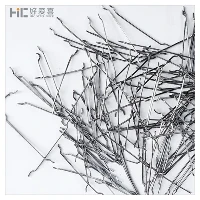

As a supplier of Glued Type Steel Fiber, I've witnessed firsthand the transformative impact this material can have on concrete projects. In this blog, I'll share the best practices for using Glued Type Steel Fiber in concrete projects, drawing on my experience and industry knowledge.
Understanding Glued Type Steel Fiber
Glued Type Steel Fiber is a type of reinforcement material that is added to concrete to enhance its mechanical properties. The fibers are typically made of high - strength steel and are glued together in bundles. This glued configuration makes the fibers easier to handle and disperse evenly in the concrete mix.
One of the key advantages of Glued Type Steel Fiber is its ability to improve the concrete's resistance to cracking, impact, and abrasion. When the fibers are evenly distributed in the concrete, they act as a three - dimensional reinforcement network, holding the concrete together and preventing cracks from propagating.


Selecting the Right Type of Glued Type Steel Fiber
There are several factors to consider when selecting the right type of Glued Type Steel Fiber for your concrete project.
1. Fiber Shape and Size
The shape and size of the fibers can significantly affect the performance of the concrete. For example, hooked - end fibers provide better anchorage in the concrete compared to straight fibers, which can enhance the crack - resistance of the concrete. The length and diameter of the fibers also play a role. Longer fibers generally offer better reinforcement, but they may be more difficult to disperse in the concrete.
2. Fiber Dosage
The dosage of Glued Type Steel Fiber is crucial. It is typically measured in kilograms per cubic meter of concrete. The optimal dosage depends on the specific requirements of the project, such as the expected load, the type of structure, and the environmental conditions. For most applications, a dosage of 20 - 60 kg/m³ is common, but in some high - performance applications, higher dosages may be required.
Mixing Glued Type Steel Fiber with Concrete
Proper mixing is essential to ensure the even distribution of Glued Type Steel Fiber in the concrete.
1. Adding Fibers at the Right Time
The fibers should be added to the concrete mix at the appropriate stage. It is recommended to add the fibers after the aggregates, water, and cement have been mixed for a short period. This allows the fibers to disperse more evenly in the mix.
2. Mixing Duration
The mixing duration should be sufficient to ensure that the fibers are fully dispersed. A general rule of thumb is to mix the concrete for an additional 2 - 3 minutes after adding the fibers. However, over - mixing can also cause the fibers to clump together, so it's important to find the right balance.
Placement and Compaction of Fiber - Reinforced Concrete
Once the concrete with Glued Type Steel Fiber is mixed, proper placement and compaction are crucial for achieving the desired performance.
1. Placement
The fiber - reinforced concrete should be placed in a continuous manner to avoid cold joints. It is important to ensure that the concrete is evenly distributed in the formwork. Special care should be taken when placing the concrete in areas with complex geometries or reinforcement.
2. Compaction
Compaction is necessary to remove air voids and ensure good bonding between the fibers and the concrete. Vibrators can be used to compact the concrete, but it's important to avoid over - vibration, which can cause the fibers to settle at the bottom of the formwork.
Curing of Fiber - Reinforced Concrete
Curing is a critical step in the concrete construction process, especially for fiber - reinforced concrete.
1. Moist Curing
Moist curing is recommended for fiber - reinforced concrete. This can be achieved by covering the concrete surface with wet burlap, plastic sheets, or by using a curing compound. Moist curing helps to prevent the concrete from drying out too quickly, which can lead to cracking.
2. Curing Duration
The curing duration depends on the type of concrete and the environmental conditions. Generally, a minimum of 7 days of curing is recommended for fiber - reinforced concrete, but in some cases, longer curing periods may be required.
Quality Control
Quality control is essential to ensure the performance of Glued Type Steel Fiber in concrete projects.
1. Testing the Fiber Quality
Before using the Glued Type Steel Fiber, it is important to test its quality. This can include testing the tensile strength, length, and diameter of the fibers. The fibers should meet the relevant standards and specifications.
2. Testing the Concrete
Regular testing of the fiber - reinforced concrete is also necessary. This can include testing the compressive strength, flexural strength, and crack - resistance of the concrete. The test results can be used to evaluate the performance of the fiber - reinforced concrete and make any necessary adjustments to the mix design.
Applications of Glued Type Steel Fiber in Concrete Projects
Glued Type Steel Fiber has a wide range of applications in concrete projects.
1. Industrial Floors
In industrial floors, Glued Type Steel Fiber can improve the abrasion resistance and crack - resistance of the concrete. This is especially important in areas where heavy machinery and traffic are present.
2. Bridge Decks
For bridge decks, the use of Glued Type Steel Fiber can enhance the durability and fatigue resistance of the concrete. The fibers can help to prevent cracking due to traffic loads and environmental factors.
3. Tunnel Linings
In tunnel linings, Glued Type Steel Fiber can provide additional reinforcement and improve the resistance of the concrete to ground pressure and water ingress.
Conclusion
Using Glued Type Steel Fiber in concrete projects can significantly improve the performance and durability of the concrete. By following the best practices outlined in this blog, including proper selection, mixing, placement, compaction, curing, and quality control, you can ensure the success of your concrete projects.
If you're interested in learning more about Glued Type Steel Fiber or Reinforced Concrete Steel Fiber for your concrete projects, or if you're considering purchasing these products, we'd love to have a discussion with you. We can provide detailed product information, technical support, and help you determine the best solutions for your specific needs.
In addition, our Concrete 4D Steel Fibre offers unique properties that can further enhance the performance of your concrete. Don't hesitate to reach out and start a conversation about how our products can benefit your projects.
References
- ACI 544.1R - 96, “Report on the Use of Fiber - Reinforced Concrete”.
- Neville, A. M., “Properties of Concrete”, Pearson Education, 2011.
- Mindess, S., Young, J. F., & Darwin, D., “Concrete”, Prentice Hall, 2003.