

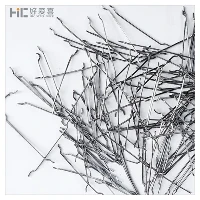

Hey there! I'm a supplier of Hooked End Steel Fibers, and today I wanna chat about how these little guys can have a big impact on the abrasion resistance of concrete.
First off, let's talk a bit about what hooked end steel fibers are. They're basically small steel fibers with hooked ends. These hooks are super important because they help the fibers bond better with the concrete. When you mix these fibers into the concrete, they distribute evenly throughout the mix. This distribution is key to enhancing the overall properties of the concrete.
Now, let's get into the nitty - gritty of how they affect abrasion resistance. Abrasion resistance is all about how well a material can withstand wear and tear from rubbing, scraping, or erosion. In the case of concrete, it's crucial in many applications, like industrial floors, road pavements, and bridge decks.
When hooked end steel fibers are added to concrete, they act as reinforcement. The fibers help to hold the concrete together. When an abrasive force is applied to the concrete surface, the fibers prevent the concrete from cracking and spalling as easily. The hooked ends anchor the fibers firmly in the concrete matrix, so they can take on the stress and strain caused by abrasion.
One of the main reasons hooked end steel fibers improve abrasion resistance is their ability to control crack propagation. Cracks are the enemy when it comes to abrasion. Once a crack forms on the concrete surface, it becomes a weak point. Abrasive forces can then widen these cracks, leading to more significant damage. But the steel fibers bridge these cracks. They stop them from growing and spreading, which means the concrete can better resist the abrasive forces.
Another factor is the way the fibers enhance the toughness of the concrete. Toughness is the ability of a material to absorb energy without breaking. With the addition of hooked end steel fibers, the concrete becomes more ductile. It can deform a bit under the abrasive load instead of just shattering. This deformation helps to dissipate the energy from the abrasion, reducing the damage to the concrete.
Let's look at some real - world examples. In industrial settings, floors are constantly subjected to heavy machinery, forklifts, and foot traffic. Without proper reinforcement, these floors can quickly wear out. But when hooked end steel fibers are used in the concrete mix for these floors, they can last much longer. The fibers help the floor resist the constant abrasion from the movement of equipment and people.
For road pavements, they face abrasion from vehicle tires, especially in high - traffic areas. The addition of hooked end steel fibers can improve the pavement's resistance to wear. This means fewer potholes and less maintenance over time. It's a win - win for both the road users and the local authorities responsible for road upkeep.
Now, I know you might be wondering about the different types of hooked end steel fibers available. We have some great options, like the Steel Fiber for Shotcrete. This type is specifically designed for shotcrete applications. Shotcrete is a method of applying concrete where it's sprayed onto a surface. The steel fibers in this product are optimized to provide excellent bonding and reinforcement in the shotcrete, which in turn enhances the abrasion resistance of the final structure.
We also offer High Strength Steel Fiber. As the name suggests, these fibers have a high strength, which means they can offer even better reinforcement for the concrete. When used in applications where high abrasion resistance is required, like in bridge decks, these high - strength fibers can make a huge difference.
And of course, our Hooked End Type Steel Fiber is a classic choice. It has the standard hooked ends that provide reliable bonding with the concrete. This type of fiber is versatile and can be used in a wide range of concrete applications, from small construction projects to large - scale infrastructure works.


When it comes to using hooked end steel fibers in concrete, there are a few things to keep in mind. The dosage of the fibers is important. Too few fibers might not provide enough reinforcement, while too many can make the concrete difficult to work with. It's all about finding the right balance. The size and shape of the fibers also matter. Different applications might require different fiber sizes and shapes to achieve the best results.
In addition, the quality of the steel fibers is crucial. We make sure that our hooked end steel fibers are made from high - quality steel. This ensures that they have the right strength and durability to enhance the abrasion resistance of the concrete. We also test our products regularly to make sure they meet the highest standards.
So, if you're involved in a concrete project where abrasion resistance is a concern, consider using our hooked end steel fibers. They can really make a difference in the longevity and performance of your concrete structures. Whether you're building an industrial floor, a road, or a bridge, our fibers can help your concrete stand up to the test of time.
If you're interested in learning more about our hooked end steel fibers or have any questions about how they can be used in your project, don't hesitate to reach out. We're here to help you make the best choice for your concrete needs. We can provide you with more detailed information, samples, and even technical support. So, let's start a conversation and see how we can work together to make your concrete projects more successful.
References
- Neville, A. M. (1995). Properties of Concrete. Pearson Education.
- ACI Committee 544. (1982). State - of - the - Art Report on Fiber - Reinforced Concrete. American Concrete Institute.