


Hey there, fellow construction enthusiasts! As a supplier of Concrete 3D Steel Fiber, I often get asked about how to calculate the amount of 3D steel fiber needed for a concrete project. It's a crucial question, and getting it right can make a huge difference in the performance and durability of your concrete. So, let's dive into it!
Understanding the Basics of 3D Steel Fiber in Concrete
First off, let's talk about why we use 3D steel fiber in concrete. Steel fibers act as reinforcement, improving the concrete's tensile strength, crack resistance, and overall toughness. Unlike traditional rebar, steel fibers are randomly distributed throughout the concrete, providing reinforcement in all directions. This is especially useful in projects where you need to prevent cracking and improve the structural integrity of the concrete.
There are different types of steel fibers available, but 3D steel fibers are particularly effective because of their unique shape. They have a three - dimensional structure that allows them to bond better with the concrete matrix, providing enhanced reinforcement.
Factors Affecting the Amount of 3D Steel Fiber Needed
The amount of 3D steel fiber you need for a concrete project depends on several factors:
1. Project Type
The type of project you're working on plays a big role. For example, a Concrete Floor Steel Fiber application might require a different amount of steel fiber compared to a structural concrete project. Floors need to withstand heavy loads and traffic, so you might need a higher dosage of steel fiber to prevent cracking and increase wear resistance.
2. Design Requirements
The design requirements of your project, such as the required strength and crack resistance, will also determine the amount of steel fiber. If your project has strict performance criteria, you'll need to use more steel fiber to meet those requirements.
3. Concrete Mix Design
The properties of the concrete mix itself, like the water - cement ratio and aggregate size, can affect how much steel fiber is needed. A well - designed concrete mix with the right proportions will work better with steel fiber and might require less fiber to achieve the desired results.
Calculation Methods
Now, let's get into the nitty - gritty of calculating the amount of 3D steel fiber. There are a few different methods you can use:
Method 1: Volume Percentage
One common way is to calculate the volume percentage of steel fiber in the concrete. The typical volume percentage of steel fiber in concrete ranges from 0.5% to 2%. To calculate the amount of steel fiber using this method, follow these steps:
- Determine the volume of concrete you need for your project. For example, if you're pouring a slab that is 10 meters long, 5 meters wide, and 0.1 meters thick, the volume of concrete is (V = 10\times5\times0.1=5) cubic meters.
- Decide on the volume percentage of steel fiber you want to use. Let's say you choose 1%.
- Calculate the volume of steel fiber needed. Multiply the volume of concrete by the volume percentage. In our example, the volume of steel fiber needed is (5\times0.01 = 0.05) cubic meters.
- Convert the volume of steel fiber to weight. The density of steel fiber is typically around 7850 kg/m³. So, the weight of the steel fiber needed is (0.05\times7850 = 392.5) kg.
Method 2: Based on Design Standards
Many design standards provide guidelines on the amount of steel fiber to use for different types of projects. For example, some standards might specify a certain amount of steel fiber per square meter for a floor slab or a certain weight per cubic meter for a structural element. You can refer to these standards and use them as a basis for your calculation.
Using Glued Steel Fibres
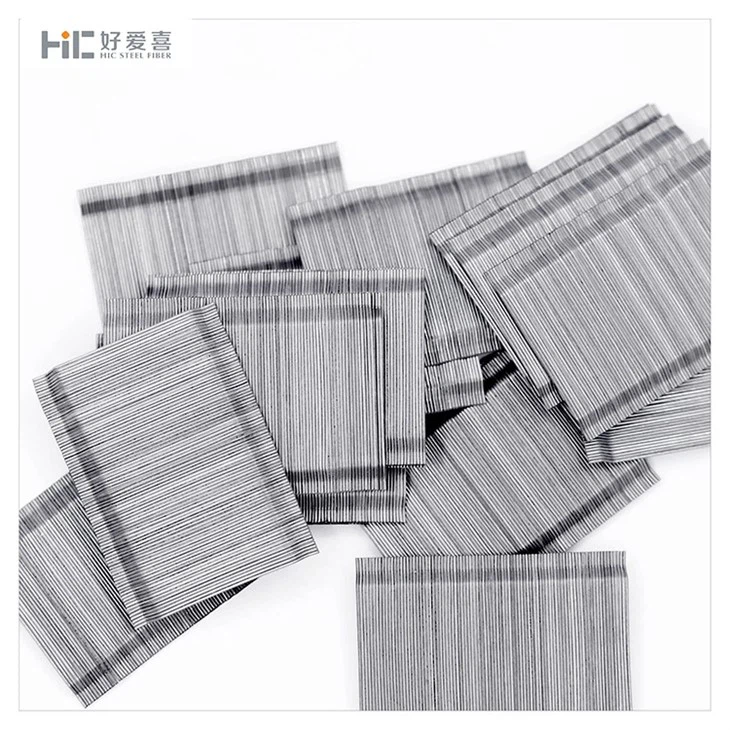
Glued steel fibres are a popular choice in many concrete projects. The glue helps to keep the fibers together during mixing, ensuring a more even distribution in the concrete. When using glued steel fibres, the calculation method is similar to that of regular steel fibers. However, you need to make sure that the glue dissolves properly during the mixing process to ensure that the fibers can provide effective reinforcement.
Reinforced Concrete Steel Fiber in Different Applications
Let's take a look at how to calculate the amount of 3D steel fiber in some common applications:
1. Concrete Floors
For concrete floors, as I mentioned earlier, the amount of steel fiber depends on the expected traffic and load. In a light - traffic area, you might use a volume percentage of 0.5% - 1%. For a heavy - traffic area like a warehouse or a parking garage, you might need to increase the volume percentage to 1% - 2%.
2. Structural Concrete
In structural concrete, such as beams and columns, the design requirements are usually more stringent. You'll need to follow the design standards and calculate the amount of steel fiber based on the required strength and crack resistance. The volume percentage of steel fiber in structural concrete can range from 1% to 2%.
Tips for Accurate Calculation
- Consult with an Engineer: If you're unsure about the amount of steel fiber needed, it's always a good idea to consult with a structural engineer. They can take into account all the factors of your project and provide you with a more accurate calculation.
- Test the Concrete Mix: Before starting your project, it's a good idea to test the concrete mix with different amounts of steel fiber. This will help you determine the optimal amount of fiber for your specific project.
- Consider the Cost: While using more steel fiber can improve the performance of the concrete, it also increases the cost. You need to find a balance between the performance requirements and the cost of the project.
Conclusion
Calculating the amount of 3D steel fiber needed for a concrete project is not an exact science, but by considering the factors I've mentioned and using the appropriate calculation methods, you can get a pretty good estimate. As a Concrete 3D Steel Fiber supplier, I'm here to help you with your project. Whether you need advice on the right amount of steel fiber or want to discuss your specific requirements, don't hesitate to reach out. We can have a detailed discussion about your project and find the best solution for you.

If you're interested in purchasing our high - quality 3D steel fibers, feel free to contact us for a quote and start a procurement discussion. We're committed to providing you with the best products and services to ensure the success of your concrete project.
References
- ACI 544.1R - 96, “Report on the Use of Steel Fibers in Concrete, Mortar, and Shotcrete”
- fib Model Code 2010, “Design Code for Concrete Structures”