



In the construction industry, the performance of concrete under various conditions is of utmost importance. One crucial aspect is its fire resistance, which can significantly impact the safety and durability of structures. As a supplier of Hooked End Steel Fibers, I am often asked about the effects of these fibers on the fire resistance of concrete. In this blog post, I will delve into this topic, exploring the scientific basis behind the potential impact of hooked end steel fibers on concrete's fire - resistant properties.
Understanding Concrete and Fire Resistance
Concrete is a widely used construction material known for its strength and durability. However, when exposed to high temperatures, such as in a fire, concrete can undergo significant changes. At elevated temperatures, the water within the concrete evaporates, leading to internal pressure build - up. This can cause spalling, where layers of concrete break off, exposing the reinforcement and reducing the structural integrity of the building.
The fire resistance of concrete is typically measured in terms of its ability to maintain its load - bearing capacity, thermal insulation, and integrity during a fire. Factors such as the type of cement, aggregate, and additives used in the concrete mix can all influence its fire - resistant performance.
Role of Hooked End Steel Fibers in Concrete
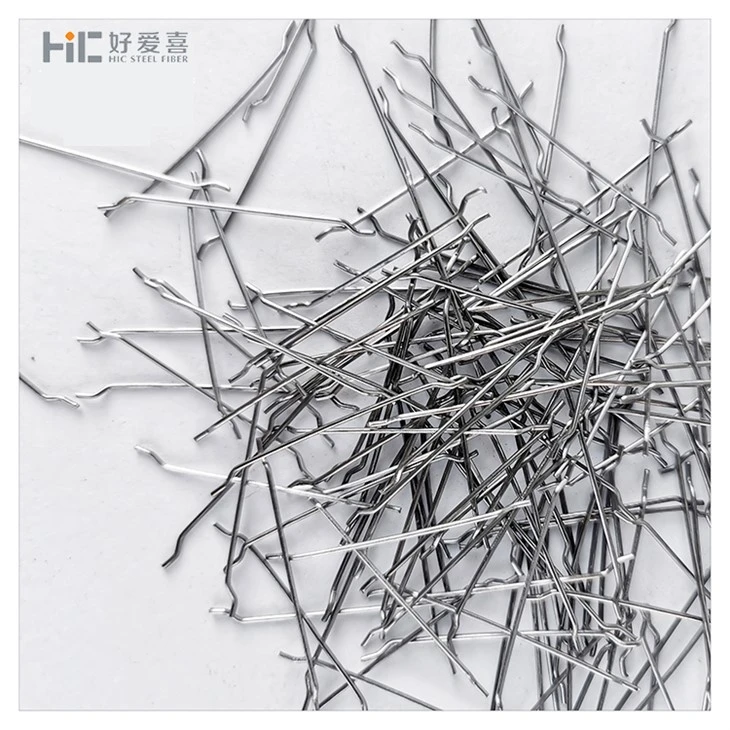
Hooked End Steel Fiber is a type of reinforcement material commonly used in concrete. These fibers are typically made of high - strength steel and have hooked ends, which provide better anchorage within the concrete matrix. When added to concrete, hooked end steel fibers can enhance its mechanical properties, such as tensile strength, flexural strength, and toughness.
The addition of hooked end steel fibers helps to control cracking in concrete. As the concrete dries and hardens, it is prone to shrinkage, which can lead to the formation of cracks. The steel fibers act as a distributed reinforcement, bridging these cracks and preventing them from propagating. This not only improves the overall strength of the concrete but also enhances its durability.
Impact on Fire Resistance
Spalling Reduction
One of the main ways hooked end steel fibers can affect the fire resistance of concrete is by reducing spalling. During a fire, the high - temperature - induced steam pressure within the concrete can cause spalling. The steel fibers in the concrete act as a barrier, helping to dissipate the steam pressure and prevent the build - up of excessive internal stress.
Research has shown that concrete with hooked end steel fibers has a lower tendency to spall compared to plain concrete. The fibers provide a three - dimensional reinforcement network that holds the concrete together, even when exposed to high temperatures. This helps to maintain the integrity of the concrete structure during a fire, reducing the risk of structural collapse.
Thermal Conductivity
Another aspect to consider is the effect of hooked end steel fibers on the thermal conductivity of concrete. Steel is a good conductor of heat, and one might expect that adding steel fibers to concrete would increase its thermal conductivity. However, studies have found that the addition of steel fibers in moderate amounts does not significantly increase the overall thermal conductivity of concrete.
In fact, the presence of steel fibers can help to redistribute heat within the concrete. This can prevent localized over - heating, which is often a cause of spalling. By spreading the heat more evenly, the steel fibers contribute to the overall fire - resistant performance of the concrete.
Residual Strength
After a fire, the residual strength of concrete is an important factor in determining the structural integrity of a building. Concrete with hooked end steel fibers has been shown to retain a higher residual strength compared to plain concrete. The fibers help to maintain the bond between the aggregate and the cement paste, even after exposure to high temperatures.
This means that structures made of concrete with hooked end steel fibers are more likely to withstand subsequent loads and continue to function safely after a fire. The residual strength of the concrete is crucial for post - fire repairs and the long - term durability of the structure.
Scientific Evidence
Numerous scientific studies have been conducted to investigate the effect of hooked end steel fibers on the fire resistance of concrete. For example, a study published in the "Journal of Materials in Civil Engineering" found that the addition of hooked end steel fibers at a dosage of 1% by volume significantly reduced the spalling of concrete exposed to high temperatures.
Another research project conducted by a team of international researchers compared the fire performance of concrete with and without steel fibers. The results showed that the concrete with hooked end steel fibers had better thermal stability and lower spalling rates, indicating improved fire resistance.
Applications in Construction
The improved fire resistance properties of concrete with hooked end steel fibers make it suitable for a wide range of construction applications. In high - rise buildings, where fire safety is a major concern, using concrete with steel fibers can enhance the overall fire - resistant design of the structure.
Tunnels are another area where the fire - resistant properties of concrete are crucial. Concrete with hooked end steel fibers can be used in tunnel linings to prevent spalling during a fire, reducing the risk of structural damage and ensuring the safety of users.
Industrial buildings, such as factories and warehouses, also benefit from the use of fire - resistant concrete. The addition of steel fibers can help to protect the structure from fire damage, minimizing downtime and repair costs.
As a Hooked End Steel Fibers Supplier
As a supplier of Steel Fibres for Concrete Reinforcement, I understand the importance of providing high - quality products that meet the specific needs of our customers. Our hooked end steel fibers are manufactured using advanced technology to ensure consistent quality and performance.
We work closely with our customers to determine the appropriate fiber dosage and type for their concrete mixes. Our technical team can provide expert advice on how to optimize the fire - resistant properties of concrete using our steel fibers. Whether it's a small - scale residential project or a large - scale commercial development, we have the expertise and products to meet your requirements.

Conclusion
In conclusion, hooked end steel fibers have a significant positive effect on the fire resistance of concrete. They reduce spalling, help to redistribute heat, and improve the residual strength of concrete after a fire. Scientific research supports the use of these fibers in enhancing the fire - resistant performance of concrete structures.
If you are involved in a construction project where fire safety is a priority, I encourage you to consider using our hooked end steel fibers. Our products can help you achieve a more fire - resistant concrete solution, ensuring the safety and durability of your structures. Contact us to discuss your specific needs and explore how our Hooked End Steel Fibers can be incorporated into your project.
References
- Journal of Materials in Civil Engineering, "Effect of Hooked End Steel Fibers on Fire Resistance of Concrete"
- International Research Project on Fire Performance of Concrete with Steel Fibers