What is UHPC?
UH in UHPC is the abbreviation of the phrase (Ultra-High), which refers to the highest-level
The word P (Performance) means performance and efficacy
C stands for Concrete
UHPC refers to "Ultra-High Performance Concrete"
How strong is UHPC?
Since UHPC is ultra-high-performance concrete, how high can its performance be? Judging from the main compressive properties of concrete, the compressive strength of ordinary concrete is about 15Mpa-30Mpa, while the compressive strength of pig iron, which is very hard in our daily lives, is generally 200Mpa. It is said that UHPC has the highest compressive strength but can reach 810Mpa picture. It can be said that ordinary concrete is the "five scum" in front of UHPC.
The "high" of ultra-high concrete (UHPC) is not just a single compression ability.
The "Three Highs" of UHPC
"Ultra high-performance concrete" is mainly known for its "three highs": high strength, high durability, and high workability.
"high strength"
As mentioned above, the maximum compressive strength of UHPC can reach 810Mpa. Because the process level of each country is quite different, UHPC also requires a minimum compressive strength of more than 150 Mpa, a shear strength of more than 25 Mpa, and high thermal insulation and high Waterproof, fine texture, which can basically isolate all harmful media. It can be said that it is a white jade pillar holding up the sky, a purple golden beam supporting the sea, and independently carrying the sky.
"High durability"
Traditional concrete inevitably has many gaps. In the case of high or low temperatures, continuous rain, or bright sunshine, the gaps will be further enlarged and the service life will be shortened. UHPC itself has basically no gaps. Even if slight gaps are caused by external forces, UHPC also has miraculous self-healing ability.
UHPC was first used in bridge construction to reduce the dead weight of the structure and improve the service life and durability of the structure. The service life can reach more than 100 years.
"High workability"
Unlike traditional concrete, which is "thick, bulky, thick, and heavy", UHPC relies on its strong physical properties to make the structure extremely lightweight and has a strong visual aesthetic. With its excellent performance, designers can realize their wild imagination.
UHPC has high density, a high surface finish, a fine texture, and a warm and jade-like feel. Ordinary concrete is completely rough in front of UHPC. Not only that, the ultra-low porosity also makes UHPC less likely to be contaminated, making cleaning and maintenance easier.
Why is UHPC so powerful?
Traditional concrete is generally prepared from cement, admixtures, sand and gravel, water, and other ingredients in a certain proportion. After mixing and certain curing, a cement-based composite material mainly composed of aggregate (sand and gravel) and cement slurry is formed. However, the physical and mechanical properties of traditional concrete aggregates and cement slurry are quite different, which are mainly restricted by the following three aspects:
First, due to the thermal expansion and contraction of the water in the cement slurry at high or low temperatures, gaps will naturally occur between the aggregate and the cement slurry.
Secondly, the hardness of the aggregates mainly composed of sand and gravel is not high and the large volume will further enlarge the cracks under the use of external force. Generally speaking, the larger the volume of the aggregate, the greater the cracks.
Third, the mixing process of traditional concrete is rough, so the supporting aggregates in the cement slurry are not evenly distributed and the porosity is relatively high, which greatly reduces the compressive capacity of the concrete.
This makes traditional concrete highly brittle, with poor compressive resistance and low durability. The pressure resistance is only 20Mpa-30Mpa.
• To improve the performance of concrete, we mainly start from the following three points:
1. Reduce moisture content in concrete as much as possible.
2. Look for smaller and harder materials as aggregates.
3. Reduce porosity and make the distribution of aggregates, media, etc. more uniform.
"Water-reducing agent reduces moisture content"
"Ultra-fine powder improves density"
In the 1970s, the Danes greatly improved the strength of concrete by adding water-reducing agents and ultra-fine powders to concrete. Water-reducing admixtures significantly reduce the moisture content in concrete. Ultra-fine powder is added to the concrete ingredients as an admixture. Through sufficient mixing, it can effectively reduce the gaps between the aggregates, minimize the quality of the mixed air, and improve the density of the material.
The concrete treated by the above method is called HPC (high-strength concrete). Theoretically, the compressive resistance of HPC can reach a strength of 120MPA (can withstand 120 tons of force per square meter).
"Steel fiber increases strength"
"Active powder improves fusion"
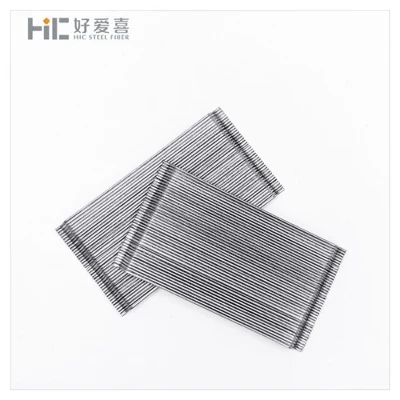
Around the 1990s, active mineral powders such as silica fume and mineral powder were used as concrete admixtures ultrafine steel fibers were used to replace traditional coarse aggregates, and ultrafine active powders were added to eliminate the internal defects of the material. drop to lowest. Steel fiber has higher strength and smaller volume. Active mineral powders such as silica fume and mineral powder can chemically achieve a higher degree of fusion between materials. After long-term maintenance in a high-temperature and high-pressure environment, the concrete can be microscopically Structurally optimal. Even minor cracks in the material can slowly heal themselves under the action of active mineral powder.
"High-pressure molding"
"High-temperature maintenance"
Because the active mineral powder plays a leading role in the entire process, the concrete at this time is called RPC (Reactive Poeder Concrete) reactive powder concrete. This kind of concrete can already have ultra-high physical properties and is also called UHPC.
Generally, RPC (reactive powder concrete) can be divided into two levels according to different curing conditions. After curing for about 3 days at 20℃-90℃, the compressive strength of RPC can reach 200 MPA (the force can bear 200 tons per square meter). ), this type of concrete is called PRC200. If RPC is formed using high pressure (the porosity of UHPC is lower under high pressure) and cured at 250℃-400℃, the compressive strength of RPC can reach 500MPA-800MPA. This type of concrete is called PRC800.
There are great differences in the level of craftsmanship and science and technology between countries, and there are also great differences in the evaluation standards of UHPC between countries. Generally speaking, concrete with a compressive strength exceeding 150 MPA can be called ultra-high performance concrete (UHPC).
"The relative limitations of UHPC"
Generally speaking, if UHPC wants to achieve relatively high strength, it requires certain high-temperature and high-pressure thermal curing as a necessary condition. On the other hand, steel fibers tend to agglomerate during the mixing process, requiring large-scale professional mixing equipment. These construction conditions are basically difficult to achieve for on-site pouring. This also leads to the fact that most UHPCs are prefabricated parts that need to be prepared in advance in the factory, and the cost will be very high.
The talented architect Rudy Ricciot1 once commented on UHPC (Ultra High-Performance Concrete), "We don't know how far this material will take us, but we can certainly change the world together." Indeed, The power of technology is more like a bridge, leading designers to the kingdom of creativity.