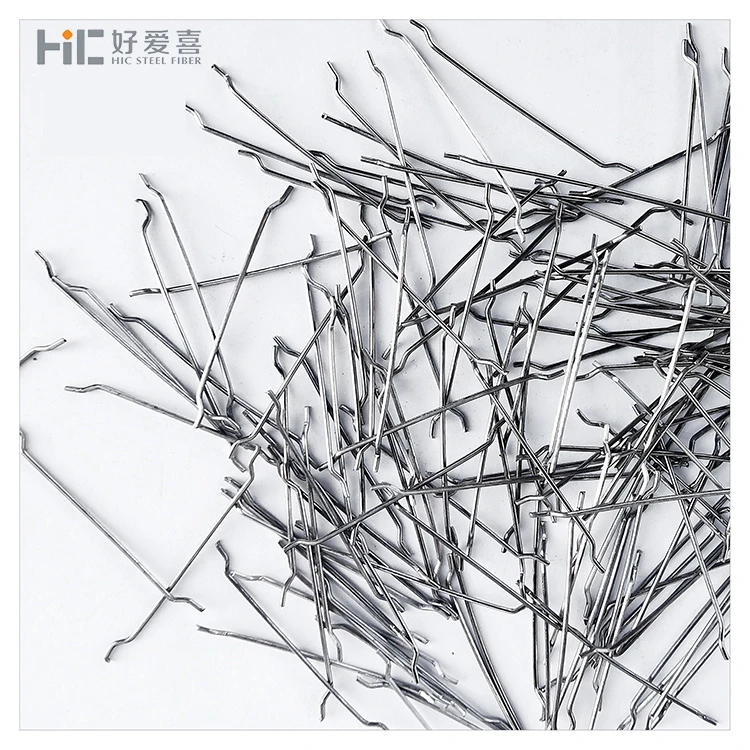
Steel fiber reinforced concrete is a new type of multiphase composite material formed by mixing short steel fibers in disorderly distribution in ordinary concrete. These randomly distributed steel fibers can effectively hinder the expansion of micro-cracks and the formation of macro-cracks in concrete, significantly improve the tensile, flexural, impact and fatigue resistance of concrete, and have good ductility.
The properties of steel fibers are divided into two types: tensile strength and source bond. In a large number of tests in the past, we can see that ordinary steel fiber reinforced concrete will be damaged to varying degrees after the steel fibers are pulled out, instead of The breaking of steel fibers causes damage, so it can be said that the effect of steel fibers in this concrete is extremely powerful. In the past, people simply thought that the more steel fibers, the better the tensile performance. In fact, this is not the case. It is a serious waste to the economy, and it will cause certain construction difficulties, and will also affect the original performance.
Steel fiber is a new, high-performance steel fiber variety. The mixing ratio design method of steel fiber road is basically the same as that of ordinary concrete, but the differences are: double-controlled strength standards (compressive strength and flexural tensile strength); steel fiber content is determined according to the flexural and tensile strength required by the design; unit water consumption and sand The rate is related to the fiber content. For every 0.5% (volume rate) steel fiber added, the unit water consumption will increase by 6kg, and the sand rate will increase by 2%. Steel fiber reinforced concrete has no obvious change in impermeability compared with ordinary concrete. Due to the good crack resistance and integrity of fiber reinforced concrete, it is resistant to freezing and thawing, heat resistance, wear resistance, cavitation resistance and corrosion resistance. were significantly improved. When fiber reinforced concrete is damaged, most of the fibers are pulled out rather than broken. Therefore, improving the bond strength between the fibers and the matrix is one of the main controlling factors to improve the fiber reinforcement effect.