

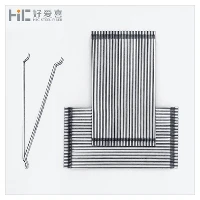
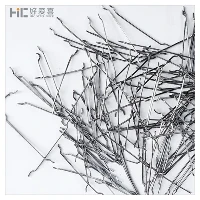
Hey there! As a supplier of low carbon steel fiber, I often get asked about the surface treatment of this amazing material. So, I thought I'd take some time to share what I know with you all.


First off, let's talk about why surface treatment is so important for low carbon steel fiber. Low carbon steel fiber is widely used in various applications, especially in concrete reinforcement. It can enhance the mechanical properties of concrete, such as its tensile strength, flexural strength, and toughness. However, the performance of steel fiber in concrete largely depends on its bond with the concrete matrix. And that's where surface treatment comes in.
One of the most common surface treatments for low carbon steel fiber is rusting. Rusting might sound like a bad thing at first, but in this case, it actually helps to improve the bond between the steel fiber and the concrete. When the steel fiber rusts, a layer of iron oxide forms on its surface. This layer has a rough texture, which increases the surface area of the fiber. As a result, the mechanical interlocking between the fiber and the concrete is enhanced, leading to better bonding.
Another popular surface treatment is coating. There are different types of coatings that can be applied to low carbon steel fiber. One type is epoxy coating. Epoxy-coated steel fiber has excellent corrosion resistance. This is particularly important in environments where the concrete is exposed to harsh chemicals or moisture. The epoxy coating acts as a barrier, preventing the steel fiber from rusting and deteriorating. It also improves the bond with the concrete by providing a smooth and continuous surface for better adhesion.
Zinc coating is also commonly used. Zinc is a sacrificial metal, which means it corrodes before the steel. When a zinc coating is applied to the steel fiber, it protects the underlying steel from corrosion. Zinc-coated steel fiber is often used in marine and coastal construction projects, where the concrete is exposed to saltwater. The zinc coating helps to extend the service life of the steel fiber and the concrete structure.
Now, let's take a look at some of the applications of low carbon steel fiber and how surface treatment plays a role.
Concrete Steel Fiber
Concrete Steel Fiber is widely used in the construction industry. Whether it's for building foundations, bridges, or high - rise buildings, steel fiber can significantly improve the performance of concrete. Surface - treated steel fiber, like the ones I mentioned above, ensures a strong bond with the concrete, making the structure more durable and resistant to cracking. For example, in a bridge deck, the use of rusted or coated steel fiber can prevent the formation of cracks due to traffic loads and environmental factors.
Hooked End Type Steel Fiber
Hooked End Type Steel Fiber is designed to have a better anchorage in the concrete. The hooked ends increase the pull - out resistance of the fiber. When combined with proper surface treatment, such as epoxy or zinc coating, the performance of hooked - end steel fiber is further enhanced. In industrial floors, hooked - end steel fiber can provide excellent crack control and load - bearing capacity. The surface treatment not only protects the fiber from corrosion but also helps it to work more effectively with the concrete.
Steel Fiber for Industrial Flooring
Steel Fiber for Industrial Flooring is a crucial application. Industrial floors are subjected to heavy traffic, impact loads, and chemical spills. Low carbon steel fiber with the right surface treatment can withstand these harsh conditions. For instance, a zinc - coated steel fiber can resist the corrosion caused by industrial chemicals, while a rusted or epoxy - coated fiber can ensure a strong bond with the concrete, preventing the floor from cracking under heavy loads.
When it comes to choosing the right surface treatment for low carbon steel fiber, several factors need to be considered. The environment in which the concrete will be used is a major factor. If the concrete is going to be exposed to a corrosive environment, such as a chemical plant or a coastal area, a corrosion - resistant coating like zinc or epoxy is a must. The type of concrete mix and the design requirements of the structure also play a role. For example, if high - early - strength is required, a surface treatment that promotes rapid bonding with the concrete might be preferred.
As a supplier, I always work closely with my customers to understand their specific needs. I offer a variety of low carbon steel fiber products with different surface treatments. Whether you need rusted steel fiber for general concrete applications or coated steel fiber for a more demanding environment, I've got you covered.
If you're in the market for high - quality low carbon steel fiber, don't hesitate to reach out. I'm here to help you find the perfect solution for your project. Whether you're a contractor, an engineer, or an architect, I can provide you with the technical support and the right products to ensure the success of your construction project.
In conclusion, the surface treatment of low carbon steel fiber is a crucial aspect that can greatly affect its performance in concrete. By choosing the right surface treatment, you can enhance the bond with the concrete, improve corrosion resistance, and extend the service life of your concrete structures. So, if you have any questions or need more information about low carbon steel fiber and its surface treatment, feel free to contact me. Let's work together to make your construction projects stronger and more durable.
References
- Neville, A. M. (2011). Properties of Concrete. Pearson Education.
- ACI Committee 544. (2016). State - of - the - Art Report on Fiber - Reinforced Concrete. American Concrete Institute.