

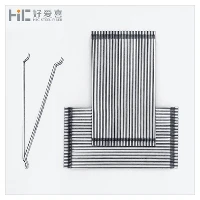
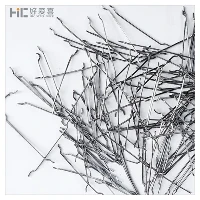
What is the influence of the aspect ratio of Glued Type Steel Fiber on concrete performance?
As a supplier of Glued Type Steel Fiber, I've witnessed firsthand the transformative impact these fibers can have on concrete performance. One of the most critical factors affecting this performance is the aspect ratio of the steel fibers. The aspect ratio is defined as the ratio of the length of the fiber to its diameter. In this blog, we'll explore how different aspect ratios of Glued Type Steel Fiber influence the performance of concrete.
1. Compressive Strength
Compressive strength is a fundamental property of concrete, and the aspect ratio of glued type steel fibers can significantly affect it. Generally, fibers with a higher aspect ratio can provide better reinforcement in concrete. When the aspect ratio is high, the fibers can bridge cracks more effectively, distributing the load more evenly throughout the concrete matrix.
Research has shown that as the aspect ratio increases, the compressive strength of concrete also tends to increase. This is because longer fibers can resist the propagation of micro - cracks under compressive loads. For example, in some laboratory tests, concrete with high - aspect - ratio glued type steel fibers showed a 10 - 15% increase in compressive strength compared to plain concrete. However, there is a limit to this improvement. If the aspect ratio is too high, the fibers may become difficult to disperse evenly in the concrete, which can lead to a decrease in performance.
2. Tensile Strength
Tensile strength is another crucial property of concrete, as concrete is relatively weak in tension. Glued type steel fibers with different aspect ratios can have a substantial impact on the tensile strength of concrete.
Higher aspect - ratio fibers are more effective in enhancing the tensile strength of concrete. They can better resist the formation and propagation of cracks under tensile stress. When a crack starts to form in the concrete, the long fibers can hold the two sides of the crack together, preventing it from opening further. For instance, Concrete 4D Steel Fibre with an optimized aspect ratio has been proven to significantly improve the tensile strength of concrete. In practical applications, such as in the construction of slabs and pavements, this improvement in tensile strength can lead to a longer service life and fewer maintenance requirements.
3. Flexural Strength
Flexural strength is important for concrete structures that are subjected to bending loads, such as beams and slabs. The aspect ratio of glued type steel fibers plays a vital role in improving the flexural strength of concrete.
Longer fibers with a high aspect ratio can provide better reinforcement in the tension zone of the concrete beam or slab. They can help to distribute the bending stress more evenly and prevent the sudden failure of the structure. A study conducted on concrete beams reinforced with different aspect - ratio glued type steel fibers showed that those with a higher aspect ratio had a higher flexural strength. The fibers can act as a bridge across the cracks that form in the tension zone, allowing the concrete to continue to carry the load even after the initial cracking.
4. Durability
Durability is a key consideration in concrete construction, and the aspect ratio of glued type steel fibers can influence it. Concrete structures are often exposed to harsh environmental conditions, such as freeze - thaw cycles, chemical attacks, and abrasion.
Fibers with an appropriate aspect ratio can improve the durability of concrete. High - aspect - ratio fibers can help to reduce the permeability of concrete by filling the pores and micro - cracks. This reduces the ingress of water and harmful chemicals, which in turn improves the resistance of concrete to freeze - thaw cycles and chemical attacks. Additionally, the fibers can enhance the abrasion resistance of concrete. For example, Supersack 0.62*35 Glued Steel Fiber with a well - designed aspect ratio has been used in industrial floors to improve their abrasion resistance and extend their service life.
5. Workability
Workability is an important factor in concrete construction, as it affects the ease of mixing, placing, and finishing of concrete. The aspect ratio of glued type steel fibers can have an impact on the workability of concrete.
Higher aspect - ratio fibers can make the concrete less workable. Longer fibers tend to entangle with each other, which can increase the viscosity of the concrete mixture. This can make it more difficult to mix the concrete thoroughly and to place it in the formwork. However, proper mixing techniques and the use of appropriate admixtures can help to mitigate this problem. For example, the use of superplasticizers can improve the workability of concrete containing high - aspect - ratio glued type steel fibers.
6. Fiber Dispersion
The aspect ratio also affects the dispersion of glued type steel fibers in the concrete. Good fiber dispersion is essential for achieving the desired performance of the reinforced concrete.
Fibers with a lower aspect ratio are generally easier to disperse evenly in the concrete. Shorter fibers are less likely to entangle with each other, which allows for a more uniform distribution in the concrete matrix. On the other hand, high - aspect - ratio fibers require more careful mixing to ensure proper dispersion. If the fibers are not well - dispersed, they may form clumps, which can reduce the effectiveness of the reinforcement and even lead to local weaknesses in the concrete.
7. Cost - Effectiveness
When considering the use of glued type steel fibers in concrete, cost - effectiveness is an important factor. The aspect ratio of the fibers can influence the cost - effectiveness of the reinforcement.
Higher aspect - ratio fibers may require a lower dosage to achieve the same level of performance compared to lower aspect - ratio fibers. This is because they are more effective in bridging cracks and distributing loads. However, high - aspect - ratio fibers may be more expensive to produce. Therefore, a balance needs to be struck between the performance requirements and the cost. In some cases, a combination of different aspect - ratio fibers may be used to optimize the cost - effectiveness of the concrete reinforcement.
In conclusion, the aspect ratio of Glued Type Steel Fiber has a significant influence on various aspects of concrete performance, including compressive strength, tensile strength, flexural strength, durability, workability, fiber dispersion, and cost - effectiveness. As a supplier, we offer a range of products, such as Concrete 4D Steel Fibre, Supersack 0.62*35 Glued Steel Fiber, and Hooked Glued Carbon Steel Fiber, with different aspect ratios to meet the diverse needs of our customers.


If you are interested in learning more about how our Glued Type Steel Fiber can improve your concrete projects or if you have any questions regarding the aspect ratio and its impact on concrete performance, we encourage you to contact us for a detailed discussion. We are ready to provide you with professional advice and high - quality products to ensure the success of your construction projects.
References
- ACI Committee 544. (1982). State - of - the - art report on fiber - reinforced concrete. American Concrete Institute.
- Banthia, N., & Trottier, J. (1994). The influence of steel fiber characteristics on the strength and ductility of high - strength concrete. Cement and Concrete Research, 24(3), 457 - 466.
- Naaman, A. E., & Jeong, S. (2003). Tensile response of steel fiber - reinforced concrete: effects of fiber properties. ACI Materials Journal, 100(6), 494 - 503.