


What is the influence of Rpc Micro Steel Fiber on the workability of concrete?
In the realm of modern construction, concrete remains one of the most widely used materials due to its versatility and strength. However, the quest for enhancing its properties, especially workability, has led to the exploration of various additives. Among these, Rpc Micro Steel Fiber has emerged as a significant component with far - reaching implications for concrete workability. As a supplier of Rpc Micro Steel Fiber, I have witnessed firsthand the transformative effects it can have on concrete, and in this blog, I will delve into the details of its influence on workability.
Understanding Workability of Concrete
Workability is a crucial characteristic of concrete that refers to the ease with which concrete can be mixed, transported, placed, compacted, and finished without segregation. It is influenced by several factors, including the water - cement ratio, aggregate properties, admixtures, and the presence of fibers. Good workability ensures that concrete can be properly placed in the formwork, filling all the corners and achieving the desired shape without leaving voids. It also affects the finishing process, resulting in a smooth and aesthetically pleasing surface.
Rpc Micro Steel Fiber: An Overview
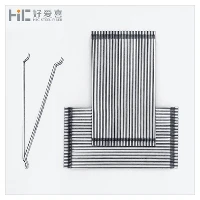
Rpc Micro Steel Fiber is a type of fiber made from high - strength steel with a very small diameter and length. These fibers are typically added to concrete in small percentages by volume to enhance its mechanical properties. The Rpc in its name stands for Reactive Powder Concrete, which is a high - performance concrete that benefits greatly from the addition of these micro steel fibers. The unique properties of Rpc Micro Steel Fiber, such as its high aspect ratio (length to diameter ratio), enable it to effectively bridge cracks and improve the overall performance of concrete.
Positive Influences on Workability
Improved Cohesion
One of the primary ways Rpc Micro Steel Fiber affects the workability of concrete is by improving its cohesion. When added to the concrete mix, the fibers act as a three - dimensional network that holds the aggregates and cement paste together. This reduces the tendency of the concrete to segregate during mixing, transportation, and placement. Segregation can lead to uneven distribution of aggregates and cement paste, resulting in poor quality concrete. With the addition of Rpc Micro Steel Fiber, the concrete remains more homogeneous, making it easier to handle and place.
Reduced Bleeding
Bleeding is a phenomenon in which water rises to the surface of freshly placed concrete. It can cause problems such as a weak surface layer, cracking, and poor bond between successive layers of concrete. Rpc Micro Steel Fiber helps to reduce bleeding by holding the water within the concrete matrix. The fibers create a physical barrier that restricts the upward movement of water, ensuring that the water remains evenly distributed throughout the concrete. This results in a more consistent and workable concrete mix.
Enhanced Flowability in Some Cases
In certain situations, the addition of Rpc Micro Steel Fiber can enhance the flowability of concrete. When the fiber dosage is carefully controlled, the fibers can act as lubricants within the concrete mix. They reduce the internal friction between the aggregates and the cement paste, allowing the concrete to flow more easily. This is particularly beneficial in applications where concrete needs to be pumped over long distances or placed in complex formwork. For example, in high - rise building construction or in the construction of precast elements with intricate shapes, the improved flowability provided by Rpc Micro Steel Fiber can significantly improve the workability of the concrete.
Negative Influences on Workability
Increased Viscosity
One of the main challenges associated with the addition of Rpc Micro Steel Fiber to concrete is the increase in viscosity. As the fibers are added to the mix, they create a network that resists the flow of the concrete. This can make the concrete more difficult to mix, especially in large - scale operations. The increased viscosity also requires more energy to transport and place the concrete. For example, in a ready - mix concrete plant, the mixer may need to run for a longer time to ensure proper dispersion of the fibers, and the pumps used to transport the concrete may need to be more powerful.
Fiber Balling
Another potential issue is fiber balling. If the fibers are not properly dispersed in the concrete mix, they can clump together to form balls. These fiber balls can block the pipes during pumping and create weak spots in the concrete. Fiber balling is more likely to occur when the fiber dosage is too high or when the mixing process is not optimized. To prevent fiber balling, it is essential to use a proper mixing sequence and to ensure that the fibers are added gradually to the concrete mix.
Mitigating the Negative Influences
To overcome the negative influences of Rpc Micro Steel Fiber on workability, several strategies can be employed.


Optimal Fiber Dosage
Determining the optimal fiber dosage is crucial. A lower dosage of fibers can provide the desired benefits without significantly increasing the viscosity of the concrete. It is important to conduct tests to find the right balance between improving the mechanical properties of the concrete and maintaining its workability. For most applications, a fiber dosage of 1% - 3% by volume is commonly used.
Use of Superplasticizers
Superplasticizers are chemical admixtures that can significantly improve the workability of concrete. When used in conjunction with Rpc Micro Steel Fiber, superplasticizers can reduce the water - cement ratio while maintaining the flowability of the concrete. This helps to counteract the increase in viscosity caused by the fibers. By using superplasticizers, the concrete can be made more workable without sacrificing its strength.
Proper Mixing Techniques
Proper mixing techniques are essential to ensure the uniform dispersion of the fibers in the concrete mix. The fibers should be added gradually to the mix while the mixer is running. It is also recommended to use a high - speed mixer to break up any fiber clumps and ensure that the fibers are evenly distributed throughout the concrete.
Applications and the Role of Workability
The influence of Rpc Micro Steel Fiber on workability has significant implications for various construction applications.
High - Performance Structures
In high - performance structures such as bridges, high - rise buildings, and industrial floors, the addition of Rpc Micro Steel Fiber can improve the durability and strength of the concrete. The enhanced workability ensures that the concrete can be properly placed in these complex structures, filling all the voids and achieving the desired shape. For example, in a bridge deck, the improved cohesion and reduced bleeding provided by the fibers can result in a more durable and crack - resistant surface.
Precast Elements
Precast elements, such as beams, columns, and panels, require concrete with good workability to ensure accurate casting. The use of Rpc Micro Steel Fiber can improve the flowability of the concrete, allowing it to fill the molds easily. This results in precast elements with better surface finish and dimensional accuracy.
Conclusion
In conclusion, Rpc Micro Steel Fiber has a complex influence on the workability of concrete. While it offers several positive benefits such as improved cohesion, reduced bleeding, and enhanced flowability in some cases, it also presents challenges such as increased viscosity and fiber balling. By carefully controlling the fiber dosage, using superplasticizers, and employing proper mixing techniques, these negative influences can be mitigated. As a supplier of Copper Coated Type Steel Fiber, Copper Micro Steel Fiber, and Micro Steel Fiber for UHPC Concrete, we understand the importance of providing high - quality products that can enhance the performance of concrete. If you are involved in a construction project and are interested in exploring the use of Rpc Micro Steel Fiber, we invite you to contact us for more information and to discuss your specific requirements. Our team of experts is ready to assist you in finding the right solution for your project.
References
- ACI Committee 544. (1982). Fiber - reinforced concrete: State - of - the - art report. American Concrete Institute.
- Bentur, A., & Mindess, S. (2007). Fiber - reinforced cementitious composites. CRC Press.
- Neville, A. M. (2011). Properties of concrete. Pearson Education.