

Fire resistance is a crucial property in construction materials, especially for concrete used in buildings and infrastructure where safety is of utmost importance. In recent years, the incorporation of Low Carbon Glued Steel Fibre into concrete has emerged as an innovative approach to enhance its performance, including its fire - resistance capabilities. As a supplier of Low Carbon Glued Steel Fibre, I am excited to delve into the details of how this material affects the fire resistance of concrete.
Understanding Low Carbon Glued Steel Fibre
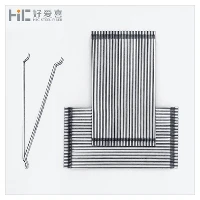
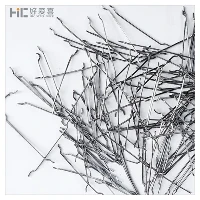
Low Carbon Glued Steel Fibre is a type of reinforcement material made from low - carbon steel. The "glued" aspect refers to the fact that the fibres are often bundled together in a pre - glued form, which makes them easier to handle and disperse evenly throughout the concrete mix. These fibres come in various shapes, sizes, and properties, such as Simple Construction Glued Steel Fiber, Concrete 3D Steel Fiber, and High Tensile Strength Glued Steel Fiber.
The low - carbon content of the steel fibre offers several advantages. Low - carbon steel is less prone to corrosion compared to high - carbon steel, which is essential for the long - term durability of the concrete. Moreover, the steel fibres provide additional strength and ductility to the concrete matrix, which can significantly improve its performance under different loading conditions, including exposure to high temperatures.
How Fire Affects Concrete
Before discussing the impact of Low Carbon Glued Steel Fibre on concrete's fire resistance, it is important to understand how fire affects normal concrete. When concrete is exposed to high temperatures, several physical and chemical changes occur. At around 100 - 110°C, the free water in the concrete starts to evaporate. As the temperature rises further, the chemically - bound water in the cement paste begins to be released, causing the concrete to shrink and develop internal stresses.
Above 500°C, the calcium hydroxide in the cement paste decomposes, leading to a significant loss of strength. Additionally, the differential thermal expansion between the aggregates and the cement paste can cause cracking and spalling of the concrete surface. Spalling is a particularly dangerous phenomenon as it exposes the underlying concrete to higher temperatures more quickly, accelerating the deterioration process and potentially compromising the structural integrity of the building.
The Role of Low Carbon Glued Steel Fibre in Enhancing Fire Resistance
Crack Control
One of the primary ways Low Carbon Glued Steel Fibre improves the fire resistance of concrete is through crack control. The steel fibres act as a distributed reinforcement throughout the concrete matrix. When the concrete is heated and starts to develop internal stresses, the fibres bridge the cracks, preventing them from propagating and growing larger. This reduces the likelihood of spalling and helps to maintain the integrity of the concrete structure.
During a fire, the ability to control cracking is crucial. Small cracks can act as channels for the escape of steam and hot gases, reducing the internal pressure within the concrete and minimizing the risk of explosive spalling. The presence of Low Carbon Glued Steel Fibre ensures that the concrete can withstand the thermal stresses generated during a fire without catastrophic failure.
Thermal Conductivity
Low Carbon Glued Steel Fibre can also influence the thermal conductivity of concrete. Steel has a relatively high thermal conductivity compared to concrete. When the steel fibres are incorporated into the concrete, they can help to distribute the heat more evenly throughout the structure. This reduces the temperature gradients within the concrete, which in turn reduces the internal stresses caused by differential thermal expansion.
By minimizing the temperature gradients, the risk of cracking and spalling is further reduced. Moreover, the more even distribution of heat can help to prevent localized overheating, which can cause rapid deterioration of the concrete.
Residual Strength
After a fire, the residual strength of the concrete is an important consideration for the structural assessment and potential repair of the building. Concrete with Low Carbon Glued Steel Fibre has been shown to have better residual strength compared to plain concrete. The steel fibres help to maintain the integrity of the concrete matrix during the fire, and even after the concrete has been damaged, they can still provide some load - carrying capacity.
This means that in the event of a fire, a structure made of concrete with Low Carbon Glued Steel Fibre is more likely to remain standing and may require less extensive repair work compared to a structure made of plain concrete.
Experimental Evidence
Numerous experimental studies have been conducted to evaluate the fire resistance of concrete with Low Carbon Glued Steel Fibre. In these studies, specimens of concrete with and without steel fibres are exposed to high - temperature conditions in a controlled environment, such as a furnace.


The results consistently show that concrete with Low Carbon Glued Steel Fibre has a higher resistance to spalling and a better overall performance under fire conditions. For example, some studies have reported that the addition of steel fibres can reduce the spalling depth by up to 50% compared to plain concrete. Additionally, the residual strength of the concrete with steel fibres after a fire is significantly higher, often retaining up to 70 - 80% of its original strength, while plain concrete may lose more than half of its strength.
Factors Affecting the Fire - Resistance Performance
The effectiveness of Low Carbon Glued Steel Fibre in enhancing the fire resistance of concrete depends on several factors. The volume fraction of the steel fibres is an important parameter. Generally, a higher volume fraction of steel fibres leads to better fire - resistance performance, but there is a limit beyond which the workability of the concrete may be affected.
The aspect ratio (length to diameter ratio) of the steel fibres also plays a role. Fibres with a higher aspect ratio are more effective in bridging cracks and providing reinforcement. Additionally, the distribution of the fibres within the concrete matrix is crucial. A uniform distribution of fibres ensures that the reinforcement is evenly spread throughout the concrete, maximizing its fire - resistance benefits.
Applications in Construction
The improved fire resistance of concrete with Low Carbon Glued Steel Fibre makes it suitable for a wide range of construction applications. In high - rise buildings, where fire safety is a major concern, this type of concrete can be used in columns, beams, and slabs to enhance the overall fire - resistance rating of the structure.
In industrial buildings, such as power plants and refineries, where there is a higher risk of fire due to the presence of flammable materials and high - temperature processes, concrete with Low Carbon Glued Steel Fibre can provide an added layer of protection. It can also be used in tunnels, where fire resistance is essential to ensure the safety of users in the event of a fire.
Conclusion
In conclusion, Low Carbon Glued Steel Fibre is a valuable addition to concrete that significantly enhances its fire - resistance capabilities. Through crack control, improved thermal conductivity, and better residual strength, the steel fibres help to protect the concrete from the damaging effects of fire and maintain the structural integrity of buildings and infrastructure.
As a supplier of Low Carbon Glued Steel Fibre, I am committed to providing high - quality products that meet the strictest standards. Our fibres are carefully manufactured to ensure optimal performance in concrete, whether it is for simple construction projects or complex high - rise buildings.
If you are interested in learning more about how our Low Carbon Glued Steel Fibre can improve the fire resistance of your concrete projects, or if you would like to discuss potential procurement and pricing, please feel free to contact us. We are ready to assist you in finding the best solution for your specific needs.
References
- Banthia, N., & Nandakumar, M. (2004). Performance of high - strength concrete incorporating hybrid fibers under high temperatures. ACI Materials Journal, 101(3), 217 - 223.
- Li, V. C., & Wang, S. (2002). Micromechanics - based design of fiber - reinforced concrete for impact resistance. Journal of Engineering Mechanics, 128(11), 1145 - 1153.
- Schneider, U. (1988). Spalling of high - strength concrete in fire. Magazine of Concrete Research, 40(144), 251 - 260.