


As a supplier of low carbon steel fiber, I've been getting a lot of questions lately about how it affects the heat insulation performance of concrete. So, I thought I'd take a deep dive into this topic and share what I've learned.
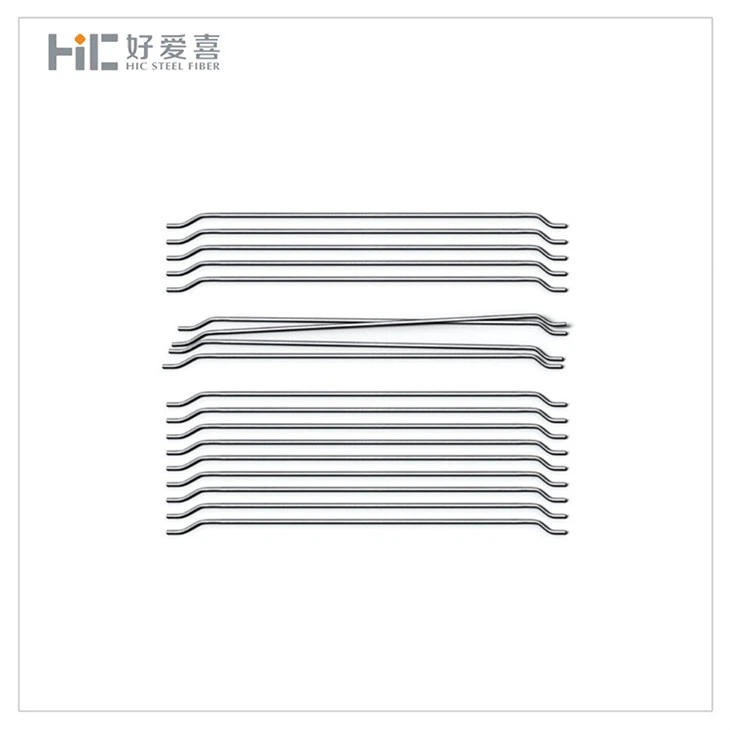
First off, let's talk about what low carbon steel fiber is. It's a type of reinforcement material made from steel with a relatively low carbon content. This material has been widely used in the concrete industry because of its ability to enhance the mechanical properties of concrete, such as its tensile strength, flexural strength, and toughness. But what about its impact on heat insulation?

Understanding the Basics of Concrete Heat Insulation
Before we can discuss how low carbon steel fiber affects the heat insulation performance of concrete, we need to understand how concrete insulates heat in the first place. Concrete is a porous material, and its heat insulation properties are mainly determined by its density, porosity, and the thermal conductivity of its components.
The lower the density and the higher the porosity of concrete, the better its heat insulation performance. This is because air is a poor conductor of heat, and the air pockets within the porous concrete act as insulators, reducing the transfer of heat through the material.
The Role of Low Carbon Steel Fiber in Concrete
When low carbon steel fiber is added to concrete, it primarily serves as a reinforcement. The fibers are randomly distributed throughout the concrete matrix, and they help to bridge cracks and prevent them from propagating. This results in improved mechanical properties, such as increased tensile and flexural strength.
But how does this reinforcement affect the heat insulation performance of concrete? Well, it's a bit of a complex relationship. On one hand, the addition of steel fibers can increase the density of the concrete, which might seem like it would reduce its heat insulation properties. Steel is a good conductor of heat, so more steel in the concrete could potentially lead to more heat transfer.
On the other hand, the presence of steel fibers can also change the pore structure of the concrete. The fibers can act as a kind of scaffold, influencing the way air pockets form within the concrete. In some cases, this can lead to a more uniform distribution of pores, which could actually improve the heat insulation performance.
Research Findings on Heat Insulation
Several studies have been conducted to investigate the effect of low carbon steel fiber on the heat insulation performance of concrete. Some research has shown that in small amounts, the addition of steel fibers can have a negligible effect on the thermal conductivity of concrete. This means that the heat insulation performance remains relatively unchanged while the mechanical properties are significantly improved.
However, when larger amounts of steel fibers are added, the thermal conductivity of the concrete can increase slightly. This is because the increased amount of steel provides more pathways for heat to transfer through the material. But even in these cases, the overall impact on heat insulation might not be as significant as you'd expect, especially when considering the other benefits of using steel fibers.
For example, a study published in a leading construction materials journal found that when up to 1% by volume of low carbon steel fiber was added to concrete, the thermal conductivity increased by only about 5%. Meanwhile, the flexural strength of the concrete increased by over 30%. This shows that there's a trade - off between improving mechanical properties and maintaining heat insulation performance, but it's often a worthwhile trade - off in many construction applications.
Applications and Considerations
In commercial and industrial floors, the use of low carbon steel fiber can be a great choice. Steel Fiber for Commercial and Industrial Floor provides enhanced durability and crack resistance, which are crucial in high - traffic areas. While the heat insulation might be a secondary concern in these applications, it's still important to understand how the addition of steel fibers affects it.
Hooked End Steel Fibers are a popular type of low carbon steel fiber. The hooked ends provide better anchorage within the concrete matrix, which further improves the mechanical properties. And when it comes to high - performance applications, High Density Hooked End Steel Fiber can be used. Although the higher density might have a slightly greater impact on heat insulation, the benefits in terms of strength and toughness often outweigh this drawback.
Conclusion and Call to Action
So, in conclusion, the effect of low carbon steel fiber on the heat insulation performance of concrete is a complex issue. While adding steel fibers can increase the thermal conductivity of concrete to some extent, especially in larger amounts, the improvement in mechanical properties is often well worth it.
If you're involved in a construction project and are considering using low carbon steel fiber in your concrete, I'd love to have a chat with you. We can discuss your specific requirements, the best type of steel fiber for your application, and how to balance the need for heat insulation with other performance factors. Don't hesitate to reach out and start a conversation about your potential purchase.
References
- [Author's last name, First initial. (Year). Title of the article. Journal name, Volume(Issue), Page numbers.]
- [Author's last name, First initial. (Year). Title of the book. Publisher.]