


Concrete is one of the most widely used construction materials globally, valued for its strength, durability, and versatility. However, its performance under fire conditions has always been a significant concern in the construction industry. In recent years, the addition of steel fibers to concrete has emerged as a promising solution to enhance its fire resistance. As a supplier of Concrete Steel Fiber, I am excited to explore the effects of these fibers on the fire resistance of concrete in this blog.
Understanding the Basics of Concrete and Fire Resistance
Before delving into the role of steel fibers, it's essential to understand why concrete's fire resistance is crucial. When exposed to high temperatures, concrete undergoes several physical and chemical changes. The water within the concrete evaporates, creating steam pressure. If this pressure cannot escape, it can lead to spalling, where large chunks of concrete break off. Spalling not only compromises the structural integrity of the concrete but also exposes the reinforcement bars to high temperatures, which can cause them to lose their strength.
How Steel Fibers Improve Fire Resistance
1. Reducing Spalling
One of the primary ways steel fibers enhance the fire resistance of concrete is by reducing spalling. The fibers act as a reinforcement network within the concrete, providing additional tensile strength. When the concrete is heated, the fibers help to distribute the internal stresses caused by steam pressure, preventing the formation of large cracks and the subsequent spalling. For example, in a fire test, concrete specimens with steel fibers showed significantly less spalling compared to plain concrete specimens.
2. Maintaining Structural Integrity
Steel fibers also help to maintain the structural integrity of concrete during a fire. By bridging cracks and preventing their propagation, the fibers ensure that the concrete can continue to bear loads even under high temperatures. This is particularly important in structural elements such as columns and beams, where any loss of strength can lead to catastrophic failure.

3. Improving Thermal Conductivity
Steel has a relatively high thermal conductivity compared to concrete. When steel fibers are added to concrete, they can help to conduct heat away from the surface, reducing the temperature gradient within the concrete. This can prevent the formation of large temperature differences that can cause thermal stress and spalling.
Types of Steel Fibers and Their Impact on Fire Resistance
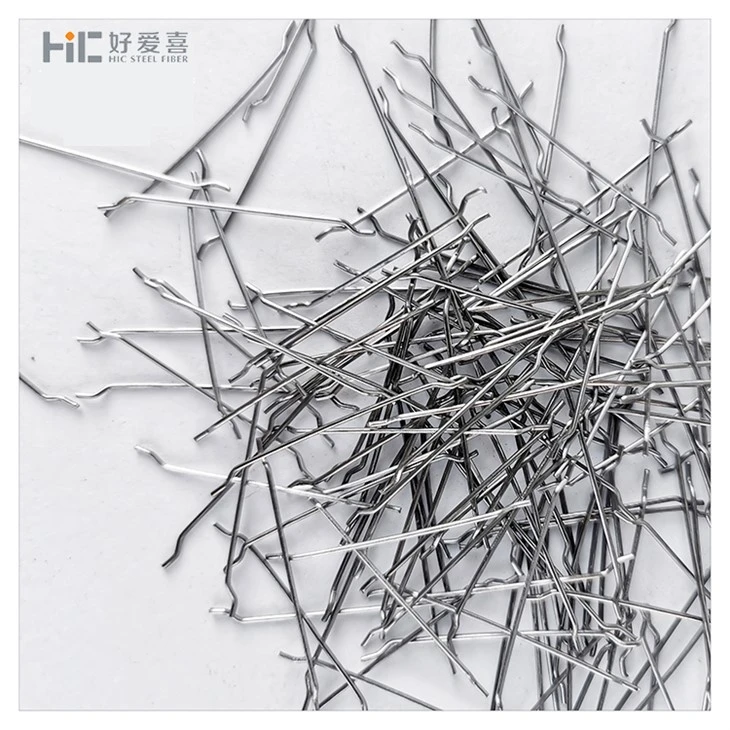
There are several types of steel fibers available in the market, each with its own unique properties and benefits. One of the most commonly used types is the Hooked End Steel Fibers. These fibers have hooks at the ends, which provide better anchorage within the concrete matrix. The hooks help to transfer the load from the concrete to the fibers more effectively, enhancing the overall strength and fire resistance of the concrete.
Another type is the Hooked End Steel Fiber. Similar to the hooked end steel fibers, these fibers also have hooks at the ends, but they may have different dimensions and properties. They are often used in applications where high strength and fire resistance are required.
The Loose Hooked End Steel Fiber is also a popular choice. These fibers are loose and can be easily mixed with the concrete during the mixing process. They provide good dispersion within the concrete, ensuring that the benefits of the fibers are evenly distributed throughout the structure.
Factors Affecting the Performance of Steel Fibers in Fire Resistance
1. Fiber Content
The amount of steel fibers added to the concrete can significantly affect its fire resistance. Generally, a higher fiber content leads to better fire resistance. However, there is a limit to the amount of fibers that can be added, as excessive fiber content can lead to workability issues and may not necessarily result in further improvements in fire resistance.
2. Fiber Length and Diameter
The length and diameter of the steel fibers also play a crucial role in their performance. Longer fibers provide better bridging and reinforcement, while thinner fibers can provide a more uniform distribution within the concrete. The optimal fiber length and diameter depend on the specific application and the requirements of the project.
3. Concrete Mix Design
The mix design of the concrete, including the water-cement ratio, aggregate type, and admixtures, can also affect the performance of steel fibers in fire resistance. A well-designed concrete mix with the right proportion of ingredients can enhance the bond between the fibers and the concrete, improving the overall fire resistance of the structure.
Case Studies and Real-World Applications
Numerous case studies have demonstrated the effectiveness of steel fibers in improving the fire resistance of concrete. For example, in a high-rise building project, the use of steel fibers in the concrete columns and beams significantly reduced the risk of spalling during a fire. The building was able to withstand the fire for a longer period, allowing more time for evacuation and minimizing the damage to the structure.
In another project, a parking garage was constructed using concrete with steel fibers. The fibers helped to prevent spalling and maintained the structural integrity of the garage during a fire, ensuring the safety of the vehicles and the people inside.
Conclusion and Call to Action
In conclusion, the addition of steel fibers to concrete can significantly enhance its fire resistance. By reducing spalling, maintaining structural integrity, and improving thermal conductivity, steel fibers provide a cost-effective and reliable solution for enhancing the safety of concrete structures.
As a supplier of Concrete Steel Fiber, we are committed to providing high-quality products that meet the specific needs of our customers. Our Hooked End Steel Fibers, Hooked End Steel Fiber, and Loose Hooked End Steel Fiber are carefully manufactured to ensure optimal performance in fire resistance.
If you are interested in learning more about our products or would like to discuss your specific requirements, please feel free to contact us. We look forward to working with you to enhance the fire resistance of your concrete structures.
References
- ACI Committee 216.1. Guide for Determining Fire Resistance of Concrete and Masonry Construction Assemblies. American Concrete Institute, 2016.
- Bentur, A., & Mindess, S. (2007). Fibre Reinforced Cementitious Composites. CRC Press.
- Khoury, G. A. (2000). Fire performance of concrete structures: A state-of-the-art review. Construction and Building Materials, 14(3), 121-135.