

The integration of 3D steel fiber into concrete has emerged as a significant advancement in the construction industry, revolutionizing the way we perceive the stress - strain behavior of concrete. As a dedicated supplier of Concrete 3D Steel Fiber, I have witnessed firsthand the transformative impact of this material on concrete performance. In this blog, we will delve into the effects of 3D steel fiber on the stress - strain behavior of concrete, exploring its mechanisms, benefits, and practical applications.
Mechanisms of 3D Steel Fiber in Concrete
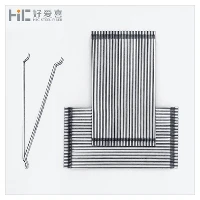
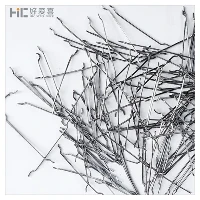
To understand the effect of 3D steel fiber on the stress - strain behavior of concrete, we must first look at how it interacts with the concrete matrix. When 3D steel fibers are added to concrete, they act as a reinforcement network throughout the material. Unlike traditional smooth steel fibers, 3D steel fibers have a unique shape with multiple bends, hooks, or twists. This irregular shape allows the fibers to bond more effectively with the concrete, providing better anchorage and resistance to pull - out.

During the initial loading of concrete, the matrix bears most of the stress. However, as the load increases and micro - cracks start to form, the 3D steel fibers come into play. They bridge these micro - cracks, preventing them from propagating and coalescing into larger cracks. This crack - bridging mechanism is crucial in enhancing the ductility and toughness of concrete.
In the stress - strain curve of concrete, the addition of 3D steel fiber has a profound impact. In the elastic stage, the presence of fibers may slightly increase the stiffness of the concrete due to their high modulus of elasticity. As the concrete approaches its peak stress, the fibers help to redistribute the stress, allowing the concrete to sustain higher loads before failure. After the peak stress, the fibers continue to hold the cracked concrete together, resulting in a more gradual decrease in stress and a significant increase in the post - peak deformation capacity.
Benefits of 3D Steel Fiber on Stress - Strain Behavior
Improved Tensile Strength
Concrete is inherently weak in tension. The addition of 3D steel fiber can significantly improve the tensile strength of concrete. The fibers effectively resist the tensile forces by transferring the load from the cracked matrix to the fibers themselves. This is particularly important in applications where concrete is subjected to bending, such as in slabs, beams, and pavements. For example, in a concrete slab, the 3D steel fibers can prevent the formation of cracks due to shrinkage and temperature changes, increasing the service life of the structure.
Enhanced Ductility
Ductility is the ability of a material to deform plastically before failure. Concrete without fibers is brittle and fails suddenly once the ultimate stress is reached. However, 3D steel fiber - reinforced concrete exhibits a more ductile behavior. The fibers allow the concrete to undergo large deformations without complete collapse, providing a warning sign before failure. This is crucial in seismic - prone areas, where structures need to withstand large displacements during an earthquake.
Increased Energy Absorption
The energy absorption capacity of concrete is greatly enhanced by the addition of 3D steel fibers. When the concrete is subjected to dynamic loads, such as impact or blast, the fibers absorb and dissipate the energy through mechanisms such as fiber pull - out, fiber rupture, and crack propagation. This results in a more resilient concrete structure that can better withstand extreme loading conditions.

Practical Applications
The unique stress - strain behavior of 3D steel fiber - reinforced concrete makes it suitable for a wide range of applications.
Industrial Floors
Industrial floors are subjected to heavy traffic, impact loads, and abrasion. The addition of 3D steel fibers to the concrete can improve its resistance to cracking and wear, reducing maintenance costs and extending the service life of the floor. The enhanced ductility also allows the floor to better withstand the dynamic loads from forklifts and other heavy equipment.
Tunnel Linings
In tunnel construction, the concrete lining is exposed to high pressure and potential seismic activity. 3D steel fiber - reinforced concrete can provide better resistance to cracking and spalling, ensuring the structural integrity of the tunnel. The improved energy absorption capacity also makes the tunnel more resilient to seismic events.
Bridge Decks
Bridge decks are constantly exposed to traffic loads, environmental factors, and temperature changes. The use of 3D steel fiber - reinforced concrete can enhance the durability and performance of bridge decks. The fibers can prevent the formation of cracks due to fatigue and thermal stresses, reducing the need for frequent repairs and replacements.

Different Types of 3D Steel Fibers
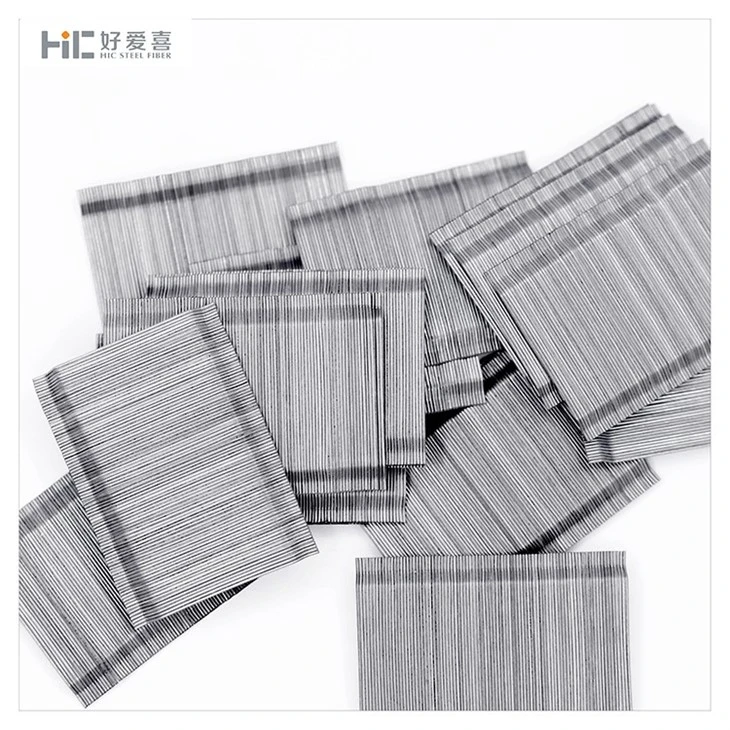
As a supplier, we offer a variety of 3D steel fibers to meet different project requirements. One of our popular products is the Glued Type Steel Fiber. The glued type steel fibers are pre - bundled, which makes them easier to disperse evenly in the concrete. This ensures a more uniform reinforcement throughout the concrete matrix, maximizing the benefits of the fibers on the stress - strain behavior.
Another option is the Simple Construction Glued Steel Fiber. This type of fiber is designed for easy construction, reducing the labor and time required for mixing and placing the concrete. The simple construction process also helps to ensure that the fibers are properly incorporated into the concrete, enhancing its performance.
We also provide SFRC Steel Fiber. SFRC (Steel Fiber Reinforced Concrete) steel fibers are specifically engineered to optimize the stress - strain behavior of concrete. They are made from high - quality steel and have a precise shape and size, providing excellent reinforcement and crack - control properties.
Conclusion
In conclusion, the addition of 3D steel fiber has a significant effect on the stress - strain behavior of concrete. It improves the tensile strength, ductility, and energy absorption capacity of concrete, making it more suitable for a wide range of applications. As a supplier of Concrete 3D Steel Fiber, we are committed to providing high - quality products that meet the diverse needs of our customers. Whether you are working on an industrial floor, a tunnel lining, or a bridge deck, our 3D steel fibers can help you achieve a more durable and resilient concrete structure.
If you are interested in learning more about our Concrete 3D Steel Fiber products or have any questions regarding their application, please feel free to contact us. We are here to assist you in making the right choice for your project and look forward to the opportunity to discuss your procurement needs.
References
- Naaman, A. E., & Reinhardt, H. W. (2003). Steel fiber reinforced concrete: microstructure, properties, and applications. CRC Press.
- ACI Committee 544. (1996). State - of - the - art report on fiber - reinforced concrete. American Concrete Institute.
- Barr, B. I. G. (1999). Steel fiber reinforced concrete: design and application. Thomas Telford.