

The distribution pattern of end hook glued steel fiber in concrete is a crucial aspect that significantly influences the performance and properties of the composite material. As a supplier of end hook glued steel fiber, understanding this distribution pattern is essential for providing high - quality products and guiding customers to achieve optimal results in their concrete applications.
1. Introduction to End Hook Glued Steel Fiber
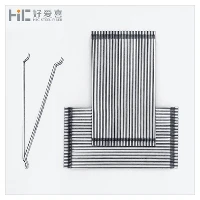
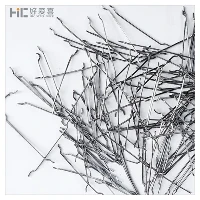
End hook glued steel fiber is a type of reinforcement material used in concrete to enhance its mechanical properties. The end hooks are designed to provide better anchorage within the concrete matrix, preventing the fibers from being pulled out easily. The gluing process is employed to bundle the fibers together, which facilitates easier handling and mixing during the concrete production process.
When the end hook glued steel fiber is added to concrete, it disperses throughout the matrix, and its distribution pattern has a direct impact on the overall performance of the concrete. A uniform distribution of fibers can improve the concrete's resistance to cracking, increase its toughness, and enhance its durability.
2. Factors Affecting the Distribution Pattern
2.1 Mixing Process
The mixing process is one of the most critical factors affecting the distribution of end hook glued steel fiber in concrete. Proper mixing ensures that the fibers are evenly dispersed throughout the concrete matrix. The mixing time, mixing speed, and the order of adding materials all play important roles.
If the mixing time is too short, the fibers may not be fully dispersed, leading to clumping and uneven distribution. On the other hand, over - mixing can cause the fibers to break, reducing their effectiveness. A recommended mixing time usually ranges from 3 to 5 minutes after all the materials, including the fibers, are added to the mixer.
The mixing speed also affects the distribution. A moderate speed is generally preferred. High - speed mixing can cause the fibers to entangle, while low - speed mixing may not be sufficient to disperse the fibers evenly.
The order of adding materials is another important consideration. It is often recommended to add the end hook glued steel fiber after the coarse and fine aggregates and water have been mixed for a short period. This allows the fibers to be better incorporated into the already - formed concrete mixture.
2.2 Fiber Properties
The properties of the end hook glued steel fiber itself, such as length, diameter, aspect ratio (the ratio of length to diameter), and the degree of gluing, also affect its distribution in concrete. Longer fibers tend to be more difficult to disperse than shorter ones. Fibers with a high aspect ratio are more likely to entangle during mixing.
The degree of gluing also matters. If the fibers are glued too tightly, they may not separate easily during mixing, resulting in uneven distribution. However, if the gluing is too weak, the fibers may separate prematurely, causing them to clump before being properly dispersed in the concrete.
2.3 Concrete Composition
The composition of the concrete, including the type and amount of cement, aggregates, and admixtures, can influence the distribution of end hook glued steel fiber. For example, a concrete with a high - viscosity mixture due to a large amount of fine particles may make it more difficult for the fibers to disperse evenly. Admixtures such as superplasticizers can improve the workability of the concrete, which in turn can help the fibers to be better distributed.
3. Distribution Patterns and Their Effects on Concrete Performance
3.1 Uniform Distribution
A uniform distribution of end hook glued steel fiber in concrete is the most desirable pattern. In this case, the fibers are evenly spread throughout the concrete matrix, providing consistent reinforcement. Uniformly distributed fibers can effectively resist cracking at different locations in the concrete.
When a crack initiates in the concrete, the fibers bridge the crack, transferring the stress across the crack and preventing it from propagating. This significantly improves the concrete's tensile strength and toughness. For example, in a concrete slab with uniformly distributed end hook glued steel fiber, the slab can better withstand the loads applied to it, reducing the risk of cracking and increasing its service life.
3.2 Clumped Distribution
Clumped distribution occurs when the fibers are not properly dispersed during the mixing process. Clumps of fibers can act as weak points in the concrete. These clumps may not provide effective reinforcement and can even cause stress concentrations, leading to premature cracking.
In addition, clumped fibers can also affect the workability of the concrete. The presence of large fiber clumps can make it difficult to place and finish the concrete, resulting in a poor - quality surface finish.
3.3 Segregated Distribution
Segregated distribution means that the fibers tend to accumulate in certain areas of the concrete, while other areas have very few or no fibers. This can happen due to improper mixing or differences in the density of the fibers and the concrete matrix.
Segregated distribution can lead to non - uniform mechanical properties of the concrete. Areas with a high concentration of fibers may have better crack - resistance and toughness, while areas with few fibers may be more prone to cracking and failure. This can be a significant problem in applications where uniform performance is required, such as in structural concrete elements.
4. Testing and Evaluation of Distribution Pattern
There are several methods to test and evaluate the distribution pattern of end hook glued steel fiber in concrete.


4.1 Visual Inspection
Visual inspection is the simplest method. After the concrete has hardened, a section of the concrete can be cut and examined visually. A well - distributed fiber system will show fibers evenly spread across the cross - section, while clumped or segregated fibers can be easily identified.
4.2 Image Analysis
Image analysis is a more advanced method. Digital images of the concrete cross - section are taken, and specialized software is used to analyze the distribution of fibers. This method can provide quantitative information about the fiber distribution, such as the fiber density in different areas of the concrete.
4.3 Electrical Resistance Method
The electrical resistance method is based on the fact that steel fibers are conductive. By measuring the electrical resistance of the concrete, the distribution of fibers can be inferred. A more uniform distribution of fibers will result in a more consistent electrical resistance across the concrete sample.
5. Our Role as a Supplier
As a supplier of end hook glued steel fiber, we are committed to providing high - quality products and technical support to ensure proper distribution of fibers in concrete.
We offer Reinforced Concrete Steel Fiber with consistent quality and well - controlled properties. Our fibers are manufactured with the right degree of gluing to ensure easy dispersion during mixing.
We also provide detailed technical guidelines on the mixing process, including the recommended mixing time, speed, and order of adding materials. Our experts are available to assist customers in optimizing the use of our end hook glued steel fiber in their concrete applications.
In addition, we offer SFRC Steel Fiber and Reinforced Concrete Steel Fiber that are suitable for a wide range of concrete applications, from industrial floors to structural elements.
6. Conclusion and Call to Action
The distribution pattern of end hook glued steel fiber in concrete is a complex but crucial factor that affects the performance of concrete. A uniform distribution is essential for achieving the best results in terms of crack - resistance, toughness, and durability.
As a reliable supplier of end hook glued steel fiber, we have the expertise and high - quality products to help you achieve optimal fiber distribution in your concrete projects. Whether you are working on a small - scale construction project or a large - scale infrastructure development, our end hook glued steel fiber can provide the reinforcement you need.
If you are interested in our products or have any questions about the distribution of end hook glued steel fiber in concrete, please feel free to contact us for more information and to discuss your specific requirements. We look forward to working with you to create high - performance concrete solutions.
References
- ACI Committee 544. “Fiber - Reinforced Concrete,” ACI Manual of Concrete Practice, American Concrete Institute, Farmington Hills, MI, USA, 2014.
- Naaman, A. E., & Reinhardt, H. W. (Eds.). “Fiber - Reinforced Concrete: Design and Applications,” Taylor & Francis, London, UK, 2003.
- Swamy, R. N. “Steel Fiber Reinforced Concrete: The State of the Art,” Elsevier Applied Science, London, UK, 1987.