


What is the density of hooked end steel fibers?
As a supplier of Hooked End Steel Fibers, I often get asked about the density of these remarkable construction materials. Understanding the density of hooked end steel fibers is crucial for various applications in the construction industry, as it directly impacts the performance and quality of the concrete or other composite materials they are incorporated into.
Understanding Hooked End Steel Fibers
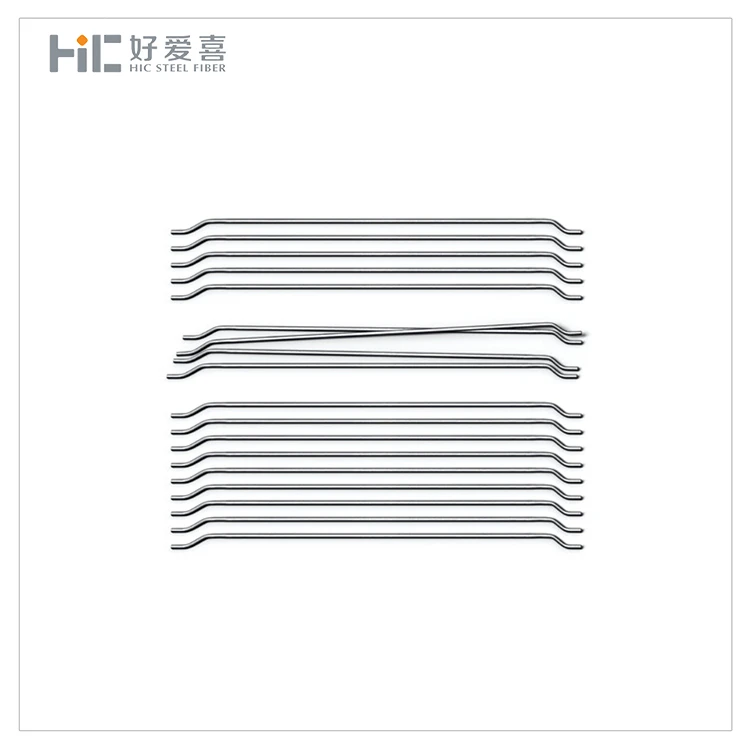
Hooked end steel fibers are a type of reinforcement material used to enhance the mechanical properties of concrete. They are typically made from high - strength steel wires that are cut into short lengths and have hooked ends. These hooks are designed to provide better anchorage within the concrete matrix, preventing the fibers from being pulled out easily and thus improving the overall toughness, ductility, and crack resistance of the concrete.
There are different types of hooked end steel fibers available in the market, such as High Strength Hooked End Steel Fiber and Cold Drawn Steel Wire Fibre. Each type may have slightly different properties depending on the manufacturing process and the specific requirements of the application.
Density of Hooked End Steel Fibers
The density of hooked end steel fibers is primarily determined by the density of the steel from which they are made. Steel is an alloy mainly composed of iron with varying amounts of carbon and other elements. The density of pure iron is approximately 7.87 g/cm³. However, the density of commercial steels used for making hooked end steel fibers can vary slightly due to the presence of alloying elements and the manufacturing process.
In general, the density of hooked end steel fibers typically ranges from 7.8 to 7.9 g/cm³. This value is relatively consistent across different types of hooked end steel fibers because the basic composition of the steel remains similar. The small variations in density can be attributed to factors such as the carbon content, the presence of other alloying elements like manganese, silicon, or chromium, and the level of impurities in the steel.
For example, high - strength steel fibers may have a slightly different density compared to standard steel fibers. High - strength steels often contain additional alloying elements to enhance their strength properties, which can cause a minor change in density. But these differences are usually very small and do not significantly affect the overall performance of the fibers in concrete applications.
Importance of Density in Construction Applications
The density of hooked end steel fibers plays a vital role in construction applications. When designing a concrete mix with steel fibers, the density is used to calculate the correct amount of fibers to be added. The volume fraction of fibers in the concrete is an important parameter that affects the mechanical properties of the composite material.
By knowing the density of the fibers, engineers can accurately determine the mass of fibers required to achieve the desired volume fraction in the concrete. For instance, if a specific volume fraction of 1% steel fibers is required in a concrete mix, the density of the fibers is used to convert this volume fraction into a mass - based quantity. This ensures that the concrete has the right amount of reinforcement to meet the design requirements, such as improved flexural strength, impact resistance, and crack control.
Moreover, the density also affects the workability of the concrete. A higher density of fibers may make the concrete more difficult to mix and place, especially if the fiber content is relatively high. Therefore, it is essential to balance the amount of fibers added based on their density to maintain the workability of the concrete while still achieving the desired performance improvements.

Quality Control and Density
As a supplier of Hooked End Steel Fibers, we pay close attention to the density of our products. Quality control measures are in place to ensure that the density of our hooked end steel fibers falls within the specified range. This is done through regular testing using precise measurement techniques.
We use methods such as the Archimedes' principle to measure the density of our steel fibers. In this method, the mass and volume of a sample of fibers are accurately determined. The mass is measured using a high - precision balance, and the volume is determined by measuring the displacement of a liquid (usually water) when the fibers are submerged. By dividing the mass by the volume, we can obtain the density of the fibers.
Consistent density is an indicator of the quality and uniformity of our hooked end steel fibers. It ensures that our customers receive a product that performs as expected in their construction projects. Any significant deviation from the standard density range could indicate a problem with the manufacturing process or the quality of the raw materials, and we take immediate steps to address such issues.
Factors Affecting Density
There are several factors that can potentially affect the density of hooked end steel fibers. One of the main factors is the manufacturing process. If the steel wires are not drawn or cut properly, it can lead to variations in the fiber dimensions and, consequently, a change in density. For example, if the wires have inconsistent diameters or lengths, the overall density of the fiber batch may be affected.
The heat treatment process also plays a role. Heat treatment is often used to improve the strength and other properties of the steel fibers. However, improper heat treatment can cause changes in the microstructure of the steel, which may result in a change in density. Additionally, the presence of surface coatings on the fibers can also affect the density. Some fibers are coated with materials to improve their corrosion resistance or adhesion to the concrete, and these coatings can add a small amount of mass and change the overall density.
Conclusion
In conclusion, the density of hooked end steel fibers is an important characteristic that has significant implications for construction applications. Typically ranging from 7.8 to 7.9 g/cm³, the density is determined by the composition of the steel and can be affected by various factors such as manufacturing processes and the presence of alloying elements.
As a reliable supplier of hooked end steel fibers, we are committed to providing high - quality products with consistent density. Our quality control measures ensure that our customers receive fibers that meet the highest standards and perform effectively in their construction projects.
If you are interested in purchasing hooked end steel fibers for your construction needs, we invite you to contact us for a detailed discussion. We can provide you with the necessary technical information and guidance to help you select the right type and quantity of fibers for your specific application. Let's work together to enhance the performance and durability of your construction projects with our top - quality hooked end steel fibers.
References
- Neville, A. M. (1995). Properties of Concrete. Pearson Education.
- ACI Committee 544. (2001). State - of - the - Art Report on Fiber - Reinforced Concrete. American Concrete Institute.