

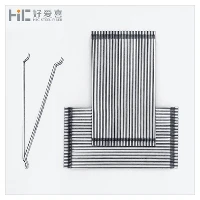

In the construction and materials industry, the choice of fiber reinforcement can significantly impact the performance and cost of a project. Among various fiber options, Copper Micro Steel Fiber has emerged as a popular choice for many applications. As a supplier of Copper Micro Steel Fiber, I will delve into the cost comparison of this fiber with other types of fibers in this blog post.
Understanding Copper Micro Steel Fiber
Copper Micro Steel Fiber [1][2][3] is a type of fiber reinforcement that consists of small, steel fibers with a copper coating. This unique combination offers several advantages, including enhanced corrosion resistance, improved bonding with concrete, and high tensile strength. These properties make it an ideal choice for applications where durability and strength are crucial, such as in industrial flooring, tunnel linings, and precast concrete elements.
Cost Factors of Copper Micro Steel Fiber
The cost of Copper Micro Steel Fiber is influenced by several factors, including the raw material prices of steel and copper, production processes, and market demand. The copper coating on the steel fibers adds to the production cost compared to uncoated steel fibers. Additionally, the manufacturing process of producing micro - sized steel fibers requires precision machinery and quality control, which can also contribute to the overall cost.
However, it's important to note that the cost should not be the sole determining factor when choosing a fiber reinforcement. The performance and long - term benefits of Copper Micro Steel Fiber need to be taken into account.
Cost Comparison with Other Fibers
Steel Fibers (Uncoated)
Uncoated steel fibers are generally less expensive than Copper Micro Steel Fiber. The absence of the copper coating reduces the raw material cost and simplifies the production process. However, uncoated steel fibers are more prone to corrosion, especially in aggressive environments. In the long run, the maintenance cost associated with preventing corrosion in structures reinforced with uncoated steel fibers can be significant. For example, in a marine environment, uncoated steel fibers may start to rust, which can lead to cracking and spalling of the concrete, requiring costly repairs. In contrast, the copper coating on Copper Micro Steel Fiber provides a protective layer that significantly reduces the risk of corrosion, potentially saving on long - term maintenance costs.
Synthetic Fibers
Synthetic fibers, such as polypropylene and nylon fibers, are often used for their lightweight and chemical resistance properties. They are typically cheaper than Copper Micro Steel Fiber on a per - unit weight basis. However, synthetic fibers have lower tensile strength compared to steel fibers. In applications where high strength and crack resistance are required, such as in high - rise buildings or heavy - duty industrial floors, a larger quantity of synthetic fibers may be needed to achieve the same level of performance as Copper Micro Steel Fiber. This can result in a higher overall cost when considering the total amount of fiber required for a project.


Glass Fibers
Glass fibers are known for their high modulus of elasticity and good chemical resistance. The cost of glass fibers can vary depending on their quality and production method. In general, they are more expensive than synthetic fibers but can be comparable to or slightly less expensive than Copper Micro Steel Fiber. However, glass fibers are brittle and can be easily damaged during the mixing process with concrete. Their performance may also degrade over time due to alkali - silica reactions in concrete. Copper Micro Steel Fiber, on the other hand, has better flexibility and durability, which can lead to a more reliable long - term performance and potentially lower total cost.
Long - Term Cost - Benefit Analysis
When evaluating the cost of Copper Micro Steel Fiber versus other fibers, a long - term cost - benefit analysis is essential. While the initial cost of Copper Micro Steel Fiber may be higher than some other fiber options, its improved durability and performance can lead to significant savings over the life cycle of a project.
In structures where corrosion is a major concern, the use of Copper Micro Steel Fiber can extend the service life of the structure by reducing the risk of corrosion - induced damage. This means fewer repairs and replacements, which can result in substantial cost savings in the long run.
In addition, the high tensile strength and crack resistance of Copper Micro Steel Fiber can enhance the structural integrity of a building or infrastructure. This can lead to reduced insurance premiums and lower liability risks, further adding to the cost - effectiveness of using Copper Micro Steel Fiber.
Conclusion and Call to Action
As a supplier of Copper Micro Steel Fiber [1][2][3], I understand that cost is an important consideration for any project. However, it's crucial to look beyond the initial price and consider the long - term benefits and performance of the fiber reinforcement. Copper Micro Steel Fiber offers a unique combination of high strength, corrosion resistance, and durability that can provide significant value over the life cycle of a project.
If you are currently evaluating fiber reinforcement options for your construction project, I encourage you to consider Copper Micro Steel Fiber. Our team of experts is ready to provide you with detailed information about the product, its applications, and cost - effectiveness. We can also offer customized solutions to meet your specific project requirements. Contact us today to start a discussion about your needs and how Copper Micro Steel Fiber can benefit your project.
References
- Copper Micro Steel Fiber. /copper - plated - steel - fiber/copper - micro - steel - fiber - factory.html
- Copper Coated Type Steel Fiber. /copper - plated - steel - fiber/copper - coated - type - steel - fiber.html
- Copper Micro Steel Fiber. /copper - plated - steel - fiber/copper - micro - steel - fiber.html