



The bonding strength of glue in End Hook Glued Steel Fiber is a crucial factor that significantly influences the performance and application of this construction material. As a reliable supplier of End Hook Glued Steel Fiber, I have witnessed firsthand the importance of understanding and optimizing this bonding strength. In this blog, we will delve into the concept of bonding strength, its significance, and the factors that affect it.
Understanding Bonding Strength in End Hook Glued Steel Fiber
End Hook Glued Steel Fiber is a type of steel fiber that is pre - bundled with a special glue. The glue serves multiple purposes. Firstly, it holds the individual steel fibers together in a bundle during transportation and handling. This bundling makes it easier to measure and mix the fibers evenly into concrete or other construction materials. Secondly, once the fibers are mixed into the concrete, the glue should dissolve or break down under the action of mechanical forces and the alkaline environment of the concrete, allowing the individual fibers to disperse uniformly.
The bonding strength of the glue refers to the force required to separate the individual steel fibers from the bundle. It is a measure of how well the glue adheres to the steel fibers and holds them together. If the bonding strength is too low, the bundles may break apart prematurely during handling, leading to uneven distribution of fibers in the concrete. On the other hand, if the bonding strength is too high, the glue may not break down properly during mixing, resulting in clumps of fibers that do not disperse effectively in the concrete.
Significance of Bonding Strength
The bonding strength of the glue in End Hook Glued Steel Fiber has a direct impact on the performance of the final concrete product. When the fibers are evenly distributed in the concrete, they can effectively enhance the mechanical properties of the concrete, such as its tensile strength, flexural strength, and toughness. For example, in a SFRC Steel Fiber - reinforced concrete structure, the evenly dispersed fibers can bridge cracks and prevent them from propagating, thereby improving the durability and service life of the structure.
In addition, proper bonding strength ensures that the fibers can be easily added to the concrete mixture. This simplifies the construction process and reduces the labor and time required for fiber dispersion. For large - scale construction projects, such as those using Concrete Floor Steel Fiber, efficient fiber dispersion is essential to meet the project's schedule and quality requirements.
Factors Affecting Bonding Strength
1. Type of Glue
Different types of glues have different bonding properties. Some glues are designed to have a relatively weak bond that can be easily broken down during mixing, while others are formulated for stronger adhesion. The choice of glue depends on the specific application requirements of the End Hook Glued Steel Fiber. For example, in applications where gentle mixing is used, a glue with a slightly higher bonding strength may be acceptable.
2. Surface Treatment of Steel Fibers
The surface condition of the steel fibers can also affect the bonding strength of the glue. If the steel fibers have a clean and smooth surface, the glue can adhere to them more effectively. However, if the surface is contaminated with oil, rust, or other substances, the bonding strength may be reduced. Surface treatment processes, such as degreasing and rust removal, can improve the bonding between the glue and the steel fibers.
3. Mixing Conditions
The way the End Hook Glued Steel Fiber is mixed into the concrete can influence the breakdown of the glue. High - speed mixing can generate more mechanical forces, which are beneficial for breaking down the glue and dispersing the fibers. However, if the mixing speed is too high, it may also cause damage to the steel fibers. Therefore, finding the right balance in mixing speed and time is crucial for achieving optimal fiber dispersion.
4. Concrete Environment
The alkaline environment of concrete can also affect the bonding strength of the glue. Over time, the alkaline substances in the concrete can react with the glue, causing it to dissolve or weaken. This natural process helps in the dispersion of the fibers. However, the rate of this reaction can be influenced by factors such as the water - cement ratio, temperature, and the presence of other additives in the concrete.
Testing Bonding Strength
To ensure the quality of End Hook Glued Steel Fiber, it is important to test the bonding strength of the glue. There are several methods available for testing bonding strength. One common method is the pull - out test, where a bundle of fibers is fixed at one end, and a pulling force is applied at the other end until the fibers start to separate. The maximum pulling force required is recorded as the bonding strength.
Another method is the observation of fiber dispersion in the concrete. After mixing the fibers into the concrete, samples can be taken and examined under a microscope or by other imaging techniques to assess the degree of fiber dispersion. If the fibers are well - dispersed, it indicates that the bonding strength of the glue is appropriate.
Applications and the Role of Bonding Strength
In various construction applications, the bonding strength of the glue in End Hook Glued Steel Fiber plays a vital role.
Industrial Floors
In industrial floors, Concrete Floor Steel Fiber is widely used to enhance the floor's resistance to cracking and abrasion. A proper bonding strength ensures that the fibers are evenly distributed in the concrete, providing uniform reinforcement throughout the floor. This helps to prevent the formation of large cracks, which can lead to costly repairs and downtime in industrial facilities.
Tunnel Linings
Tunnel linings are subjected to high pressures and dynamic loads. End Hook Glued Steel Fiber can improve the toughness and durability of tunnel linings. The correct bonding strength of the glue allows the fibers to disperse effectively in the concrete, enabling them to resist the propagation of cracks caused by external forces. This is essential for the long - term safety and stability of the tunnel.
Precast Concrete Elements
Precast concrete elements, such as beams, columns, and panels, often use SFRC Steel Fiber to enhance their mechanical properties. The bonding strength of the glue in the steel fiber ensures that the fibers are evenly distributed during the precasting process. This results in precast elements with consistent quality and performance, which is crucial for the overall structural integrity of the building.
Our Product and Quality Assurance
As a supplier of End Hook Glued Steel Fiber, we pay great attention to the bonding strength of the glue in our products. We use high - quality glues that are specifically formulated to meet the requirements of different construction applications. Our manufacturing process includes strict quality control measures to ensure that the bonding strength of the glue is within the optimal range.

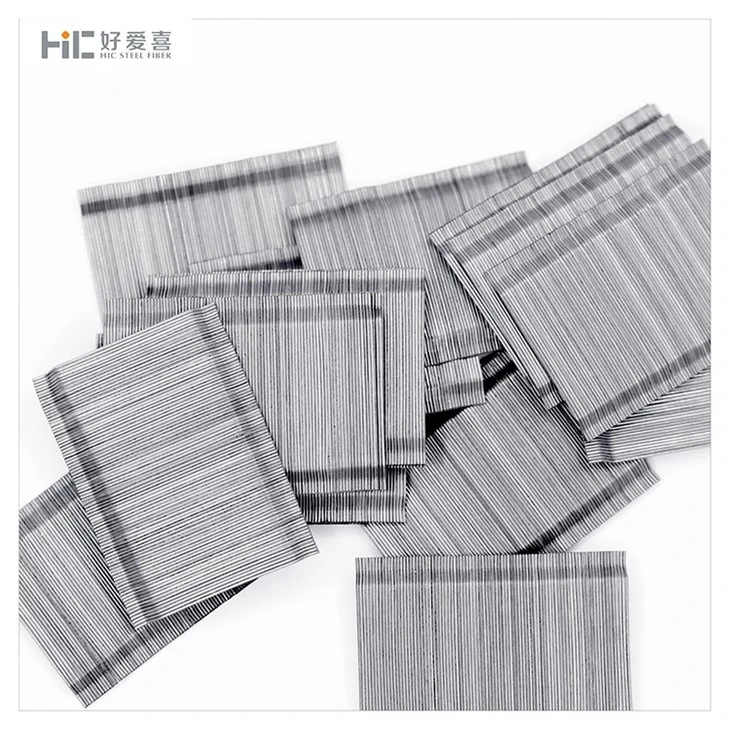
We also offer Anti Glued Type Steel Fiber for customers who have special requirements. This type of steel fiber does not rely on glue for bundling, providing an alternative solution for certain construction scenarios.
Contact Us for Procurement
If you are interested in our End Hook Glued Steel Fiber products and want to learn more about the bonding strength of the glue or other product details, please feel free to contact us. We have a professional team ready to provide you with comprehensive technical support and customized solutions. Whether you are working on a small - scale construction project or a large - scale infrastructure development, we can offer the right products to meet your needs. Let's work together to achieve high - quality construction results.
References
- ACI Committee 544. “State - of - the - Art Report on Fiber - Reinforced Concrete.” American Concrete Institute, 1996.
- Malvar, L. J., & Ross, C. A. “Fiber - Reinforced Concrete: An Overview After 30 Years of Development.” Journal of Materials in Civil Engineering, 1999.
- Naaman, A. E., & Reinhardt, H. W. “Fiber - Reinforced Concrete: Design and Applications.” Taylor & Francis, 2003.