


As a supplier of Low Carbon Glued Steel Fibre, ensuring the quality of our products is of utmost importance. Low Carbon Glued Steel Fibre is widely used in various construction projects due to its excellent performance in enhancing the mechanical properties of concrete. In this blog, I will discuss the quality control measures we implement during the production of Low Carbon Glued Steel Fibre.
Raw Material Selection
The quality of Low Carbon Glued Steel Fibre starts with the selection of raw materials. We source high - quality low - carbon steel wires as the base material. These wires are carefully inspected for their chemical composition, mechanical properties, and surface quality.
The chemical composition of the low - carbon steel is crucial. It should have a proper carbon content, usually in the range of 0.05% - 0.3%, which allows for good ductility and weldability. Other elements such as manganese, silicon, and sulfur are also strictly controlled within specific limits. For example, sulfur content should be kept as low as possible because high sulfur can cause brittleness in the steel.
Mechanical properties of the raw steel wires, such as tensile strength and elongation, are tested. The tensile strength should meet the industry standards to ensure that the steel fibres can withstand the stresses in concrete. Elongation is also important as it indicates the ductility of the steel, which is beneficial for crack resistance in concrete.
Surface quality of the raw wires is inspected for any defects like rust, scratches, or unevenness. Rust can affect the bonding between the steel fibre and the concrete matrix, and scratches may lead to stress concentration points in the fibre, reducing its performance.
Manufacturing Process Control
Drawing and Cutting
The first step in the production of Low Carbon Glued Steel Fibre is drawing the raw steel wires to the desired diameter. During the drawing process, we control the reduction ratio carefully. A proper reduction ratio ensures that the steel fibres have a uniform cross - section and good mechanical properties.
After drawing, the wires are cut into the required lengths. The cutting process is precisely controlled to ensure that the length of each fibre is within the specified tolerance. Variations in fibre length can affect the dispersion and reinforcement efficiency of the fibres in concrete.
Gluing Process
The gluing process is a key step in producing Low Carbon Glued Steel Fibre. We use high - quality adhesives that are specifically designed for bonding steel fibres. The adhesive should have good adhesion strength to keep the fibres together in bundles during transportation and handling, and it should dissolve easily in the concrete mixing process to ensure proper dispersion of the fibres.
The amount of adhesive applied is strictly controlled. Too much adhesive can lead to excessive agglomeration of the fibres, while too little adhesive may not hold the fibres together effectively. We also control the temperature and humidity during the gluing process, as these environmental factors can affect the curing and performance of the adhesive.
Quality Inspection during Production
Throughout the manufacturing process, we conduct regular in - process quality inspections. This includes visual inspections to check for any obvious defects such as broken fibres, uneven gluing, or improper cutting.
We also use non - destructive testing methods, such as ultrasonic testing, to detect any internal defects in the steel fibres. Ultrasonic waves can penetrate the fibres and detect flaws like cracks or inclusions that may not be visible to the naked eye.
Product Testing
Physical and Mechanical Property Testing
Once the Low Carbon Glued Steel Fibre is produced, it undergoes a series of physical and mechanical property tests. Tensile strength testing is carried out to measure the maximum stress the fibre can withstand before breaking. This is an important indicator of the fibre's ability to reinforce concrete.
Elongation at break is also measured. A higher elongation at break indicates better ductility of the fibre, which is beneficial for crack control in concrete.
The aspect ratio (the ratio of length to diameter) of the fibres is calculated. A proper aspect ratio is essential for the fibres to effectively bridge cracks in concrete. Fibres with an appropriate aspect ratio can provide better reinforcement and improve the overall performance of the concrete.
Dispersion Testing
Dispersion of the Low Carbon Glued Steel Fibre in concrete is a critical factor. We conduct dispersion tests to ensure that the fibres can disperse evenly in the concrete matrix. This is usually done by mixing the fibres with a small batch of concrete and then visually inspecting the distribution of the fibres under a microscope or by using image analysis techniques.
Good dispersion of the fibres is necessary for achieving uniform reinforcement in the concrete. If the fibres are not well - dispersed, they may form clusters, which can lead to weak points in the concrete and reduce its performance.
Packaging and Storage
Packaging
Proper packaging is essential to protect the Low Carbon Glued Steel Fibre during transportation and storage. We use high - quality packaging materials that can prevent moisture, dust, and mechanical damage. The packaging should also be designed to facilitate easy handling and stacking.
The packaging is labeled with important information such as the product name, specifications, batch number, and manufacturing date. This allows for easy traceability of the product in case of any quality issues.
Storage
The Low Carbon Glued Steel Fibre should be stored in a dry and well - ventilated environment. Moisture can cause rusting of the steel fibres and affect the performance of the adhesive. We also ensure that the storage area is free from any chemical contaminants that may react with the steel or the adhesive.
Comparison with Industry Standards
We regularly compare our Low Carbon Glued Steel Fibre products with national and international industry standards. Standards such as ASTM (American Society for Testing and Materials) and ISO (International Organization for Standardization) provide guidelines on the quality requirements of steel fibres for concrete reinforcement.
By comparing our products with these standards, we can identify any areas for improvement and ensure that our products meet or exceed the industry requirements. This also helps us to build trust with our customers, as they can be confident that our products are of high quality.
Conclusion
In conclusion, as a supplier of Low Carbon Glued Steel Fibre, we implement a comprehensive set of quality control measures from raw material selection to packaging and storage. These measures ensure that our products have consistent quality and can effectively enhance the performance of concrete in various construction projects.
We offer different types of Low Carbon Glued Steel Fibre, such as Easy Disperse Glued Type Steel Fiber, Hooked Glued Carbon Steel Fiber, and Reinforced Concrete Steel Fiber. Each type is designed to meet specific construction needs.
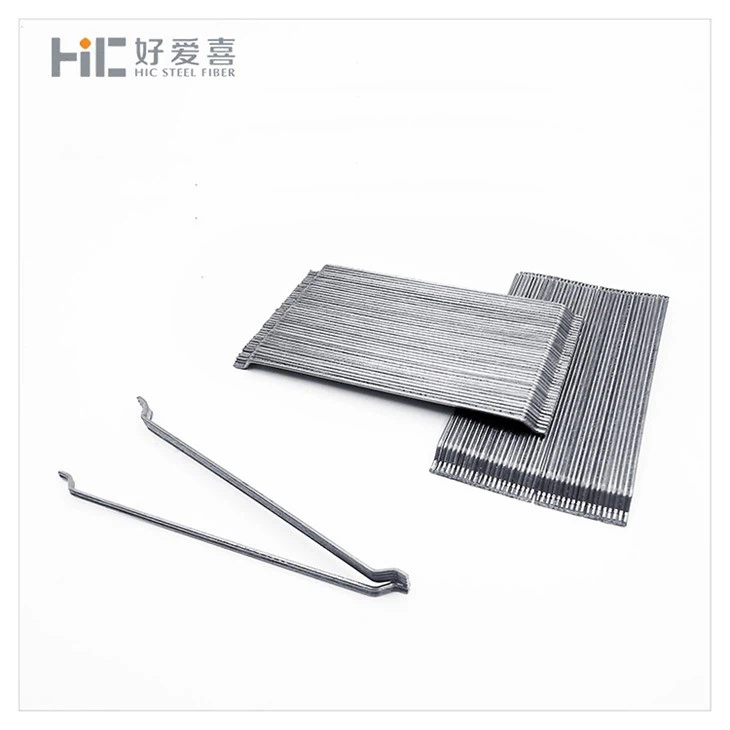

If you are interested in our Low Carbon Glued Steel Fibre products or have any questions about their quality and application, please feel free to contact us for procurement and further discussions. We are committed to providing you with high - quality products and excellent service.
References
- ASTM International. (Year). Standard specifications for steel fibers for concrete. ASTM C1116/C1116M.
- ISO (International Organization for Standardization). (Year). ISO standards related to steel fibers for concrete reinforcement.