

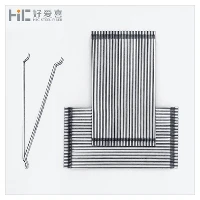
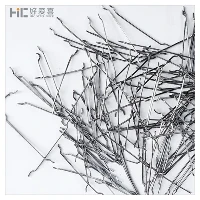
When it comes to shotcrete, the choice of steel fibers can significantly impact the performance and durability of the final structure. As a supplier of Steel Fiber for Shotcrete, I've witnessed firsthand the diverse needs of construction projects and the crucial role that different types of steel fibers play. In this blog, we'll explore the differences between hooked - end and straight steel fibers for shotcrete, helping you make an informed decision for your next project.
Physical Characteristics
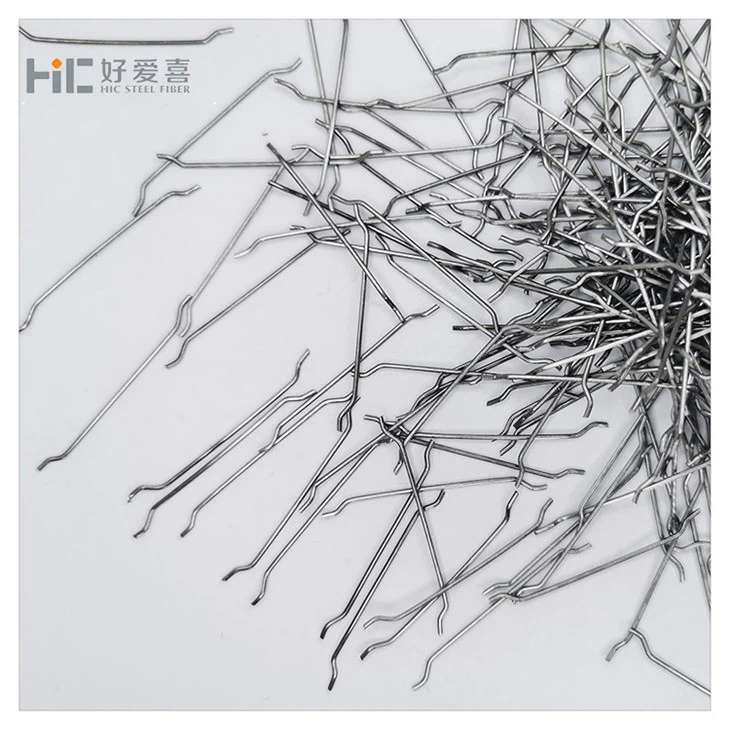
The most obvious difference between hooked - end and straight steel fibers lies in their shape. Hooked - end steel fibers have a bent or hooked shape at one or both ends. This unique design is engineered to enhance the fiber's ability to bond with the concrete matrix. When the shotcrete is being applied, the hooks anchor the fibers firmly in place, preventing them from easily pulling out.
On the other hand, straight steel fibers are, as the name suggests, straight throughout their length. They are typically simpler in production and have a more uniform appearance. While they can still provide some reinforcement to the shotcrete, their lack of hooks means they rely more on the frictional forces within the concrete for bonding.
Reinforcement Mechanisms
Hooked - end steel fibers work by creating a three - dimensional network within the shotcrete. The hooks act as mechanical anchors, engaging with the surrounding concrete particles. This results in improved crack resistance, especially in the post - cracking stage. When a crack begins to form in the shotcrete, the hooked - end fibers bridge the crack, transferring the stress across the crack face and preventing it from propagating further.
Straight steel fibers, in contrast, mainly rely on their high tensile strength and the frictional forces between the fibers and the concrete. They can help to distribute the stress more evenly within the shotcrete, reducing the likelihood of large cracks forming. However, their effectiveness in preventing crack growth may be somewhat limited compared to hooked - end fibers, especially under high - stress conditions.
Workability and Placement
In terms of workability, straight steel fibers generally have less impact on the flowability of the shotcrete mixture. Since they are straight, they tend to align more easily with the direction of the shotcrete flow during application. This can result in a smoother application process, especially in situations where a high degree of precision is required.
Hooked - end steel fibers, however, can sometimes cause a slight reduction in the workability of the shotcrete. The hooks can interlock with each other, creating a more complex internal structure within the mixture. This may require some adjustments to the shotcrete mix design, such as increasing the water - cement ratio slightly, to ensure proper placement. But with proper mixing and application techniques, the benefits of hooked - end fibers in terms of reinforcement can outweigh the minor workability issues.
Strength and Durability
Hooked - end steel fibers are known for providing higher post - cracking strength to the shotcrete. They can significantly improve the flexural and tensile strength of the structure, making it more resistant to impact and dynamic loads. This makes them an ideal choice for applications where the shotcrete will be subjected to heavy traffic, seismic activity, or other harsh conditions.
Straight steel fibers can also enhance the strength of the shotcrete, but their contribution is more focused on the pre - cracking stage. They can increase the overall compressive strength of the shotcrete and provide some level of crack control, but may not offer the same level of post - cracking performance as hooked - end fibers.
Cost Considerations
The cost of hooked - end and straight steel fibers can vary. Hooked - end steel fibers are generally more expensive to produce due to their more complex manufacturing process. However, the enhanced performance they provide can often justify the higher cost, especially in critical applications where long - term durability and crack resistance are essential.
Straight steel fibers are usually more cost - effective, making them a popular choice for projects with budget constraints. They can still provide a reasonable level of reinforcement, making them suitable for less demanding applications.
Applications
Hooked - end steel fibers are commonly used in applications such as tunnel linings, slope stabilization, and industrial floors. In tunnel linings, the high post - cracking strength of hooked - end fibers is crucial for withstanding the ground pressure and potential seismic activity. For Steel Fiber for Commercial and Industrial Floor, the improved crack resistance helps to prevent the formation of large cracks that could compromise the integrity of the floor.
Straight steel fibers are often used in less critical applications, such as small - scale shotcrete repairs and some residential projects. They can also be used in combination with other reinforcement methods to provide a cost - effective solution.
Conclusion
In conclusion, both hooked - end and straight steel fibers have their own unique advantages and disadvantages when it comes to shotcrete applications. The choice between the two depends on a variety of factors, including the specific requirements of the project, the expected load conditions, and the budget.
As a supplier of Steel Fiber for Shotcrete, I can provide you with high - quality CE - compliant steel fibers. Our CE Steel Fibers for Concrete are manufactured to the highest standards, ensuring optimal performance in your shotcrete projects.
If you're considering using steel fibers for your next shotcrete project, I encourage you to reach out to me. I can help you determine the most suitable type of steel fiber based on your specific needs and provide you with detailed product information and technical support. Let's work together to ensure the success of your construction project.

References
- ACI Committee 544. “State - of - the - Art Report on Fiber - Reinforced Concrete.” American Concrete Institute, 1996.
- Naaman, A. E., and Reinhardt, H. W. “Fiber Reinforced Concrete: State of the Art Report.” FIB, 2003.
- Swamy, R. N. “Steel Fiber Reinforced Concrete: Properties, Design and Application.” E & FN Spon, 1993.