

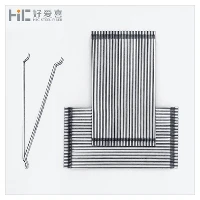
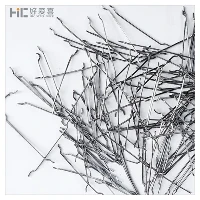
As a supplier of End Hook Glued Steel Fiber, I have witnessed firsthand the growing popularity of this material in large - scale concrete projects. End Hook Glued Steel Fiber is known for its ability to enhance the mechanical properties of concrete, such as tensile strength, toughness, and crack resistance. However, like any material, it also presents several challenges when used in large - scale applications.
1. Dispersion issues
One of the primary challenges in using End Hook Glued Steel Fiber in large - scale concrete projects is achieving uniform dispersion. The glued design of these fibers is intended to prevent clumping during storage and handling, but once introduced into the concrete mix, they must disperse evenly throughout the matrix.
In large batches of concrete, achieving proper dispersion becomes more difficult. The high volume of concrete requires an efficient mixing system to ensure that the fibers are distributed uniformly. Inadequate mixing can lead to fiber clustering, which compromises the performance of the concrete. For example, if fibers are concentrated in one area, the surrounding regions may lack sufficient reinforcement, leading to weak points in the structure.
To address this challenge, it is crucial to invest in high - quality mixing equipment. Modern concrete mixers with powerful agitators and multiple mixing stages can significantly improve fiber dispersion. Additionally, following the manufacturer's recommended mixing procedures is essential. This may include adding the fibers at a specific point in the mixing process or adjusting the mixing time and speed.


2. Cost considerations
Cost is another significant challenge in large - scale concrete projects using End Hook Glued Steel Fiber. Compared to traditional concrete reinforcement methods, such as steel bars, the cost of steel fibers can be relatively high. The production process of End Hook Glued Steel Fiber involves specialized manufacturing techniques, which contribute to its higher price.
In large - scale projects, the quantity of steel fibers required can quickly add up, increasing the overall project cost. This can be a deterrent for some contractors and project owners, especially when working on tight budgets. However, it's important to consider the long - term benefits of using steel fibers. They can reduce the need for traditional reinforcement, potentially saving on labor and formwork costs. Moreover, the enhanced durability of fiber - reinforced concrete can lead to lower maintenance costs over the lifespan of the structure.
To mitigate the cost challenge, suppliers like us often work closely with contractors to optimize the fiber dosage. By conducting proper structural analysis, we can determine the minimum amount of steel fibers needed to achieve the desired performance. This way, we can balance the cost with the benefits, making the use of End Hook Glued Steel Fiber more economically viable for large - scale projects.
3. Workability and pumping
The addition of End Hook Glued Steel Fiber can have a significant impact on the workability of concrete. As the fibers are introduced into the mix, they increase the internal resistance within the concrete, making it more difficult to place and finish. In large - scale projects, where concrete is often pumped over long distances or to high elevations, workability becomes even more critical.
Poor workability can lead to issues such as blockages in the pumping system, which can cause delays and additional costs. The presence of fibers can also make it challenging to achieve a smooth surface finish, which is important for aesthetic and functional reasons.
To improve workability, various admixtures can be used. Superplasticizers, for example, can reduce the water - cement ratio without sacrificing workability, allowing the concrete to flow more easily. Additionally, proper aggregate grading can play a role in improving workability. Well - graded aggregates provide a better matrix for the fibers to distribute and can reduce the impact on the overall flow of the concrete.
4. Quality control
Maintaining consistent quality is a challenge in any large - scale construction project, and the use of End Hook Glued Steel Fiber adds an extra layer of complexity. Ensuring that the fibers meet the required specifications is essential for the performance of the concrete.
The quality of the steel used in the fibers, the coating, and the hook design can all affect their effectiveness. For instance, if the steel is of low quality, it may rust over time, reducing its ability to reinforce the concrete. Inconsistent hook design can also lead to poor bonding between the fibers and the concrete matrix.
To implement effective quality control, it is necessary to have a comprehensive testing program in place. This includes testing the fibers before they are added to the concrete, as well as conducting in - situ tests on the concrete itself. Suppliers should provide detailed product information and certificates of compliance to demonstrate the quality of their products.
5. Design and specification knowledge
Many engineers and contractors may not have sufficient experience or knowledge when it comes to designing and specifying End Hook Glued Steel Fiber in large - scale concrete projects. Traditional design codes and standards are often based on the use of conventional reinforcement methods, and there is a lack of comprehensive guidelines for fiber - reinforced concrete.
This lack of knowledge can lead to improper design, such as incorrect fiber dosage or inappropriate structural detailing. For example, if the fiber dosage is too low, the concrete may not achieve the desired performance. On the other hand, an excessive dosage can lead to cost overruns and potential workability issues.
To address this challenge, suppliers can play an important role in providing technical support and training. We can offer design consultations to help engineers and contractors understand the properties and behavior of End Hook Glued Steel Fiber. Additionally, industry associations and research institutions can contribute to the development of more comprehensive design guidelines.
Conclusion
Despite the challenges, the use of End Hook Glued Steel Fiber in large - scale concrete projects offers significant benefits. It can enhance the performance and durability of concrete structures, leading to longer - lasting and more sustainable infrastructure. As a supplier, we are committed to helping our customers overcome these challenges.
We offer a range of products such as Simple Construction Glued Steel Fiber, FRC Steel Fibres for Concrete, and SFRC Steel Fiber to meet different project requirements. If you are considering using End Hook Glued Steel Fiber in your large - scale concrete project, we encourage you to contact us for a detailed discussion. Our team of experts can provide you with the necessary technical support, help you optimize your design, and ensure the success of your project.
References
- ACI Committee 544. (Year). State - of - the - Art Report on Fiber - Reinforced Concrete. American Concrete Institute.
- Neville, A. M. (Year). Properties of Concrete. Pearson Education.
- Romualdi, J. P., & Mandel, J. (Year). Tensile Strength of Concrete Beams Reinforced with Small - Diameter Steel Rods. Proceedings of the American Society of Civil Engineers.