


As a supplier of Concrete 3D Steel Fiber, I've witnessed firsthand the transformative impact this material has on the concrete industry. The addition of 3D steel fibers to concrete significantly enhances its mechanical properties, such as tensile strength, toughness, and durability. However, ensuring the quality of 3D steel fiber during concrete production is not without its challenges. In this blog post, I'll delve into the key challenges we face in the quality control of 3D steel fiber in concrete production and explore potential solutions.
1. Uniform Distribution of Steel Fibers
One of the primary challenges in the quality control of 3D steel fiber in concrete production is achieving a uniform distribution of fibers throughout the concrete mix. A non - uniform distribution can lead to localized weak points in the concrete structure, reducing its overall strength and performance.
The shape and geometry of 3D steel fibers make them more prone to clumping compared to traditional straight steel fibers. The three - dimensional configuration, which includes hooks, crimps, or other deformations, can cause the fibers to entangle with each other during mixing. This entanglement results in fiber clusters within the concrete, leaving areas with insufficient fiber reinforcement.
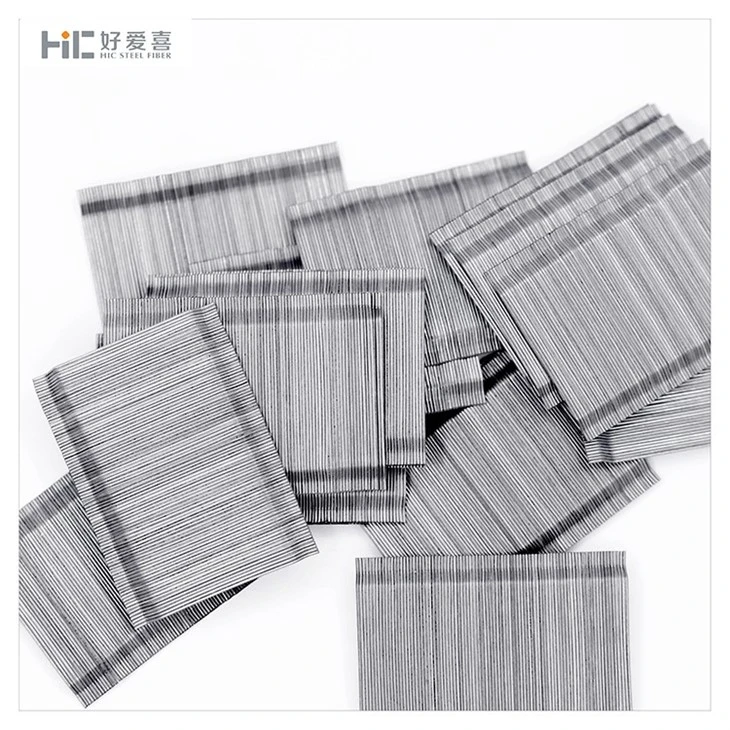
To address this challenge, proper mixing techniques are crucial. The mixing process should be carefully designed to break up any fiber clusters and ensure that the fibers are evenly dispersed. High - energy mixers, such as pan mixers or twin - shaft mixers, are often more effective than traditional drum mixers in achieving a uniform fiber distribution. Additionally, the sequence of adding materials to the mixer can also impact fiber dispersion. Adding the steel fibers after the aggregates and water have been partially mixed can help prevent premature clumping.
2. Quality of Raw Materials
The quality of the raw materials used to produce 3D steel fiber directly affects the quality of the final product. The steel used for fiber production should have consistent chemical composition and mechanical properties. Variations in the carbon content, for example, can significantly impact the strength and ductility of the steel fibers.
Impurities in the steel, such as sulfur and phosphorus, can also reduce the quality of the fibers. These impurities can cause brittleness and decrease the bond strength between the fibers and the concrete matrix. As a supplier, we source our steel from reputable manufacturers and conduct rigorous quality checks on the incoming raw materials. We analyze the chemical composition of the steel using techniques such as spectroscopy to ensure that it meets our strict quality standards.

Another aspect of raw material quality is the surface finish of the steel fibers. A smooth surface finish can improve the workability of the concrete mix, but it may also reduce the bond strength between the fibers and the concrete. On the other hand, a rough surface finish can enhance the bond strength but may make the fibers more difficult to disperse. Finding the right balance is essential for ensuring the overall quality of the 3D steel fiber in concrete production.
3. Consistency in Fiber Dimensions
The dimensions of 3D steel fibers, including length, diameter, and aspect ratio (the ratio of length to diameter), play a crucial role in determining the performance of the concrete. Inconsistent fiber dimensions can lead to variations in the mechanical properties of the concrete.
During the manufacturing process, it can be challenging to maintain precise control over the fiber dimensions. Small variations in the production parameters, such as the drawing speed or the cutting process, can result in fibers with different lengths or diameters. These variations can affect the fiber - matrix interaction and the overall reinforcement efficiency of the concrete.
To ensure consistency in fiber dimensions, we use advanced manufacturing equipment and strict quality control measures. Our production lines are equipped with sensors and monitoring systems that continuously measure and adjust the production parameters. We also conduct regular inspections of the produced fibers using microscopy and other measurement techniques to verify their dimensions.

4. Compatibility with Concrete Mix Design
3D steel fibers need to be compatible with the concrete mix design to achieve optimal performance. The addition of steel fibers can affect the workability, setting time, and strength development of the concrete. Therefore, it is essential to carefully consider the mix design when incorporating 3D steel fibers.
The water - cement ratio, aggregate gradation, and the use of admixtures can all interact with the steel fibers. For example, a high water - cement ratio may reduce the bond strength between the fibers and the concrete, while certain admixtures may cause the fibers to clump. As a supplier, we work closely with our customers to develop customized mix designs that are compatible with our High Density Glued Type Steel Fiber, SFRC Steel Fiber, and Good Ductility Glued Steel Fiber.
We conduct extensive laboratory tests to evaluate the performance of different mix designs with our steel fibers. These tests include slump tests to measure workability, compressive strength tests, and flexural strength tests. Based on the test results, we can recommend the most suitable mix design for specific applications.
5. Quality Assurance during Transportation and Storage
The quality of 3D steel fiber can also be affected during transportation and storage. Exposure to moisture, humidity, and corrosive environments can cause the steel fibers to rust, which will reduce their strength and bond performance.
During transportation, the steel fibers should be properly packaged to protect them from physical damage and environmental factors. We use high - quality packaging materials, such as sealed plastic bags or drums, to ensure the integrity of the fibers during transit.
In terms of storage, the steel fibers should be stored in a dry and well - ventilated area. We recommend that our customers store the fibers off the ground to prevent moisture absorption. Regular inspections should be conducted during storage to check for any signs of rust or damage.
6. Testing and Certification
Accurate and reliable testing methods are essential for quality control of 3D steel fiber in concrete production. There are various international standards and test methods available for evaluating the properties of steel fibers, such as ASTM A820 and EN 14889.
However, conducting these tests requires specialized equipment and trained personnel. As a supplier, we have established a state - of - the - art testing laboratory where we perform a comprehensive range of tests on our steel fibers. These tests include tensile strength tests, length and diameter measurements, and bond strength tests.
In addition to in - house testing, we also seek third - party certification to ensure the quality and compliance of our products. Third - party certification provides an independent verification of the product's performance and can enhance customer confidence.

Conclusion
The quality control of 3D steel fiber in concrete production is a complex process that involves multiple challenges. From achieving uniform fiber distribution to ensuring compatibility with concrete mix designs, each step requires careful attention and strict quality control measures.
As a supplier of Concrete 3D Steel Fiber, we are committed to providing high - quality products that meet the strictest industry standards. We continuously invest in research and development to improve our manufacturing processes and testing methods.
If you are interested in learning more about our High Density Glued Type Steel Fiber, SFRC Steel Fiber, or Good Ductility Glued Steel Fiber, or if you have any questions regarding the quality control of 3D steel fiber in concrete production, please feel free to contact us. We look forward to discussing your specific needs and working with you to achieve the best results in your concrete projects.
References
- ACI Committee 544. (2016). State - of - the - Art Report on Fiber - Reinforced Concrete. American Concrete Institute.
- EN 14889 - 1:2006. Fibres for concrete - Part 1: Steel fibres - Definitions, specifications and conformity. European Committee for Standardization.
- ASTM A820/A820M - 19. Standard Specification for Steel Fibers for Fiber - Reinforced Concrete. ASTM International.