


What are the acoustic properties of concrete with glued steel fiber?
In the realm of construction materials, concrete is a cornerstone, used in a vast array of structures from buildings to bridges. The addition of glued steel fiber to concrete has emerged as an innovative approach to enhance its performance. As a supplier of glued steel fiber, I've witnessed firsthand the growing interest in understanding how this addition impacts the acoustic properties of concrete. This blog post delves into the intricacies of the acoustic characteristics of concrete with glued steel fiber.
Understanding Glued Steel Fiber
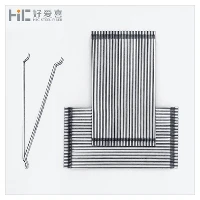
Before exploring the acoustic properties, it's essential to understand what glued steel fiber is. Glued steel fibers are bundles of individual steel fibers held together by a water - soluble adhesive. When added to concrete, these bundles disperse evenly, providing reinforcement throughout the concrete matrix. There are different types of glued steel fiber available, such as Low Carbon Glued Steel Fibre, Reinforced Concrete Steel Fiber, and End Hook Glued Steel Fiber. Each type has unique properties that can influence the overall performance of the concrete.
Acoustic Basics in Concrete
Sound in concrete behaves according to certain physical principles. When a sound wave hits a concrete surface, three main phenomena can occur: reflection, absorption, and transmission. Reflection happens when the sound wave bounces off the surface. Absorption occurs when the sound energy is converted into heat within the material. Transmission is the passage of the sound wave through the concrete.
The acoustic performance of concrete is typically measured by parameters such as sound absorption coefficient, sound transmission loss, and reverberation time. A high sound absorption coefficient means that the material can absorb more sound energy, reducing the amount of reflected sound. Sound transmission loss indicates how well the material can block the passage of sound. Reverberation time is the time it takes for the sound intensity to decay by 60 decibels after the sound source has stopped.
Impact of Glued Steel Fiber on Acoustic Properties
Sound Absorption
The addition of glued steel fiber can potentially enhance the sound absorption properties of concrete. Steel fibers can disrupt the propagation of sound waves within the concrete matrix. As sound waves travel through the concrete, they encounter the fibers, which cause scattering and diffraction of the waves. This scattering leads to an increase in the path length of the sound waves, allowing more opportunities for the sound energy to be absorbed.
The distribution and orientation of the glued steel fibers also play a crucial role. Randomly distributed fibers can create a more complex internal structure, which is more effective in scattering sound waves compared to a more ordered structure. Additionally, the aspect ratio (length - to - diameter ratio) of the fibers can influence sound absorption. Fibers with a higher aspect ratio can provide more surface area for interaction with the sound waves, enhancing the absorption effect.
Sound Transmission Loss
Glued steel fiber can also improve the sound transmission loss of concrete. The presence of fibers adds to the mass and stiffness of the concrete. According to the mass - law in acoustics, the sound transmission loss of a material increases with its mass per unit area. The steel fibers contribute to the overall mass of the concrete, making it more difficult for sound waves to pass through.
Moreover, the fibers can help to prevent the formation and propagation of cracks in the concrete. Cracks can act as channels for sound transmission. By reducing the likelihood of crack formation, the fibers maintain the integrity of the concrete structure, further improving its sound - blocking capabilities.
Reverberation Time
In a closed space made of concrete with glued steel fiber, the reverberation time can be reduced. The enhanced sound absorption due to the presence of fibers means that sound energy decays more quickly. This is beneficial in spaces such as auditoriums, concert halls, and recording studios, where a short reverberation time is desired to ensure clear and distinct sound quality.
Factors Affecting the Acoustic Performance of Concrete with Glued Steel Fiber
Fiber Content
The amount of glued steel fiber added to the concrete is a significant factor. Generally, as the fiber content increases, the acoustic performance (both sound absorption and transmission loss) improves up to a certain point. However, if the fiber content is too high, it can lead to issues such as poor workability of the concrete, which may result in an uneven distribution of the fibers and a decrease in the overall quality of the concrete.
Concrete Mix Design
The composition of the concrete mix, including the type and amount of cement, aggregates, and water, can interact with the glued steel fiber to affect the acoustic properties. For example, the porosity of the concrete can be influenced by the mix design. A more porous concrete may have different acoustic characteristics compared to a denser one. The presence of the fibers can also affect the curing process of the concrete, which in turn can impact its porosity and acoustic performance.
Environmental Conditions
Environmental factors such as temperature and humidity can also influence the acoustic properties of concrete with glued steel fiber. Changes in temperature can cause thermal expansion and contraction of the concrete and the fibers, which may affect the internal structure and the way sound waves interact with the material. Humidity can also have an impact, as moisture can change the physical properties of the concrete and the fibers, potentially altering the acoustic performance.
Applications of Concrete with Glued Steel Fiber for Acoustic Purposes
Building Construction
In building construction, concrete with glued steel fiber can be used in walls, floors, and ceilings to improve the acoustic comfort of the interior spaces. For example, in residential buildings, it can reduce the noise transmission between rooms, creating a quieter living environment. In commercial buildings such as offices and hotels, it can enhance the speech intelligibility and reduce background noise.
Infrastructure Projects
Infrastructure projects such as tunnels and bridges can also benefit from the acoustic properties of concrete with glued steel fiber. In tunnels, the improved sound absorption can reduce the echo and reverberation of traffic noise, providing a more comfortable environment for drivers. On bridges, the enhanced sound transmission loss can prevent the spread of traffic noise to the surrounding areas.
Conclusion
The addition of glued steel fiber to concrete can significantly impact its acoustic properties. It can enhance sound absorption, improve sound transmission loss, and reduce reverberation time. As a supplier of glued steel fiber, I'm excited about the potential of this material in improving the acoustic performance of concrete structures.


Whether you're involved in building construction, infrastructure projects, or any other field that requires high - quality acoustic solutions, concrete with glued steel fiber could be the answer. If you're interested in exploring the use of glued steel fiber in your projects, I encourage you to reach out to me for more information and to discuss potential procurement. We can work together to find the most suitable type and amount of glued steel fiber for your specific needs.
References
- Berkovits, W. (1997). Acoustics: Sound Fields and Transducers. Academic Press.
- Neville, A. M. (2011). Properties of Concrete. Pearson Education.
- Mindess, S., Young, J. F., & Darwin, D. (2014). Concrete. Pearson.