


Is it possible to use 3D steel fiber in self - compacting concrete?
In the construction industry, the pursuit of high - performance building materials is a continuous journey. Self - compacting concrete (SCC) has emerged as a revolutionary material due to its ability to flow and fill formwork under its own weight without the need for vibration. Meanwhile, 3D steel fiber has also gained significant attention for its potential to enhance the mechanical properties of concrete. As a supplier of Concrete 3D Steel Fiber, I am often asked whether it is possible to use 3D steel fiber in self - compacting concrete. In this blog, I will delve into this topic and explore the feasibility, benefits, and challenges of this combination.
Feasibility of Using 3D Steel Fiber in Self - Compacting Concrete
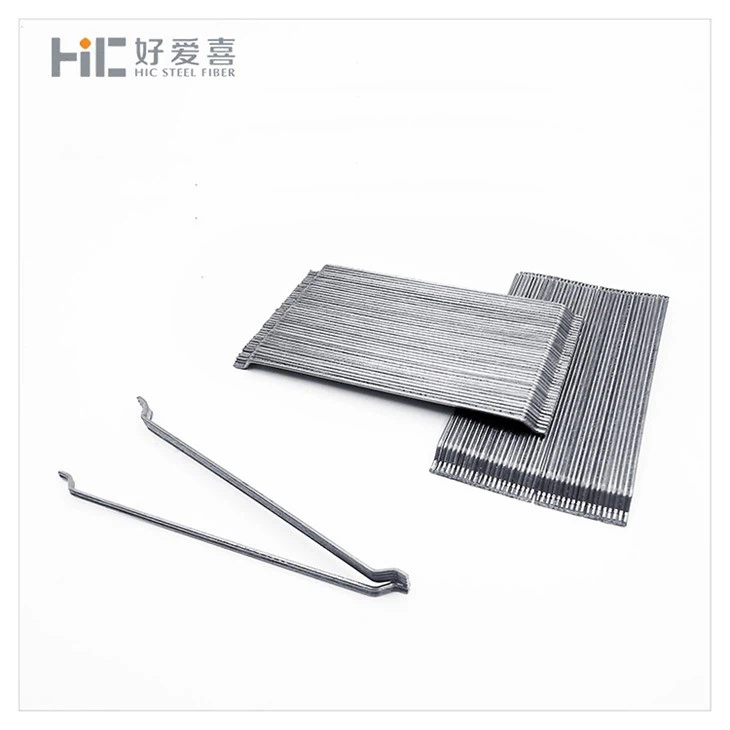
The basic principle of self - compacting concrete is to achieve high fluidity, passing ability, and segregation resistance. The addition of 3D steel fiber is feasible in theory, as long as proper measures are taken to ensure that the workability of SCC is not severely compromised. 3D steel fibers are designed to have a complex geometry, which can provide better anchorage and bridging effects within the concrete matrix compared to traditional straight steel fibers.
When incorporated into SCC, the 3D steel fibers can be evenly distributed throughout the concrete if the mix design is carefully adjusted. The key lies in optimizing the fiber content, aspect ratio, and the properties of the SCC matrix itself. For example, using a superplasticizer in the SCC mix can help maintain the required fluidity even with the addition of steel fibers. Studies have shown that with appropriate mix design, 3D steel fibers can be successfully integrated into self - compacting concrete, resulting in a composite material with improved performance.

Benefits of Using 3D Steel Fiber in Self - Compacting Concrete
Enhanced Mechanical Properties
One of the most significant benefits is the improvement in the mechanical properties of self - compacting concrete. The 3D steel fibers act as reinforcement, increasing the tensile, flexural, and impact strength of the SCC. In tensile loading, the fibers bridge the cracks, preventing them from propagating and thus enhancing the overall ductility of the concrete. For example, in structures such as slabs on grade or precast elements, the addition of 3D steel fibers can reduce the risk of cracking due to shrinkage or external loads.
In flexural applications, the fibers can increase the load - carrying capacity of the SCC beams. The complex shape of 3D steel fibers provides better interlocking with the concrete matrix, allowing for a more efficient transfer of stress. This is particularly important in structures where bending moments are significant, such as bridges or high - rise buildings.
Crack Resistance
Cracking is a major concern in concrete structures. The use of 3D steel fibers in self - compacting concrete can significantly improve crack resistance. The fibers can arrest the growth of micro - cracks at an early stage, preventing them from developing into larger, more detrimental cracks. This is especially beneficial in structures exposed to harsh environmental conditions, such as freeze - thaw cycles or chemical attacks. By reducing crack width and frequency, the durability of the concrete structure can be greatly enhanced.
Durability
The addition of 3D steel fibers can also improve the durability of self - compacting concrete. The fibers can reduce the permeability of the concrete, which in turn reduces the ingress of harmful substances such as water, chloride ions, and carbon dioxide. This is crucial for protecting the reinforcement bars from corrosion and extending the service life of the concrete structure. In marine environments or structures exposed to de - icing salts, the use of 3D steel fiber - reinforced SCC can provide long - term durability.
Challenges of Using 3D Steel Fiber in Self - Compacting Concrete
Workability Issues
One of the main challenges is maintaining the workability of self - compacting concrete when adding 3D steel fibers. The fibers can increase the viscosity of the concrete mix, making it more difficult to flow and fill the formwork. If the fiber content is too high or the fiber distribution is not uniform, it can lead to segregation and blockage during the placement process. To overcome this challenge, it is necessary to optimize the mix design, including the use of appropriate admixtures and adjusting the aggregate gradation.
Fiber Dispersion
Ensuring uniform fiber dispersion is another challenge. If the fibers clump together, they will not be able to发挥 their full reinforcing potential. Special mixing techniques may be required to achieve a homogeneous distribution of 3D steel fibers in the SCC. For example, using a high - shear mixer or adding the fibers gradually during the mixing process can help improve fiber dispersion.
Our Product Offerings
As a supplier of Concrete 3D Steel Fiber, we offer a range of high - quality products that are suitable for use in self - compacting concrete. Our Hooked Glued Carbon Steel Fiber is designed with a hooked end and a glued coating, which provides excellent anchorage and dispersion in the concrete matrix. The glued coating helps to prevent fiber clumping during mixing, ensuring a more uniform distribution of fibers in the SCC.
Our Glued Steel Fibres are also a popular choice for self - compacting concrete applications. The glue on the fibers breaks down during the mixing process, allowing the fibers to separate and disperse evenly in the concrete. These fibers have a high aspect ratio, which enhances their reinforcing effect in the SCC.
In addition, our Simple Construction Glued Steel Fiber is specifically designed for easy handling and use in construction projects. It can be easily incorporated into self - compacting concrete mixes, providing cost - effective reinforcement for a variety of structures.
Contact Us for Purchase and Consultation
If you are interested in using 3D steel fiber in your self - compacting concrete projects, we are here to help. Our team of experts can provide you with detailed technical support and guidance on mix design, fiber selection, and application techniques. We understand the challenges and benefits of using 3D steel fiber in SCC, and we are committed to helping you achieve the best results for your construction projects. Whether you are a contractor, engineer, or architect, we invite you to contact us for more information and to discuss your specific requirements. Let's work together to create high - performance, durable concrete structures using our 3D steel fiber products.
References
- Naaman, A. E., & Reinhardt, H. W. (Eds.). (2003). Fibre - reinforced concrete: Design and applications. E & FN Spon.
- ACI Committee 544. (1996). State - of - the - art report on fiber - reinforced concrete. American Concrete Institute.
- de Larrard, F. (1999). Concrete mixture proportioning: A scientific approach. E & FN Spon.