

As a supplier of End Hook Glued Steel Fiber, I often encounter inquiries from customers regarding its compatibility with different types of cement. This question is crucial as the proper combination of steel fiber and cement can significantly enhance the performance of concrete structures. In this blog, we will explore the compatibility of End Hook Glued Steel Fiber with various types of cement, based on scientific knowledge and practical experience.
Understanding End Hook Glued Steel Fiber
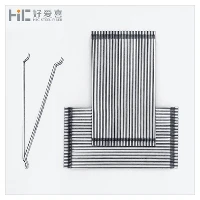
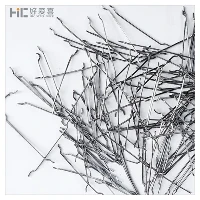
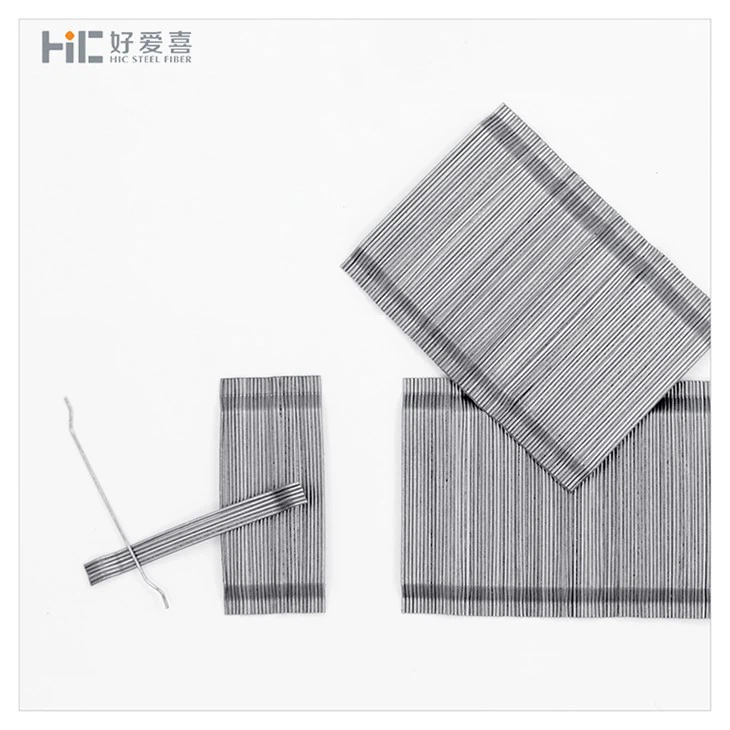
End Hook Glued Steel Fiber is a type of reinforcement material used in concrete. The end - hook design provides better anchorage within the concrete matrix, improving its ability to resist cracking and increase the overall toughness of the concrete. The glued aspect is important as it allows for easy handling and uniform distribution during the mixing process. When the fiber is added to the concrete mix, the glue dissolves, and the individual fibers disperse evenly.
For more information about our End Hook Glued Steel Fiber products, you can visit Reinforced Concrete Steel Fiber and Glued Type Steel Fiber for Mining.
Compatibility with Portland Cement
Portland cement is the most widely used type of cement in the world. It is known for its good binding properties and strength development. End Hook Glued Steel Fiber is generally highly compatible with Portland cement. The chemical properties of Portland cement create a suitable environment for the steel fibers to bond effectively.
During the hydration process of Portland cement, a series of chemical reactions occur, forming a strong matrix. The steel fibers can interlock with this matrix, providing additional reinforcement. The end - hooks of the steel fibers prevent them from pulling out easily, enhancing the crack - resistance of the concrete. In fact, numerous studies have shown that adding End Hook Glued Steel Fiber to Portland cement - based concrete can increase its flexural strength, impact resistance, and durability.
Compatibility with Blended Cements
Blended cements are made by mixing Portland cement with other supplementary cementitious materials such as fly ash, slag, or silica fume. These supplementary materials can improve certain properties of the concrete, such as workability, long - term strength, and resistance to chemical attacks.
When it comes to the compatibility of End Hook Glued Steel Fiber with blended cements, the situation is more complex. Generally, if the blending materials are used within the recommended proportions, the steel fibers can still function effectively. For example, in fly ash - blended cements, the slow - reacting fly ash particles can fill the voids in the concrete, and the steel fibers can work together with the refined matrix to enhance the overall performance.
However, some blending materials may have an impact on the early - age hydration process of the cement. For instance, high - volume slag - blended cements may have a slower initial setting time. This can affect the way the steel fibers interact with the fresh concrete. In such cases, it is important to adjust the mixing process and curing conditions to ensure the proper dispersion and bonding of the steel fibers. You can find more details about our steel fiber products suitable for different cement types at Glued Steel Fiber.
Compatibility with Special - Purpose Cements
There are also special - purpose cements, such as high - alumina cement, white cement, and sulfate - resistant cement. Each of these cements has unique chemical and physical properties, which may influence their compatibility with End Hook Glued Steel Fiber.
High - alumina cement has a very rapid setting and hardening process. The fast - paced hydration can make it challenging for the steel fibers to disperse evenly in the fresh concrete. Special mixing techniques may be required to ensure that the fibers are well - distributed.
White cement is mainly used for aesthetic purposes. The compatibility of steel fibers with white cement is generally good, but care must be taken to avoid any staining or discoloration of the white concrete surface.
Sulfate - resistant cement is designed to resist the attack of sulfates in the environment. The chemical composition of this cement is adjusted to prevent the formation of expansive compounds. End Hook Glued Steel Fiber can enhance the durability of sulfate - resistant cement - based concrete by providing additional reinforcement against cracking caused by sulfate attacks.
Factors Affecting Compatibility
Apart from the type of cement, several other factors can affect the compatibility of End Hook Glued Steel Fiber with cement.
Mixing Process
The way the steel fibers are added to the concrete mix is crucial. If the fibers are not added at the right time or in the right manner, they may clump together, resulting in poor dispersion. A proper mixing sequence, usually adding the fibers after the cement and aggregates have been partially mixed, can ensure better distribution.
Water - Cement Ratio
The water - cement ratio affects the workability and strength of the concrete. A too - high water - cement ratio can lead to a weaker concrete matrix, reducing the effectiveness of the steel fibers. On the other hand, a too - low water - cement ratio may make the concrete difficult to mix and place, also affecting the fiber dispersion.
Curing Conditions
Curing is essential for the proper development of concrete strength. Different types of cement may require different curing conditions. For example, some blended cements may need longer curing times. Proper curing ensures that the steel fibers bond well with the cement matrix and that the concrete reaches its full potential in terms of strength and durability.

Practical Applications and Case Studies
In practical applications, the compatibility of End Hook Glued Steel Fiber with different cements has been well - demonstrated. In large - scale infrastructure projects such as bridges and high - rise buildings, where Portland cement is commonly used, the addition of steel fibers has improved the structural performance and reduced the risk of cracking.
In mining applications, blended cements are often used due to their cost - effectiveness and environmental benefits. End Hook Glued Steel Fiber has been successfully used in shotcrete applications in mines, where it enhances the support capacity of the concrete lining and improves its resistance to rock movements.
Conclusion
In conclusion, End Hook Glued Steel Fiber is generally compatible with a wide range of cement types, including Portland cement, blended cements, and special - purpose cements. However, due to the different chemical and physical properties of various cements, some adjustments may be needed in the mixing process, water - cement ratio, and curing conditions to ensure optimal performance.
If you are interested in using our End Hook Glued Steel Fiber products for your projects, whether it's for a small - scale construction or a large - scale infrastructure development, we are more than happy to discuss your specific requirements. Our team of experts can provide you with detailed technical support and guidance on the proper use of our products to achieve the best results. Contact us for procurement and let's start a productive discussion about how our steel fibers can enhance the performance of your concrete structures.
References
- Neville, A. M. (1995). Properties of Concrete. Pearson Education.
- ACI Committee 544. (1996). State - of - the - Art Report on Fiber - Reinforced Concrete. American Concrete Institute.
- Mindess, S., Young, J. F., & Darwin, D. (2003). Concrete: Microstructure, Properties, and Materials. Prentice Hall.