

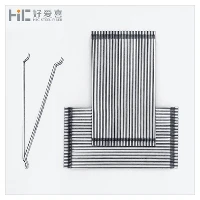
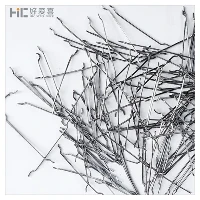
Hey there! I'm a supplier of Low Carbon Glued Steel Fibre, and I'm super excited to share with you the industries where this amazing product is commonly used. Low Carbon Glued Steel Fibre is a game - changer in many fields, offering unique properties that make it a top choice for various applications.
Construction Industry
The construction industry is one of the biggest consumers of Low Carbon Glued Steel Fibre. In concrete construction, these fibres play a crucial role in enhancing the performance of concrete. When added to concrete, they act as reinforcement, improving its tensile strength, toughness, and durability.
One of the key advantages of using Low Carbon Glued Steel Fibre in construction is its ability to control cracking. Concrete is prone to cracking due to factors like shrinkage, temperature changes, and external loads. The steel fibres help distribute the stress more evenly throughout the concrete, reducing the formation and propagation of cracks. This is especially important in large - scale construction projects such as high - rise buildings, bridges, and industrial floors.


For example, in bridge construction, the durability of the concrete is of utmost importance. Bridges are exposed to harsh environmental conditions, heavy traffic loads, and constant vibrations. Low Carbon Glued Steel Fibre - reinforced concrete can withstand these challenges better than traditional concrete, increasing the lifespan of the bridge and reducing maintenance costs.
In industrial floors, where there is a lot of heavy machinery movement and impact, the addition of these fibres can prevent the formation of cracks and spalling. This results in a more stable and long - lasting floor surface. Also, the Simple Construction Glued Steel Fiber is easy to mix with concrete, which simplifies the construction process and saves time and labor costs.
Mining Industry
The mining industry also benefits greatly from Low Carbon Glued Steel Fibre. In underground mining, the stability of mine shafts and tunnels is a major concern. The use of steel - fibre - reinforced concrete in mine support structures helps to improve the safety and durability of these structures.
Mine shafts are subject to high pressures from the surrounding rock and soil. The addition of Low Carbon Glued Steel Fibre to the concrete lining of the shafts increases its strength and resistance to deformation. This reduces the risk of collapses and ensures the safety of miners working underground.
In addition, in open - pit mining, the use of steel - fibre - reinforced concrete in conveyor belts, chutes, and hoppers can improve their wear resistance. These components are constantly exposed to abrasive materials such as rocks and ores, and the steel fibres help to extend their service life.
Tunnel and Underground Engineering
Similar to the mining industry, tunnel and underground engineering projects rely on Low Carbon Glued Steel Fibre for structural stability. Tunnels are often built in challenging geological conditions, and the concrete used in their construction needs to be strong and durable.
The steel fibres help to improve the flexural and shear strength of the concrete, which is essential for withstanding the complex stress conditions in tunnels. They also enhance the resistance of the concrete to water penetration, which is important for preventing corrosion of the reinforcement and maintaining the integrity of the tunnel structure.
For instance, in subway tunnels, where there is a high volume of passenger traffic and constant vibrations from trains, the use of Low Carbon Glued Steel Fibre - reinforced concrete can ensure the long - term stability of the tunnel. The Glued Type Steel Fiber is well - suited for these applications as it can be easily incorporated into the concrete mix during the construction process.
Precast Concrete Products
The precast concrete industry is another area where Low Carbon Glued Steel Fibre is widely used. Precast concrete products such as pipes, manholes, and precast panels require high - strength and durable materials.
Adding steel fibres to the precast concrete mix can improve the quality and performance of these products. For precast pipes, the steel fibres enhance the pipe's resistance to cracking and impact, making them more suitable for underground installation. In precast panels, the fibres increase the panel's strength and stiffness, allowing for larger panel sizes and reducing the need for additional reinforcement.
This not only improves the quality of the precast products but also makes them more cost - effective. The ease of handling and installation of precast products with Low Carbon Glued Steel Fibre also makes them a popular choice in the construction market.
Marine Engineering
In marine engineering, structures are exposed to the harsh marine environment, including saltwater corrosion, wave action, and tidal forces. Low Carbon Glued Steel Fibre - reinforced concrete is an excellent choice for marine structures such as piers, breakwaters, and offshore platforms.
The steel fibres in the concrete help to resist the penetration of saltwater, which can cause corrosion of the reinforcement. They also improve the structure's resistance to wave impact and abrasion from sand and debris. This increases the durability of the marine structures and reduces the need for frequent repairs and maintenance.
Agricultural and Livestock Facilities
In agricultural and livestock facilities, Low Carbon Glued Steel Fibre can be used in the construction of floors, walls, and storage silos. These facilities need to be durable and resistant to the corrosive effects of animal waste and fertilizers.
The use of steel - fibre - reinforced concrete in agricultural floors can prevent cracking and damage from the movement of heavy equipment and livestock. In storage silos, the fibres help to maintain the structural integrity of the silo, ensuring the safe storage of grains and other agricultural products.
Contact for Procurement
As you can see, Low Carbon Glued Steel Fibre has a wide range of applications in various industries. If you're involved in any of these industries and are looking for a reliable source of high - quality Low Carbon Glued Steel Fibre, I'd love to hear from you. Whether you're working on a small - scale project or a large - scale infrastructure development, I can provide you with the right product to meet your needs.
Don't hesitate to reach out if you have any questions about our products, pricing, or technical specifications. Let's start a conversation and see how we can work together to make your projects a success.
References
- Neville, A. M. (1995). Properties of Concrete. Pearson Education.
- ACI Committee 544. (1982). State - of - the - Art Report on Fiber Reinforced Concrete. American Concrete Institute.
- Mindess, S., Young, J. F., & Darwin, D. (2003). Concrete. Prentice Hall.