

Ensuring the uniform distribution of glued type steel fiber in concrete is crucial for achieving the desired performance and properties of fiber - reinforced concrete (FRC). As a supplier of glued type steel fiber, I have witnessed firsthand the importance of this process and the challenges that can arise. In this blog, I will share some insights and practical tips on how to ensure the uniform distribution of glued type steel fiber in concrete.
Understanding Glued Type Steel Fiber
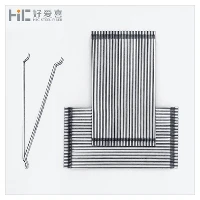
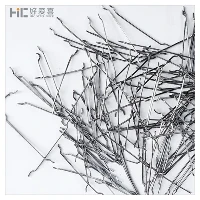
Glued type steel fibers are pre - bundled steel fibers that are held together by a water - soluble adhesive. This bundling makes it easier to handle and disperse the fibers during the concrete mixing process. When the fibers are added to the wet concrete, the adhesive dissolves, and the individual fibers are released to reinforce the concrete matrix. There are different types of glued type steel fibers available, such as FRC Steel Fibres for Concrete, Hooked Glued Carbon Steel Fiber, and Small Rebound Glued Steel Fiber, each with its own unique characteristics and applications.
Factors Affecting the Distribution of Glued Type Steel Fiber in Concrete
Mixing Equipment
The type and quality of the mixing equipment play a significant role in the uniform distribution of steel fibers. A high - energy mixer, such as a pan mixer or a twin - shaft mixer, is preferred over a drum mixer. High - energy mixers can generate more intense shear forces, which are necessary to break up the fiber bundles and disperse the individual fibers evenly throughout the concrete. The mixing capacity of the equipment should also be considered. Overloading the mixer can lead to poor fiber dispersion, as there may not be enough space for the fibers to move freely and be properly mixed with the concrete.
Mixing Time
The mixing time is another critical factor. Insufficient mixing time may result in incomplete dissolution of the adhesive and uneven fiber distribution. On the other hand, over - mixing can cause the fibers to deform or break, reducing their effectiveness. As a general rule, the mixing time should be long enough to ensure that the adhesive is completely dissolved and the fibers are uniformly distributed. However, it should not exceed the recommended maximum mixing time provided by the fiber manufacturer.
Concrete Workability
The workability of the concrete affects the ability of the fibers to disperse. A concrete mix with good workability allows the fibers to move more freely during mixing. Factors such as the water - cement ratio, aggregate size and shape, and the use of admixtures can influence the workability of the concrete. A higher water - cement ratio generally improves workability, but it may also reduce the strength of the concrete. Therefore, a balance needs to be struck between workability and strength.
Fiber Dosage
The dosage of the glued type steel fiber also impacts its distribution. Higher fiber dosages can make it more challenging to achieve uniform distribution. When the fiber content is too high, the fibers may tend to clump together, forming clusters in the concrete. It is important to follow the manufacturer's recommendations regarding the maximum fiber dosage for a given concrete mix.


Practical Tips for Ensuring Uniform Distribution
Pre - wetting the Fibers
Pre - wetting the glued type steel fibers before adding them to the concrete can help to speed up the dissolution of the adhesive. This can be done by soaking the fibers in water for a short period. However, care should be taken not to over - wet the fibers, as this can cause them to stick together and form large clumps.
Adding Fibers at the Right Time
The fibers should be added to the concrete at the appropriate stage of the mixing process. It is recommended to add the fibers after the coarse and fine aggregates have been mixed with water and cement for a short time. This allows the concrete to form a homogeneous matrix, which can better accommodate the fibers. Adding the fibers too early may result in the fibers being trapped in the aggregates, while adding them too late may not provide enough time for proper dispersion.
Monitoring the Mixing Process
During the mixing process, it is important to monitor the concrete to ensure that the fibers are being evenly distributed. Visual inspection can be used to check for any signs of fiber clumping or uneven distribution. If clumps are detected, additional mixing time or adjustments to the mixing process may be required.
Quality Control Tests
Regular quality control tests should be conducted to verify the uniform distribution of the fibers in the concrete. These tests can include taking samples of the fresh concrete and examining them under a microscope to count the number of fibers per unit volume and to check for any signs of fiber clustering. Compressive strength and flexural strength tests can also be performed on hardened concrete specimens to assess the effectiveness of the fiber reinforcement.
Case Studies
Let's take a look at a few case studies to illustrate the importance of ensuring uniform distribution of glued type steel fiber in concrete.
In a large - scale industrial floor project, the contractor initially used a drum mixer to mix the concrete with glued type steel fibers. The result was a non - uniform distribution of the fibers, with some areas having a high concentration of fibers and others having very few. This led to inconsistent strength and durability of the floor. After switching to a twin - shaft mixer and adjusting the mixing time, the fiber distribution improved significantly, and the floor met the design requirements.
In another project, a bridge deck was constructed using glued type steel fiber - reinforced concrete. By following the recommended procedures for fiber addition and mixing, the fibers were uniformly distributed throughout the concrete. As a result, the bridge deck showed excellent crack resistance and long - term durability.
Conclusion
Ensuring the uniform distribution of glued type steel fiber in concrete is essential for maximizing the benefits of fiber reinforcement. By understanding the factors that affect fiber distribution, following the practical tips outlined above, and conducting regular quality control tests, it is possible to achieve a concrete mix with evenly distributed fibers. This can lead to improved strength, durability, and crack resistance of the concrete structures.
As a supplier of glued type steel fiber, I am committed to providing high - quality products and technical support to our customers. If you are interested in learning more about our glued type steel fibers or have any questions regarding their use in concrete, please feel free to contact us for further discussion and potential procurement. We look forward to working with you to achieve the best results in your concrete projects.
References
- ACI Committee 544. (1996). State - of - the - Art Report on Fiber - Reinforced Concrete. American Concrete Institute.
- Neville, A. M. (2011). Properties of Concrete. Pearson Education.
- Ramakrishnan, V. (2007). Steel Fibre Reinforced Concrete: Design and Applications. Taylor & Francis.