

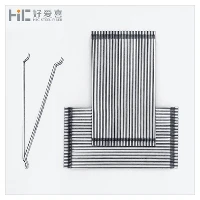
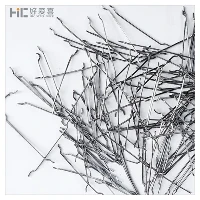
Hey there! As a supplier of Hooked End Type Steel Fiber, I've spent a ton of time thinking about how different factors affect its performance, especially when it comes to bonding with concrete. One factor that often gets overlooked but is super important is the surface roughness of the steel fiber. In this blog, I'll dig into how the surface roughness of Hooked End Type Steel Fiber impacts its bonding with concrete.
First off, let's talk about why bonding between steel fiber and concrete matters. When you add steel fibers to concrete, you're looking to enhance its mechanical properties, like toughness, ductility, and crack resistance. For the steel fibers to do their job effectively, they need to bond well with the concrete matrix. If the bond is weak, the fibers won't be able to transfer stress properly, and you won't get the full benefits of adding them.
Now, surface roughness plays a huge role in this bonding process. A rough surface provides more surface area for the concrete to grip onto. Think of it like Velcro. The more hooks and loops there are, the stronger the bond. When the surface of the steel fiber is rough, the concrete can penetrate into the tiny grooves and irregularities, creating a mechanical interlock. This interlock helps to transfer stress between the fiber and the concrete, making the composite material stronger.
On the other hand, a smooth surface has less area for the concrete to adhere to. With less mechanical interlock, the bond between the fiber and the concrete is weaker. This can lead to the fibers pulling out of the concrete more easily under stress, reducing the overall performance of the material.
But it's not just about the amount of surface area. The shape and size of the surface irregularities also matter. If the irregularities are too small, the concrete may not be able to penetrate them effectively. On the other hand, if they're too large, the bond may be less uniform, and there could be weak points in the material. Finding the right balance is key.
Let's take a look at some real - world examples. In construction projects where high - performance concrete is required, like in high - rise buildings or bridges, the surface roughness of the steel fibers can make a big difference. For instance, in a bridge deck, the concrete is subjected to heavy traffic loads and environmental factors. Using Hooked End Type Steel Fiber with the right surface roughness can improve the crack resistance of the deck, reducing the need for costly repairs and maintenance.
Now, as a supplier, I offer different types of Hooked End Type Steel Fiber to meet various needs. For example, our Diameter Matching Hooked End Steel Fiber is designed with a specific diameter that matches well with different concrete mixes. The surface roughness of these fibers is optimized to provide a strong bond with the concrete, ensuring maximum performance.
Another product we have is the Steel Fiber for Shotcrete. Shotcrete is a construction technique where concrete is sprayed onto a surface. The surface roughness of our steel fibers for shotcrete helps them to bond well with the sprayed concrete, improving the overall strength and durability of the structure.
And then there's our High Density Hooked End Steel Fiber. This type of fiber has a high density of hooks and a well - controlled surface roughness. It's ideal for applications where extra toughness and crack resistance are needed, such as in industrial floors or precast concrete elements.
In addition to the mechanical interlock, surface roughness can also affect the chemical bonding between the steel fiber and the concrete. The rough surface can provide more sites for chemical reactions to occur between the steel and the cement paste in the concrete. These chemical bonds can further strengthen the interface between the fiber and the concrete, enhancing the overall performance of the composite material.
However, it's important to note that surface roughness isn't the only factor that affects bonding. Other factors, such as the fiber's shape, aspect ratio (the ratio of the fiber's length to its diameter), and the properties of the concrete mix itself, also play important roles. For example, a concrete mix with a high water - cement ratio may have a weaker bond with the steel fibers compared to a mix with a lower water - cement ratio.
When it comes to manufacturing Hooked End Type Steel Fiber, controlling the surface roughness is a delicate process. We use advanced manufacturing techniques to ensure that each fiber has the right amount of surface roughness. This involves processes like surface treatment and quality control checks at every stage of production.
If you're involved in a construction project and are considering using Hooked End Type Steel Fiber, it's crucial to understand how surface roughness can impact the performance of your concrete. By choosing the right type of fiber with the appropriate surface roughness, you can ensure that your concrete structure has the strength, durability, and crack resistance it needs.
As a supplier, I'm always here to help you make the right choice. Whether you're working on a small residential project or a large - scale commercial development, I can provide you with the information and products you need. If you're interested in learning more about our Hooked End Type Steel Fiber or have any questions about how surface roughness affects bonding with concrete, don't hesitate to reach out. We can have a detailed discussion about your project requirements and find the best solution for you.
In conclusion, the surface roughness of Hooked End Type Steel Fiber is a critical factor in its bonding with concrete. A well - designed surface roughness can enhance the mechanical and chemical bonding between the fiber and the concrete, leading to a stronger and more durable composite material. So, if you're in the market for Hooked End Type Steel Fiber, make sure to consider the surface roughness and choose a product that meets your specific needs.
References


- Naaman, A. E., & Reinhardt, H. W. (Eds.). (2003). Fibre - reinforced concrete: design and applications. CRC Press.
- ACI Committee 544. (1996). State - of - the - art report on fiber - reinforced concrete. American Concrete Institute.