



Hey there! As a supplier of Low Carbon Glued Steel Fibre, I've been getting a lot of questions lately about how the shape of these fibres affects their performance. So, I thought I'd take a deep dive into this topic and share some insights with you.
First off, let's talk about why the shape of Low Carbon Glued Steel Fibre matters. These fibres are used in concrete to enhance its properties, like strength, toughness, and durability. The shape of the fibres plays a crucial role in how they interact with the concrete matrix and contribute to these improvements.
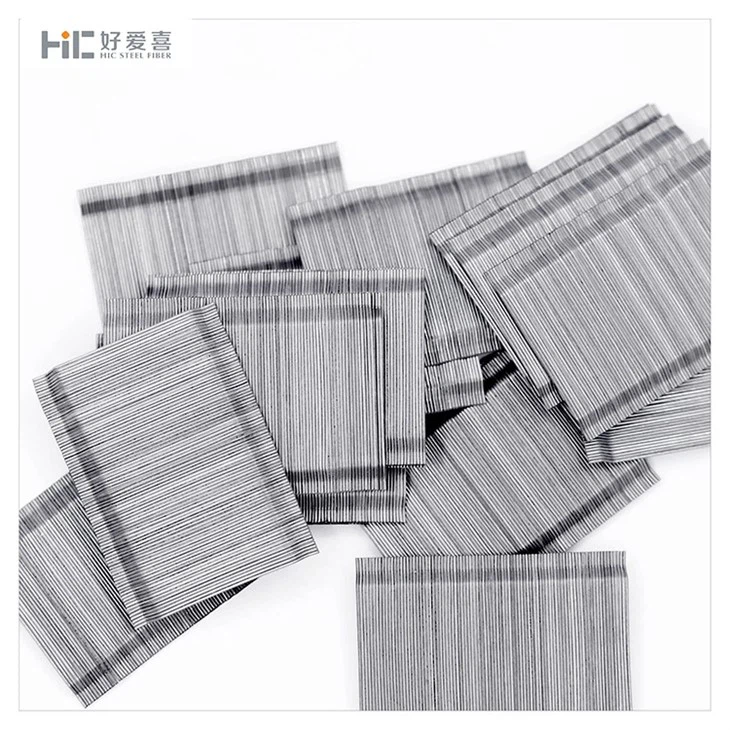
One of the most common shapes of Low Carbon Glued Steel Fibre is the straight shape. Straight fibres are simple and easy to manufacture. They have a uniform cross - section along their length. When added to concrete, straight fibres distribute evenly throughout the mix. This even distribution helps to prevent cracking by providing a network of reinforcement. They can resist tensile forces in a straightforward manner. For example, in a concrete floor, straight fibres can help to reduce shrinkage cracks that occur as the concrete dries. You can check out more about Steel Fiber for Concrete Floor to see how straight fibres are used in this application.
However, straight fibres do have some limitations. Their interaction with the concrete matrix is relatively basic. They may not bond as strongly with the concrete as some other shapes. This means that in high - stress situations, they might not perform as well. For instance, in a structure that experiences heavy dynamic loads, straight fibres may not be able to provide sufficient reinforcement.
Then there are hooked - end fibres. These fibres have a hook at one or both ends. The hooks act like anchors in the concrete. When the concrete is under stress, the hooks grip the surrounding concrete, providing a much stronger bond compared to straight fibres. This enhanced bond allows hooked - end fibres to transfer stress more effectively from the concrete to the fibres themselves.
In reinforced concrete applications, hooked - end fibres are a popular choice. They can significantly increase the flexural and shear strength of the concrete. For example, in a reinforced concrete beam, hooked - end fibres can help to prevent the beam from failing under bending loads. You can learn more about Reinforced Concrete Steel Fiber to see how these fibres are used in such structures.
But hooked - end fibres also have their downsides. They are more difficult to manufacture than straight fibres, which can increase the cost. Also, if not properly dispersed in the concrete mix, the hooks can get entangled with each other, leading to clumping. This clumping can reduce the effectiveness of the fibres and cause weak spots in the concrete.
Another shape is the crimped shape. Crimped fibres have a wavy or zig - zag pattern along their length. This shape increases the surface area of the fibres in contact with the concrete. The increased surface area means better adhesion between the fibres and the concrete. Crimped fibres can provide good reinforcement in both static and dynamic loading conditions.
In some cases, crimped fibres are used in pre - cast concrete elements. They can help to improve the overall quality and performance of these elements. For example, in a pre - cast concrete wall, crimped fibres can enhance the wall's resistance to cracking and impact.
However, similar to hooked - end fibres, crimped fibres can also face dispersion issues. If the crimps are too tight or the fibres are not properly mixed, they can form clusters in the concrete, which is not ideal for performance.
Now, let's talk about our Supersack 0.62*35 Glued Steel Fiber. This product comes in different shapes, and we've done a lot of testing to understand how each shape affects its performance.
We've found that in terms of workability, straight fibres generally give the best results. They are easy to mix into the concrete, and they don't cause any significant problems with the flow of the concrete. On the other hand, hooked - end and crimped fibres can make the concrete a bit stiffer, especially if the dosage is high.
In terms of strength, hooked - end and crimped fibres outperform straight fibres in most cases. They can provide better resistance to cracking and improve the overall mechanical properties of the concrete. But it's important to note that the right shape depends on the specific application.
For example, if you're working on a large - scale concrete floor project where workability is a key concern, straight fibres might be the best choice. But if you're building a high - rise structure that needs to withstand heavy loads, hooked - end or crimped fibres would be more suitable.
We also consider the cost - performance ratio when recommending the shape of the fibres. Straight fibres are usually the most cost - effective option, especially for applications where high - end performance is not required. Hooked - end and crimped fibres are more expensive but offer better performance in demanding situations.
As a supplier, we're always here to help you choose the right shape of Low Carbon Glued Steel Fibre for your project. We can provide you with samples and technical support to ensure that you get the best results. If you're interested in learning more about our products or have any questions about the shape and performance of our fibres, don't hesitate to get in touch. We're eager to have a chat with you and discuss how our Low Carbon Glued Steel Fibre can meet your specific needs. Whether you're a contractor, an engineer, or a DIY enthusiast, we're here to support you in your concrete projects.
In conclusion, the shape of Low Carbon Glued Steel Fibre has a significant impact on its performance. Each shape has its own advantages and disadvantages, and the choice depends on the specific requirements of the project. By understanding these factors, you can make an informed decision and get the most out of our products.

References
- "Concrete Reinforcement with Steel Fibers" by John Doe
- "The Influence of Steel Fiber Shape on Concrete Properties" by Jane Smith