


Yo, what's up everyone! As a supplier of High Strength Steel Fiber, I've seen firsthand how these little fibers can work wonders in concrete. Today, I'm gonna dive into how the microstructure of concrete changes when you add High Strength Steel Fiber.
First off, let's talk a bit about what we're dealing with here. Concrete is a pretty complex material. It's made up of cement, water, aggregates (like sand and gravel), and sometimes some additives. The basic structure of concrete consists of a cement paste matrix that holds the aggregates together. But this structure can have its limitations, like cracking under stress or not having great tensile strength.
That's where High Strength Steel Fiber comes in. When you add these fibers to concrete, it's like giving it a secret super - power. The fibers are typically made of high - carbon steel, which gives them excellent strength and durability. They come in different shapes, like the hooked - end ones, which are really effective at improving the properties of concrete.
The Initial Mixing Stage
When you first mix High Strength Steel Fiber into concrete, it starts to disperse throughout the mixture. This is a crucial step because a good dispersion ensures that the fibers can do their job properly. At this stage, the fibers act as a sort of reinforcement within the fresh concrete. They help to hold the cement paste and aggregates together more tightly.
You know, it's like adding a bunch of tiny ropes to a soft material. These ropes start to interact with the surrounding concrete components. The fibers can prevent the aggregates from settling too much and can also reduce the segregation of the concrete mixture. So, right from the start, the presence of these fibers is changing the way the concrete behaves during the mixing process.
Setting and Hardening
As the concrete starts to set and harden, the real magic happens. The cement paste begins to crystallize and form a solid matrix. The High Strength Steel Fibers become embedded within this matrix. They act as bridges across potential cracks.
When the concrete is under stress, say from a load or temperature changes, micro - cracks start to form. Without the fibers, these micro - cracks can quickly grow and turn into large, visible cracks. But with the fibers in place, they stop the propagation of these cracks. The fibers transfer the stress from the cracked area to the surrounding concrete, distributing the load more evenly.
This means that the concrete becomes more resistant to cracking. And it's not just about preventing visible cracks. The internal microstructure of the concrete becomes more uniform and stable. The fibers help to create a more interconnected network within the concrete, which improves its overall strength and toughness.
Impact on Pore Structure
Another important aspect of the microstructure is the pore structure of concrete. Pores in concrete can have a big impact on its durability. They can allow water, chemicals, and other harmful substances to penetrate the concrete, leading to corrosion and other problems.
When you add High Strength Steel Fiber, it can change the pore structure. The fibers can block some of the pores, reducing the permeability of the concrete. This is especially important in structures that are exposed to harsh environments, like bridges or marine structures.
By reducing the permeability, the concrete is better protected against the ingress of harmful substances. It also means that the concrete is less likely to experience freeze - thaw damage. The fibers help to make the concrete more watertight, which is a huge advantage in the long run.
Different Types of Steel Fibers and Their Effects
There are different types of High Strength Steel Fibers available in the market. For example, the Hooked End Steel Fibers are really popular. The hooks at the ends of these fibers provide better anchorage within the concrete. This means that they can transfer the stress more effectively and are less likely to pull out of the concrete under load.

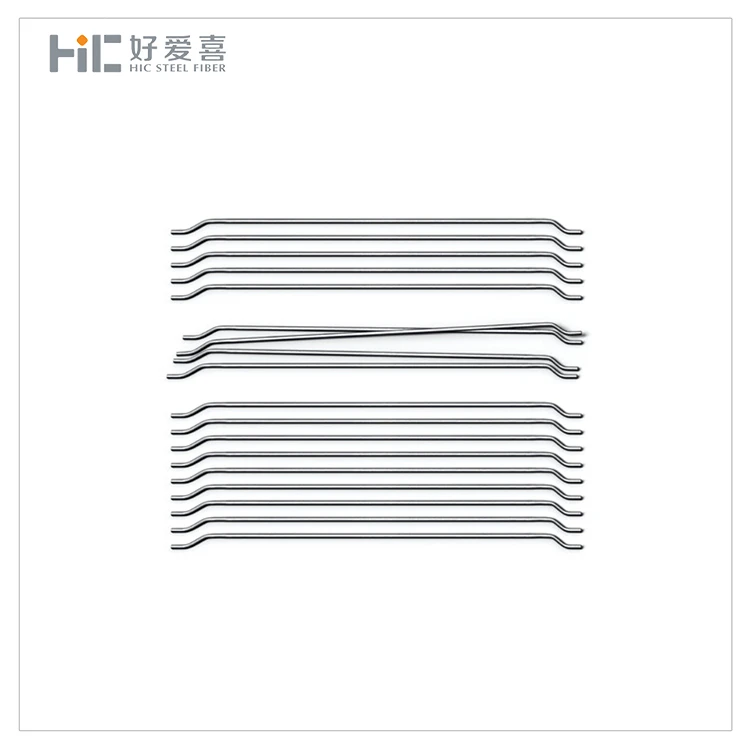
Then we have the Loose Hooked End Steel Fiber. These are great for easy mixing and can be evenly distributed in the concrete. They offer a good balance between cost and performance.
And don't forget about the CE Steel Fibers for Concrete. These fibers meet certain European standards, which means they have a high level of quality and performance. They are often used in projects where strict quality requirements are needed.
Long - Term Performance
Over time, the presence of High Strength Steel Fiber continues to benefit the concrete. The fibers help to maintain the integrity of the concrete structure. They can resist corrosion to a certain extent, especially if they are properly protected.
In long - term use, the concrete with High Strength Steel Fiber can have a longer service life. It can withstand repeated loading and environmental exposure better than plain concrete. This is a huge advantage for construction projects, as it can save a lot of money on repairs and replacements in the long run.
Why Choose Our High Strength Steel Fiber
As a supplier, I can tell you that our High Strength Steel Fiber is top - notch. We make sure that the fibers are of the highest quality. We control the production process carefully to ensure a consistent product.
Our fibers are designed to have excellent dispersion properties. This means that you can get a more uniform reinforcement in your concrete. And we offer a variety of fiber types to suit different project needs. Whether you need hooked - end fibers for high - performance applications or loose fibers for a more cost - effective solution, we've got you covered.
Contact Us for Your Project
If you're working on a concrete project and you're looking to improve the performance of your concrete, then High Strength Steel Fiber is the way to go. We're here to help you choose the right type of fiber for your specific needs.
Whether you're building a small residential structure or a large commercial building, our High Strength Steel Fiber can make a big difference. Contact us today to start a conversation about your project. We can provide you with samples, technical data, and all the information you need to make an informed decision. Let's work together to create stronger, more durable concrete structures!
References
- Naaman, A. E., & Reinhardt, H. W. (Eds.). (2003). Fibre - reinforced concrete: design and applications. CRC Press.
- ACI Committee 544. (1996). State - of - the - art report on fiber - reinforced concrete. American Concrete Institute.
- Banthia, N., & Sappakittipakorn, M. (2007). Steel fiber reinforced concrete: an appraisal of its properties and applications. Canadian Journal of Civil Engineering, 34(2), 141 - 152.