


Hey there! I'm a supplier of Concrete Steel Fiber, and I've been in this business for quite some time. Over the years, I've seen firsthand how the distribution of concrete steel fiber in concrete can have a huge impact on its performance. So, I thought I'd share some insights with you all.
First off, let's talk about what concrete steel fiber is. Simply put, it's small pieces of steel that are added to concrete to enhance its properties. These fibers come in different shapes and sizes, and one of the most popular types is the Hooked End Steel Fiber. The hooked ends of these fibers help them to bond better with the concrete, which in turn improves its overall strength and durability.
Now, let's get into the main topic - how the distribution of these steel fibers affects the performance of concrete.
1. Uniform Distribution
When the steel fibers are uniformly distributed throughout the concrete, it can lead to some really great results. A uniform distribution means that the fibers are spread evenly in all directions within the concrete mix. This is super important because it allows the concrete to resist forces from all angles.
For example, in a Hooked End Type Steel Fiber reinforced concrete slab, a uniform distribution ensures that the slab can handle loads evenly. If there's a heavy load placed on one part of the slab, the uniformly distributed fibers will help to transfer the load to other parts of the slab. This reduces the risk of cracking and increases the overall load - bearing capacity of the structure.
In terms of durability, a uniform distribution of steel fibers also helps to prevent the penetration of harmful substances like water and chemicals. Since the fibers form a kind of network within the concrete, they act as a barrier. This network stops water and chemicals from seeping into the concrete, which can cause corrosion and other forms of damage over time.
2. Clumping and Agglomeration
On the flip side, if the steel fibers clump together or form agglomerations, it can spell trouble for the concrete's performance. Clumping usually happens when the fibers are not properly mixed into the concrete. When this occurs, there are areas in the concrete that have a high concentration of fibers, while other areas have very few or none at all.
Areas with a high concentration of fibers may become too stiff and brittle. These areas are more likely to crack under stress because the fibers are so close together that they can't effectively distribute the load. On the other hand, areas with few or no fibers are much weaker. They are more prone to cracking and can't resist forces as well as the areas with fibers.
For instance, in an industrial floor made with Steel Fiber for Industrial Flooring, if there are clumps of fibers, the floor may develop uneven wear and tear. The areas with few fibers will wear out faster, and cracks may start to appear, which can compromise the safety and functionality of the floor.
3. Orientation of Fibers
The orientation of the steel fibers also plays a crucial role in how the concrete performs. Ideally, the fibers should be randomly oriented within the concrete. When fibers are randomly oriented, they can resist forces from multiple directions.
If the fibers are aligned in a particular direction, say, all parallel to each other, the concrete will have better strength in that direction but will be weaker in other directions. For example, in a beam, if the fibers are all aligned along the length of the beam, the beam will be stronger in the longitudinal direction. However, it may be more prone to cracking in the transverse direction because there aren't enough fibers to resist forces in that direction.
4. Effect on Workability
The distribution of steel fibers can also affect the workability of the concrete. Workability refers to how easily the concrete can be mixed, placed, and compacted.
When the fibers are uniformly distributed, the workability of the concrete can be maintained to a certain extent. However, if there are too many fibers or if they are clumped, the workability can decrease significantly. Clumped fibers can make the concrete sticky and difficult to mix. It becomes harder to pour the concrete into molds or formwork, and it may not compact properly.
This is why it's important to find the right balance when adding steel fibers to concrete. As a supplier, I always recommend following the manufacturer's guidelines on the recommended dosage and mixing methods to ensure good workability and optimal performance.
5. Impact on Cost - Efficiency
Finally, the distribution of steel fibers can have an impact on cost - efficiency. A well - distributed fiber system can provide better performance at a lower cost in the long run.
If the fibers are distributed correctly, the concrete will have better strength and durability, which means less maintenance and repair work over the life of the structure. For example, a building with properly distributed steel fiber - reinforced concrete will require fewer repairs due to cracking and other forms of damage. This saves money on repair costs and also reduces the downtime of the building.
On the other hand, if the fibers are not distributed properly, the concrete may fail prematurely. This will lead to additional costs for replacing or repairing the damaged concrete, which can be quite expensive.
So, as you can see, the distribution of concrete steel fiber in concrete is a critical factor that affects its performance in many ways. Whether you're working on a small DIY project or a large - scale industrial construction, getting the fiber distribution right is essential.
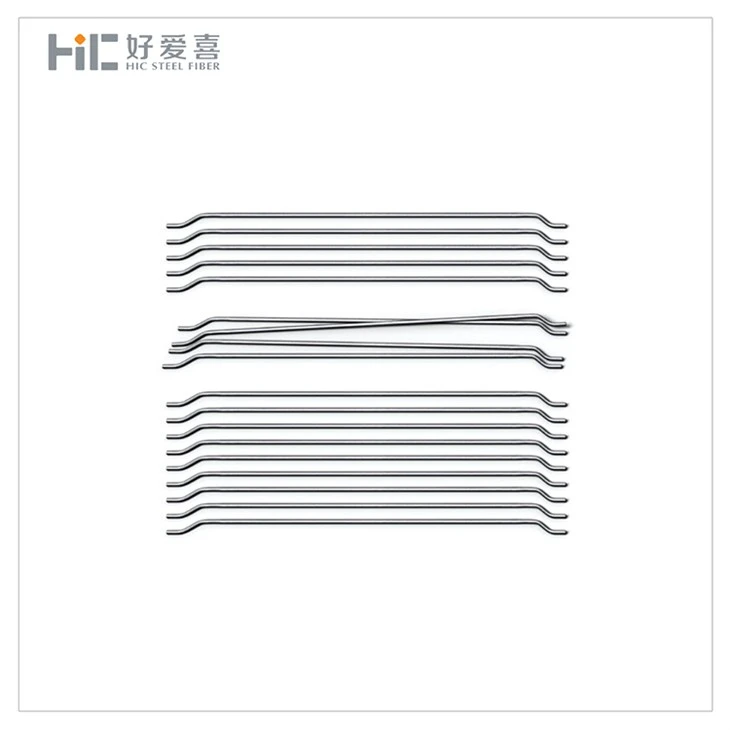

If you're in the market for high - quality concrete steel fibers, I'd love to help you out. I can provide you with the best products and offer advice on how to ensure proper distribution for optimal performance. Feel free to reach out to me to discuss your specific needs and start a procurement negotiation.
References
- ACI 544.1R - 96, “Report on Fiber - Reinforced Concrete,” American Concrete Institute.
- “Steel Fibers in Concrete: Properties, Applications, and Advantages,” Concrete Construction Magazine.
- Neville, A. M., “Properties of Concrete,” Pearson Education.