



Hey there! I'm a supplier of SFRC Steel Fiber, and today I wanna chat about how our SFRC Steel Fiber performs in freeze - thaw cycles. It's a topic that's super important, especially for those working in construction and infrastructure projects where the concrete has to endure harsh weather conditions.
First off, let's understand what freeze - thaw cycles are. When water gets into the pores of concrete and then freezes, it expands by about 9%. This expansion creates internal pressure within the concrete. When the ice thaws and the water contracts, it leaves behind tiny cracks. Over time, repeated freeze - thaw cycles can cause these cracks to grow, leading to spalling, scaling, and ultimately, a significant reduction in the concrete's strength and durability.
So, where does our SFRC Steel Fiber come in? Well, these steel fibers act as a reinforcement within the concrete. They're evenly distributed throughout the mix, and when the concrete is subjected to the stresses of freeze - thaw cycles, the fibers help to hold the concrete together.
One of the key benefits of our SFRC Steel Fiber is its ability to improve the concrete's toughness. Toughness is the ability of a material to absorb energy and deform plastically before fracturing. In the context of freeze - thaw cycles, a tougher concrete is less likely to crack when the ice expands. The steel fibers bridge the micro - cracks that form during the freezing process, preventing them from propagating into larger, more damaging cracks.
Another advantage is the improvement in the concrete's flexural strength. Flexural strength is the ability of the concrete to resist bending. During freeze - thaw cycles, the expansion and contraction of the ice can cause the concrete to bend and flex. Our SFRC Steel Fiber reinforces the concrete, increasing its flexural strength and making it more resistant to these bending forces.
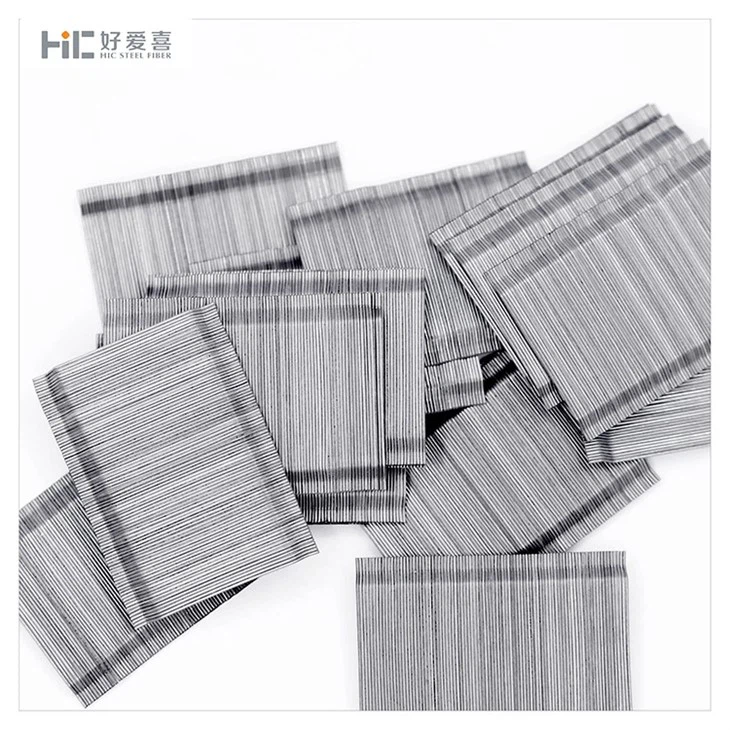
Let's talk a bit about the types of steel fibers we offer. We have Low Carbon Glued Steel Fibre, which is known for its excellent bonding properties with the concrete matrix. The low - carbon composition makes it more ductile, allowing it to deform without breaking under stress. This ductility is crucial in freeze - thaw situations, as it enables the fibers to adapt to the changing volume of the concrete as the ice freezes and thaws.
We also have Reinforced Concrete Steel Fiber, which is specifically designed to provide high - strength reinforcement. These fibers have a unique shape and surface texture that enhances their interaction with the concrete. They effectively transfer the stresses from the concrete to the fibers, reducing the likelihood of crack formation and propagation.
Now, I know you might be wondering about the research behind all this. There have been numerous studies on the performance of steel - fiber - reinforced concrete (SFRC) in freeze - thaw cycles. Researchers have conducted laboratory tests where they subject SFRC specimens to multiple freeze - thaw cycles and then measure various properties such as compressive strength, flexural strength, and mass loss.

In many of these tests, SFRC with our type of steel fibers has shown significantly better performance compared to plain concrete. For example, after 300 freeze - thaw cycles, plain concrete may experience a substantial loss of compressive strength, while SFRC with our fibers retains a much higher percentage of its original strength. The mass loss, which is an indicator of the deterioration of the concrete surface due to spalling, is also much lower in SFRC.
In real - world applications, our SFRC Steel Fiber has been used in many projects in cold climates. Bridges, parking garages, and sidewalks are just a few examples. In bridge decks, the steel fibers help to prevent the formation of cracks that could allow water to penetrate and corrode the underlying steel reinforcement. In parking garages, they improve the durability of the concrete floor, which is constantly exposed to vehicle traffic and de - icing salts.
When it comes to using our SFRC Steel Fiber, it's important to follow the correct mixing procedures. The fibers should be added to the concrete mix at the right time and in the proper dosage. We provide detailed guidelines to ensure that our customers get the best performance from our product.
The dosage of the steel fibers depends on several factors, such as the type of project, the expected severity of the freeze - thaw cycles, and the design requirements. In general, a higher dosage of fibers will result in better performance in freeze - thaw conditions, but it's also important to balance this with cost and workability considerations.
Our team of experts is always available to help you determine the optimal dosage for your specific project. We can also provide on - site support to ensure that the fibers are mixed and placed correctly.
In conclusion, our SFRC Steel Fiber is a game - changer when it comes to protecting concrete from the damaging effects of freeze - thaw cycles. Whether you're working on a small residential project or a large - scale infrastructure development, our steel fibers can significantly improve the durability and performance of your concrete.
If you're interested in learning more about our SFRC Steel Fiber or have a project where you think it could be a good fit, don't hesitate to reach out. We're here to help you make the right choice for your construction needs. Let's work together to build stronger, more durable structures that can withstand the test of time and the elements.
References
- "Performance of Steel Fiber - Reinforced Concrete in Freeze - Thaw Cycles," Journal of Materials in Civil Engineering
- "Effect of Steel Fibers on the Durability of Concrete Exposed to Freeze - Thaw Conditions," Construction and Building Materials
- "Research on the Freeze - Thaw Resistance of Steel - Fiber - Reinforced Concrete," International Journal of Concrete Structures and Materials