


Hey there! As a supplier of low carbon steel fiber, I've been getting a lot of questions lately about how it affects the workability of concrete. So, I thought I'd sit down and write this blog to share some insights based on my experience in the industry.
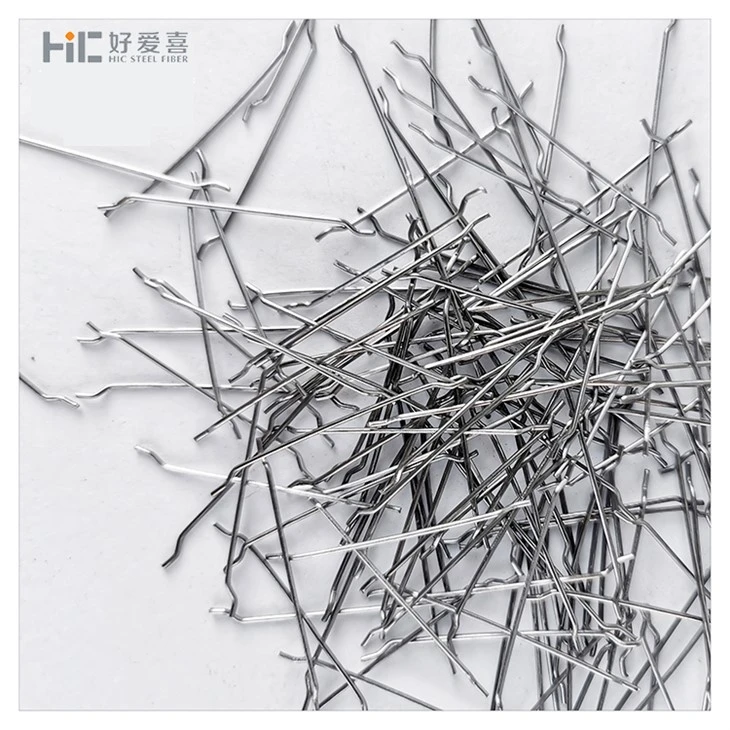
First off, let's talk a bit about what low carbon steel fiber is. Low carbon steel fiber is made from low - carbon steel, which is known for its relatively high ductility and good weldability. These fibers are usually added to concrete to enhance its mechanical properties, but they also have an impact on the workability of the concrete mix.

Workability of concrete is a crucial factor. It refers to how easily the concrete can be mixed, transported, placed, and compacted without any segregation. A good workable concrete mix will flow smoothly, fill the formwork properly, and can be finished easily.
When it comes to low carbon steel fiber and its effect on workability, there are a few key aspects to consider.
Viscosity and Flowability
Adding low carbon steel fiber to concrete generally increases the viscosity of the mix. The fibers act as a sort of internal reinforcement that resists the flow of the concrete. This means that the concrete becomes less fluid and more sticky.
Imagine trying to pour a thick milkshake compared to a thin fruit juice. The milkshake, with its higher viscosity, is harder to pour and doesn't flow as freely. Similarly, concrete with low carbon steel fiber requires more effort to move around.
However, this isn't always a bad thing. In some cases, a higher viscosity can be beneficial. For example, in applications where you need the concrete to stay in place, like in vertical formwork or in areas with complex shapes, the increased viscosity helps prevent the concrete from slumping or flowing out of position.
But for projects where a high degree of flowability is required, such as in self - compacting concrete, the addition of low carbon steel fiber can be a challenge. You might need to adjust the mix design, for instance, by increasing the amount of superplasticizer. Superplasticizers are chemicals that can reduce the water content in the concrete while maintaining its workability. They help to break down the internal structure of the concrete and make it more fluid.
Mixing and Compaction
Mixing concrete with low carbon steel fiber also requires more attention. The fibers need to be evenly distributed throughout the mix to ensure that the concrete has consistent properties. If the fibers clump together, it can lead to weak spots in the concrete and affect its overall performance.
To achieve a good distribution, it's important to use the right mixing equipment. A powerful mixer with a high - speed rotation can help to disperse the fibers effectively. You might also need to adjust the mixing time. Longer mixing times are usually required when adding low carbon steel fiber to ensure that the fibers are well - integrated into the concrete.
Compaction is another area where low carbon steel fiber makes a difference. Since the fibers increase the viscosity of the concrete, it becomes harder to compact. Compaction is essential to remove air voids from the concrete and to ensure its strength and durability. You may need to use more powerful compaction equipment, such as vibrators, to get the job done.
Fiber Shape and Size
The shape and size of the low carbon steel fiber also play a significant role in the workability of concrete. For example, High Density Hooked End Steel Fiber has hooked ends that provide better anchorage within the concrete. However, these hooked ends can also cause the fibers to interlock with each other, which further increases the viscosity of the mix.
On the other hand, straight fibers may have less of an impact on the workability as they are less likely to interlock. But they may not provide as much reinforcement as hooked - end fibers. The size of the fiber is also important. Longer and thicker fibers tend to have a greater impact on workability compared to shorter and thinner ones.
Surface Finish
The addition of low carbon steel fiber can also affect the surface finish of the concrete. Since the fibers increase the viscosity, it can be more difficult to achieve a smooth surface. You may need to use different finishing techniques or tools. For example, you might need to use a trowel with a higher pressure or a power - driven finishing machine.
In some cases, the fibers may protrude from the surface of the concrete, which can be aesthetically unappealing. To prevent this, you can use a sealer or a topping to cover the surface and give it a more uniform appearance.
Case Studies
I've seen many projects where low carbon steel fiber has been used in concrete. In one project, we supplied High Strength Steel Fiber for a bridge deck. The addition of the steel fiber improved the crack resistance of the concrete, but the workability was initially a concern.
The contractor had to adjust the mix design by adding more superplasticizer and increasing the mixing time. Once these adjustments were made, the concrete was successfully placed and compacted, and the bridge deck has been performing well ever since.
In another project, a building with a complex architectural design required concrete with good workability. We recommended Hooked End Steel Fiber with a relatively short length to minimize the impact on workability. The contractor was able to achieve a good balance between the reinforcement provided by the fibers and the workability of the concrete.
Conclusion
In conclusion, low carbon steel fiber has a significant impact on the workability of concrete. While it can increase the viscosity and make the concrete less fluid, it also offers many benefits in terms of crack resistance, durability, and strength. By understanding how the fibers affect workability and making the right adjustments to the mix design, mixing process, and finishing techniques, you can use low carbon steel fiber effectively in your concrete projects.
If you're working on a concrete project and are considering using low carbon steel fiber, I'd love to help. Whether you need advice on the right type of fiber, mix design, or any other aspect related to low carbon steel fiber in concrete, feel free to reach out. We're here to support you and ensure that your project is a success. Let's have a chat and see how we can work together to meet your needs.
References
- Neville, A. M. (2011). Properties of Concrete. Pearson Education.
- ACI Committee 544. (1988). State - of - the - Art Report on Fiber - Reinforced Concrete. American Concrete Institute.
- Ramakrishnan, V., & Al - Nageim, A. (1998). Workability of Steel Fiber Reinforced Concrete. Cement and Concrete Research, 28(7), 1081 - 1090.