

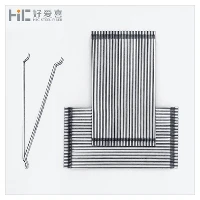
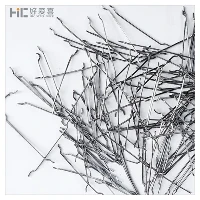
Hey there! As a supplier of Low Carbon Glued Steel Fibre, I've been getting a lot of questions lately about how our product can improve the toughness of concrete. So, I thought I'd take a few minutes to break it down for you.
First off, let's talk about what we mean by "toughness" in concrete. In simple terms, toughness is the ability of concrete to resist cracking and damage under stress. Traditional concrete is pretty brittle, which means it can crack easily when it's subjected to heavy loads or sudden impacts. That's where our Low Carbon Glued Steel Fibre comes in.
When you add our steel fibres to concrete, they act like tiny reinforcement bars. They distribute the stress evenly throughout the concrete, which helps to prevent cracks from forming and spreading. This is especially important in applications where the concrete is going to be exposed to a lot of wear and tear, like in industrial floors, pavements, and bridges.
One of the key benefits of our Low Carbon Glued Steel Fibre is its low carbon content. This not only makes it more environmentally friendly but also improves its performance in concrete. Low carbon steel fibres are less likely to rust, which means they can provide long - term reinforcement for your concrete structures.
Now, let's get into the science behind how these fibres work. When concrete is mixed with our steel fibres, the fibres become randomly distributed throughout the mixture. As the concrete hardens, the fibres bond with the cement matrix, creating a composite material. This composite material has much better mechanical properties than plain concrete.


Under stress, the steel fibres start to take on some of the load. They bridge the cracks that form in the concrete, preventing them from opening up further. This bridging effect significantly increases the toughness of the concrete. For example, in a flexural test, concrete with our steel fibres can withstand much higher loads before it fails compared to plain concrete.
There are different types of steel fibres that we offer, each with its own unique properties. For instance, we have FRC Steel Fibres for Concrete. These fibres are designed specifically for use in fibre - reinforced concrete (FRC). They have a high aspect ratio, which means they are long and thin. This allows them to provide excellent reinforcement in the concrete, improving its toughness and durability.
Another type is the Anti Glued Type Steel Fiber. These fibres are treated to prevent them from clumping together during the mixing process. This ensures that they are evenly distributed in the concrete, maximizing their effectiveness in improving toughness.
We also offer End Hook Glued Steel Fiber. The end - hooks on these fibres increase their bond strength with the concrete. When the concrete is under stress, the end - hooks help to anchor the fibres in place, providing even better crack - resistance and toughness.
In addition to improving toughness, our Low Carbon Glued Steel Fibre also has other benefits for concrete. It can improve the impact resistance of the concrete, making it more suitable for areas where there is a risk of heavy impacts, such as in loading docks or industrial warehouses. It also enhances the fatigue resistance of the concrete, which is important for structures that are subjected to repeated loading, like bridges.
The use of our steel fibres can also lead to cost savings. By improving the toughness and durability of concrete, you can reduce the need for maintenance and repairs over the life of the structure. This means less downtime and lower overall costs for your project.
When it comes to mixing our Low Carbon Glued Steel Fibre with concrete, it's a pretty straightforward process. You can add the fibres directly to the concrete mixer at the same time as the other ingredients. Just make sure to mix the concrete thoroughly to ensure that the fibres are evenly distributed.
If you're working on a project that requires tough and durable concrete, I highly recommend giving our Low Carbon Glued Steel Fibre a try. Whether you're a contractor, an engineer, or a DIY enthusiast, our product can help you achieve better results.
We're always here to help you with any questions you might have about our steel fibres or how to use them in your concrete projects. If you're interested in purchasing our Low Carbon Glued Steel Fibre, don't hesitate to reach out. We can provide you with more information about our products, pricing, and delivery options. Let's work together to make your concrete projects stronger and more durable!
References
- Neville, A. M. (2011). Properties of Concrete. Pearson Education.
- ACI Committee 544. (1982). State - of - the - Art Report on Fiber Reinforced Concrete. American Concrete Institute.