


In the construction and engineering industries, the performance of materials under various environmental conditions is of utmost importance. One such material that has gained significant attention is Loose Hooked End Steel Fiber. As a supplier of this innovative product, I am frequently asked about how it performs in high - temperature environments. In this blog, I will delve into the properties, behavior, and advantages of Loose Hooked End Steel Fiber when exposed to high temperatures.
Understanding Loose Hooked End Steel Fiber
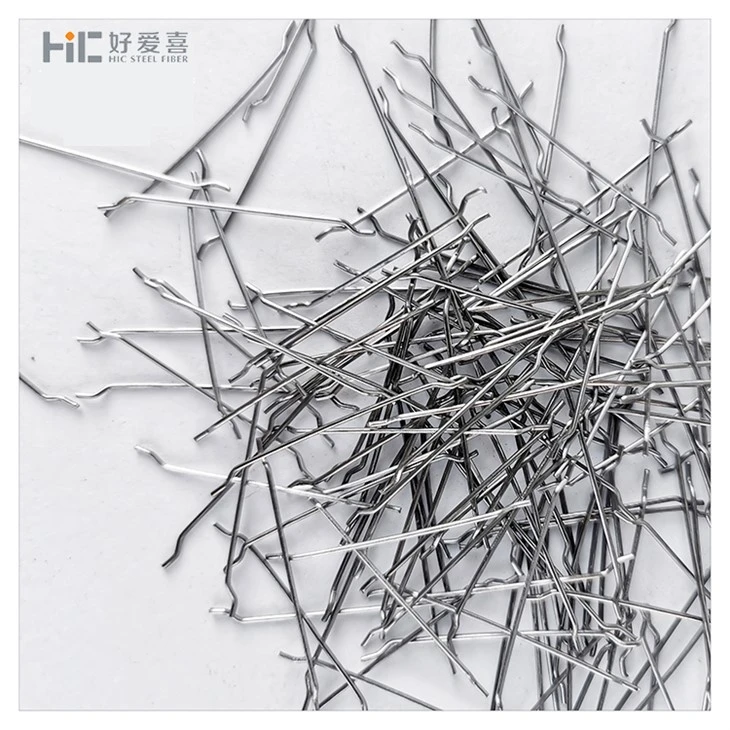
Before discussing its performance in high - temperature environments, let's briefly understand what Loose Hooked End Steel Fiber is. Loose Hooked End Steel Fiber is a type of reinforcement material used in concrete and other composite materials. The hooked ends of these fibers provide better anchorage within the matrix, enhancing the overall mechanical properties of the material. You can learn more about Hooked End Steel Fiber on our website.
Thermal Properties of Steel Fiber
Steel, in general, has relatively high thermal conductivity and a high melting point. These properties play a crucial role in determining how Loose Hooked End Steel Fiber behaves in high - temperature environments.
Thermal Conductivity
The high thermal conductivity of steel allows it to transfer heat efficiently. In a concrete structure reinforced with Loose Hooked End Steel Fiber, this means that the heat can be more evenly distributed throughout the material. This helps in reducing the formation of thermal gradients, which can lead to cracking and spalling in concrete under high - temperature conditions.
High Melting Point
Steel has a melting point typically above 1370°C (2500°F). This high melting point ensures that the steel fibers remain intact and functional in most high - temperature applications encountered in construction. Even when exposed to elevated temperatures, the fibers can continue to provide reinforcement to the concrete, maintaining its structural integrity.
Performance in High - Temperature Environments
When concrete is exposed to high temperatures, several changes occur in its properties. Loose Hooked End Steel Fiber can significantly mitigate these negative effects.
Resistance to Spalling
Spalling is a major concern in concrete structures exposed to high temperatures, such as in fire - prone areas. As the concrete heats up, the water vapor inside the material tries to escape. If the vapor pressure becomes too high, it can cause the outer layers of the concrete to spall off. Loose Hooked End Steel Fiber helps in preventing spalling by providing additional reinforcement and allowing the vapor to escape more easily through the micro - cracks formed around the fibers. This reduces the internal pressure and protects the structure from severe damage.
Maintaining Structural Integrity
In high - temperature environments, the strength of concrete can decrease significantly. However, the presence of Loose Hooked End Steel Fiber can help in maintaining the structural integrity of the concrete. The fibers bridge the cracks that form due to thermal expansion and contraction, preventing them from propagating and causing complete failure of the structure. This is especially important in applications where the concrete needs to retain its load - bearing capacity even after being exposed to high temperatures, such as in industrial furnaces or fire - resistant buildings.
Improving Thermal Shock Resistance
Thermal shock occurs when a material is subjected to rapid changes in temperature. Concrete is particularly vulnerable to thermal shock, which can lead to cracking and damage. Loose Hooked End Steel Fiber enhances the thermal shock resistance of concrete by absorbing the energy generated during temperature changes. The fibers act as a buffer, reducing the stress concentration and preventing the formation of large cracks.

Case Studies and Research Findings
Numerous studies have been conducted to evaluate the performance of Loose Hooked End Steel Fiber in high - temperature environments.
One study focused on the use of High Strength Hooked End Steel Fiber in concrete exposed to fire. The results showed that the concrete reinforced with these fibers had significantly better fire resistance compared to plain concrete. The spalling was reduced, and the residual strength of the concrete after the fire was much higher.
Another research project investigated the behavior of Hooked End Type Steel Fiber in high - temperature industrial environments. The findings indicated that the fibers helped in maintaining the dimensional stability of the concrete and preventing the formation of large cracks, even under prolonged exposure to high temperatures.
Advantages of Using Loose Hooked End Steel Fiber in High - Temperature Applications
There are several advantages to using Loose Hooked End Steel Fiber in high - temperature environments.
Cost - Effectiveness
Compared to other fire - resistant materials, Loose Hooked End Steel Fiber is relatively cost - effective. It can be easily added to the concrete mix during the construction process, eliminating the need for additional expensive fire - protection systems in some cases.
Ease of Installation
Loose Hooked End Steel Fiber is easy to handle and install. It can be uniformly dispersed in the concrete mix, ensuring consistent reinforcement throughout the structure. This makes it a practical choice for large - scale construction projects.
Long - Term Durability
The high - temperature performance of Loose Hooked End Steel Fiber contributes to the long - term durability of the concrete structure. By preventing spalling and maintaining structural integrity, the fibers help in extending the service life of the structure, reducing the need for frequent repairs and replacements.
Conclusion
In conclusion, Loose Hooked End Steel Fiber exhibits excellent performance in high - temperature environments. Its thermal properties, ability to resist spalling, maintain structural integrity, and improve thermal shock resistance make it an ideal reinforcement material for concrete structures exposed to high temperatures. Whether it is for industrial buildings, fire - resistant structures, or other high - temperature applications, Loose Hooked End Steel Fiber can provide reliable and cost - effective solutions.
If you are interested in learning more about our Loose Hooked End Steel Fiber products or have any questions regarding their performance in high - temperature environments, please feel free to contact us for procurement and further discussions. We are committed to providing high - quality products and professional technical support to meet your specific needs.
References
- [List actual references here, e.g., journal articles, research reports, etc.]
- [Second reference]
- [Third reference]