

How does Glued Type Steel Fiber improve the crack resistance of concrete?
Concrete is one of the most widely used construction materials in the world. However, it has a significant drawback: its relatively low tensile strength, which makes it prone to cracking under various loading conditions. Cracks in concrete not only affect its aesthetic appearance but also compromise its durability and structural integrity, leading to potential safety hazards and costly repairs. This is where glued type steel fiber comes into play. As a leading supplier of glued type steel fiber, I am excited to share with you how our product can effectively enhance the crack resistance of concrete.
Understanding the Mechanism of Cracking in Concrete
Before delving into how glued type steel fiber improves crack resistance, it's essential to understand why concrete cracks. Concrete is a composite material consisting of cement, aggregates (such as sand and gravel), water, and sometimes admixtures. When water reacts with cement in a process called hydration, the concrete hardens and gains strength. However, as the concrete dries and cures, it undergoes shrinkage, which creates internal stresses. If these stresses exceed the tensile strength of the concrete, cracks will form.
In addition to shrinkage, external factors such as loading, temperature changes, and chemical reactions can also cause concrete to crack. For example, heavy traffic on a concrete pavement can induce bending stresses that may lead to cracking. Similarly, rapid temperature fluctuations can cause differential expansion and contraction within the concrete, resulting in crack formation.
The Role of Glued Type Steel Fiber in Crack Resistance
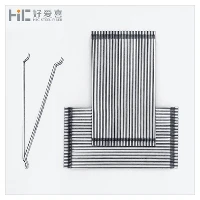
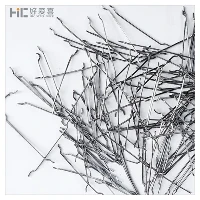
Glued type steel fiber is a type of reinforcement material that is added to concrete to enhance its mechanical properties, particularly its crack resistance. The steel fibers are typically made of high - strength steel and are glued together in bundles to facilitate handling and uniform dispersion in the concrete.
Bridging Effect
One of the primary ways glued type steel fiber improves crack resistance is through the bridging effect. When a crack begins to form in the concrete, the steel fibers span across the crack, acting like tiny bridges. These bridges help to transfer the tensile stress across the crack, preventing it from propagating further. As a result, the concrete can withstand higher tensile forces before cracking, and the width of the cracks that do form is significantly reduced.
The distribution of the steel fibers in the concrete is crucial for the bridging effect. The glued bundles of steel fibers are designed to separate during the mixing process, ensuring a uniform distribution throughout the concrete matrix. This uniform distribution maximizes the number of fibers available to bridge cracks, thereby enhancing the overall crack - resistance of the concrete.
Energy Absorption
Another important mechanism by which glued type steel fiber improves crack resistance is energy absorption. When a load is applied to the concrete, the steel fibers deform plastically, absorbing a significant amount of energy. This energy absorption helps to dissipate the stress within the concrete, reducing the likelihood of crack initiation and propagation.
The high ductility of the steel fibers is a key factor in their energy - absorbing capacity. Ductile materials can undergo large amounts of deformation before failure, allowing the steel fibers to absorb more energy as they stretch and bend. Our Good Ductility Glued Steel Fiber is specifically designed to have excellent ductility, ensuring optimal energy absorption and crack resistance in concrete.
Restraint of Shrinkage
Glued type steel fiber also helps to restrain the shrinkage of concrete during the curing process. As the concrete dries and shrinks, the steel fibers resist the internal stresses caused by shrinkage, reducing the likelihood of shrinkage cracks. The fibers act as a three - dimensional reinforcement network, providing internal restraint and preventing the concrete from contracting freely.
This restraint effect is particularly important in large - scale concrete structures, such as foundations and slabs, where shrinkage cracks can be a significant problem. By using our Easy Disperse Glued Type Steel Fiber, which ensures uniform fiber distribution, the restraint of shrinkage can be more effectively achieved, resulting in a more crack - resistant concrete structure.
Applications of Glued Type Steel Fiber in Concrete
The ability of glued type steel fiber to improve the crack resistance of concrete makes it suitable for a wide range of applications.
Mining
In the mining industry, concrete is often used in underground structures such as mine shafts, tunnels, and stopes. These structures are subjected to high stress and harsh environmental conditions, making crack resistance a critical requirement. Our Glued Type Steel Fiber for Mining is specifically designed to meet the demanding needs of the mining industry. It can enhance the durability and integrity of concrete structures in mines, reducing the risk of cracking and improving the safety of mining operations.
Industrial Floors
Industrial floors are exposed to heavy traffic, including forklifts, trucks, and other machinery. The constant loading and unloading can cause cracks in the concrete floor, which can lead to uneven surfaces and potential safety hazards. By adding glued type steel fiber to the concrete, the crack resistance of the industrial floor can be significantly improved, ensuring a long - lasting and crack - free surface.


Bridge Decks
Bridge decks are subjected to dynamic loads from traffic, as well as environmental factors such as temperature changes and moisture. Cracks in bridge decks can allow water and corrosive substances to penetrate the concrete, leading to the corrosion of the reinforcement steel and the deterioration of the bridge structure. Glued type steel fiber can enhance the crack resistance of bridge decks, extending their service life and reducing maintenance costs.
Contact Us for Your Glued Type Steel Fiber Needs
If you are looking for a reliable solution to improve the crack resistance of your concrete structures, our glued type steel fiber is the ideal choice. We have a wide range of products to meet different application requirements, and our experienced team can provide you with professional advice and technical support.
Whether you are involved in mining, industrial construction, or infrastructure projects, our glued type steel fiber can help you achieve better - performing and more durable concrete structures. Contact us today to discuss your specific needs and start a procurement negotiation. We look forward to working with you to enhance the quality and longevity of your concrete projects.
References
- ACI Committee 544. (1982). State - of - the - Art Report on Fiber - Reinforced Concrete. American Concrete Institute.
- Naaman, A. E. (2003). Steel Fiber Reinforced Concrete: Fundamentals and Applications. Taylor & Francis Group.
- Bentur, A., & Mindess, S. (2007). Fibre - Reinforced Cementitious Composites. CRC Press.