



Hey there! As a supplier of glued steel fiber, I've been getting a lot of questions lately about how these fibers distribute in concrete. It's a super important topic because the way the fibers spread out in the concrete can really affect its performance. So, let's dive right in and explore this together.
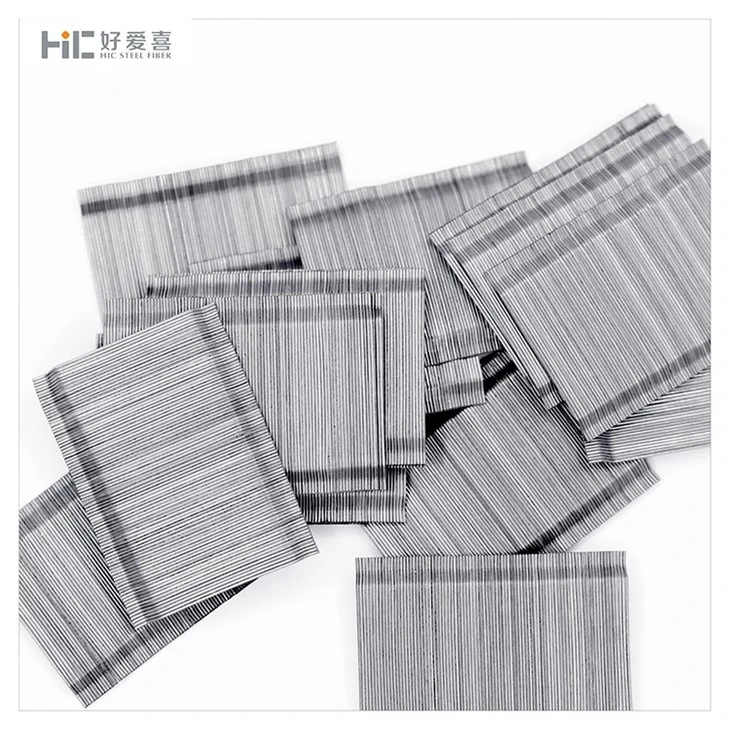
First off, let's understand what glued steel fiber is. Glued steel fibers are basically steel fibers that are held together in bundles using a special adhesive. This bundling makes it easier to handle and mix them with concrete. When these bundles are added to the concrete during the mixing process, the adhesive dissolves, and the individual fibers are released.
Now, the distribution of these fibers in concrete is influenced by several factors. One of the key factors is the mixing process. How you mix the concrete with the glued steel fibers can make a huge difference. If the mixing is too short, the fibers might not disperse evenly, and you could end up with clumps in the concrete. On the other hand, over - mixing can also be a problem as it might damage the fibers.
Let's talk about the ideal mixing procedure. When adding glued steel fibers to concrete, it's best to add them gradually. Start by adding a small amount of the fibers while the concrete mixer is running. This allows the fibers to start breaking apart and getting incorporated into the concrete matrix. As the mixer continues to turn, slowly add the rest of the fibers. This step - by - step approach helps in achieving a more uniform distribution.
Another factor that affects fiber distribution is the concrete's workability. Workable concrete is like a friendly medium for the fibers. If the concrete is too stiff, the fibers might have a hard time moving around and spreading evenly. Conversely, if the concrete is too runny, the fibers might settle at the bottom. A well - balanced workability, usually achieved by adjusting the water - cement ratio and using appropriate admixtures, can promote better fiber distribution.
The shape and length of the glued steel fibers also play a role. Different shapes, like hooked - end or straight fibers, interact with the concrete in different ways. Hooked - end fibers tend to have better anchorage in the concrete, which can affect their distribution pattern. Longer fibers might require more energy to disperse evenly compared to shorter ones. So, depending on the application, you need to choose the right type of fiber.
Now, let's take a look at some of the products we offer. We have the Reinforced Concrete Steel Fiber. These fibers are great for enhancing the strength and durability of concrete structures. They distribute well in concrete, providing excellent reinforcement. Our Concrete 4D Steel Fibre is another innovative product. The 4D design gives these fibers unique properties, and they distribute in a way that offers enhanced performance in various concrete applications. And then there's the SFRC Steel Fiber. SFRC stands for Steel Fiber Reinforced Concrete, and these fibers are specifically designed to improve the mechanical properties of concrete by distributing evenly and working in harmony with the concrete matrix.
To ensure proper fiber distribution, it's also important to consider the placement of the concrete. When pouring the concrete, make sure to use proper techniques to avoid any segregation. Segregation can cause the fibers to accumulate in certain areas, leading to an uneven distribution. Using a concrete pump or a conveyor belt can help in a more controlled placement of the concrete with the fibers.
In some cases, it might be beneficial to use additional tools or equipment to aid in fiber distribution. For example, using a vibrator during the concrete placement can help the fibers settle and distribute more evenly. However, be careful not to over - vibrate as it can cause the fibers to float to the surface.

Monitoring the fiber distribution in concrete is also crucial. There are several methods available for this. One common method is to take samples of the fresh concrete and visually inspect them under a microscope. This can give you an idea of how well the fibers are distributed. Another method is to use non - destructive testing techniques, which can provide information about the fiber distribution without damaging the concrete structure.
If you're planning to use glued steel fibers in your concrete projects, it's essential to work with a reliable supplier. That's where we come in! We have years of experience in providing high - quality glued steel fibers. Our products are carefully manufactured to ensure consistent quality and excellent distribution in concrete.
Whether you're working on a small residential project or a large commercial construction, our glued steel fibers can make a significant difference in the performance of your concrete. The proper distribution of these fibers can enhance the concrete's tensile strength, crack resistance, and durability.
So, if you're interested in learning more about our glued steel fiber products or want to discuss your specific project requirements, don't hesitate to reach out. We're here to help you make the right choice and ensure that your concrete projects are a success.
In conclusion, the distribution of glued steel fibers in concrete is a complex but crucial process. By understanding the factors that affect distribution, using the right mixing and placement techniques, and choosing the appropriate fiber type, you can achieve optimal results. And remember, we're your go - to supplier for all your glued steel fiber needs.
References
- Neville, A. M. (1995). Properties of Concrete. Pearson Education.
- ACI Committee 544. (1988). State - of - the - Art Report on Fiber - Reinforced Concrete. American Concrete Institute.