

Yo, what's up everyone! As a supplier of Hooked End Steel Fibers, I've been getting a lot of questions lately about how these little fibers affect the carbonation resistance of concrete. So, I thought I'd take a deep dive into this topic and share what I've learned over the years.
First off, let's talk about what carbonation is. Carbonation in concrete is a chemical reaction that occurs when carbon dioxide (CO2) from the air penetrates the concrete and reacts with calcium hydroxide (Ca(OH)2) in the cement paste. This reaction forms calcium carbonate (CaCO3), which gradually reduces the alkalinity of the concrete. Now, why is this a big deal? Well, the high alkalinity of concrete normally protects the steel reinforcement inside from corrosion. When the alkalinity drops due to carbonation, the steel is at risk of rusting, which can seriously compromise the structural integrity of the concrete.
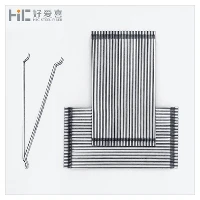
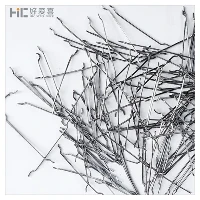
So, where do Hooked End Steel Fibers come into play? These fibers are designed to enhance the performance of concrete in various ways, and carbonation resistance is one of them. When you add Hooked End Steel Fibers to concrete, they act as a kind of internal reinforcement. The hooked ends of the fibers help them to bond better with the concrete matrix, creating a more cohesive and durable structure.
One of the key ways these fibers improve carbonation resistance is by reducing the permeability of the concrete. Permeability is a measure of how easily fluids and gases can pass through the concrete. A more permeable concrete allows CO2 to penetrate more quickly, leading to faster carbonation. Hooked End Steel Fibers fill in the voids and micro - cracks in the concrete, making it harder for CO2 to get in. This means that the carbonation process is slowed down, and the steel reinforcement inside the concrete stays protected for longer.
Let's get a bit technical here. The presence of Hooked End Steel Fibers changes the pore structure of the concrete. The fibers disrupt the formation of large, interconnected pores that would otherwise act as pathways for CO2. Instead, they promote the formation of smaller, isolated pores. These smaller pores are much less efficient at transporting CO2, which is a major plus for carbonation resistance.


Another important factor is the crack - bridging effect of the fibers. Concrete is prone to cracking, especially under stress. Once cracks form, they provide easy access for CO2 to reach the interior of the concrete. Hooked End Steel Fibers can bridge these cracks, preventing them from widening and spreading. By keeping the cracks small and contained, the fibers limit the ingress of CO2 and thus improve the carbonation resistance of the concrete.
Now, I want to mention some of the products we offer. We have the Cold Drawn Steel Wire Fibre. These fibers are made through a cold - drawing process, which gives them excellent strength and durability. They are great for improving the carbonation resistance of concrete because they can effectively reduce permeability and bridge cracks.
Our High Density Hooked End Steel Fiber is another top - notch product. As the name suggests, it has a high density of fibers, which means more reinforcement for the concrete. With a higher fiber content, the concrete becomes even more resistant to carbonation, as there are more fibers to fill voids, disrupt pore formation, and bridge cracks.
For those of you in the industrial flooring business, our Steel Fiber for Industrial Flooring is a game - changer. Industrial floors are often exposed to harsh environmental conditions, including high levels of CO2. By using our steel fibers in industrial flooring concrete, you can significantly improve its carbonation resistance, ensuring a longer lifespan for the floor.
In real - world applications, the benefits of using Hooked End Steel Fibers for carbonation resistance are quite evident. For example, in coastal areas where the air is rich in CO2 and other corrosive substances, concrete structures with Hooked End Steel Fibers have shown much better performance compared to plain concrete. Bridges, piers, and buildings in these areas are less likely to experience premature carbonation and corrosion, which saves a lot of money on maintenance and repairs in the long run.
Now, you might be wondering about the optimal dosage of Hooked End Steel Fibers for maximum carbonation resistance. Well, it depends on several factors, such as the type of concrete, the environmental conditions, and the specific requirements of the project. Generally, a dosage of around 20 - 60 kg per cubic meter of concrete is recommended. However, it's always a good idea to consult with a concrete expert or do some tests to determine the best dosage for your particular situation.
In conclusion, Hooked End Steel Fibers are a fantastic addition to concrete if you want to improve its carbonation resistance. They work by reducing permeability, changing the pore structure, and bridging cracks. Whether you're working on a small residential project or a large - scale industrial development, these fibers can make a big difference in the durability and longevity of your concrete structures.
If you're interested in learning more about our Hooked End Steel Fibers or want to discuss a potential purchase, feel free to reach out. We're here to help you find the best solution for your concrete needs.
References
- Neville, A. M. (1995). Properties of Concrete. Pearson Education.
- ACI Committee 544. (1982). State - of - the - Art Report on Fiber - Reinforced Concrete. American Concrete Institute.