


Hey there! I'm a supplier of glued steel fibres, and today I want to chat about how these amazing fibres perform in concrete structures under dynamic loads. Dynamic loads are those that change over time, like the vibrations from traffic on a bridge, the impact of machinery in an industrial building, or the forces from earthquakes. Understanding how glued steel fibres handle these loads is crucial for building strong and durable structures.
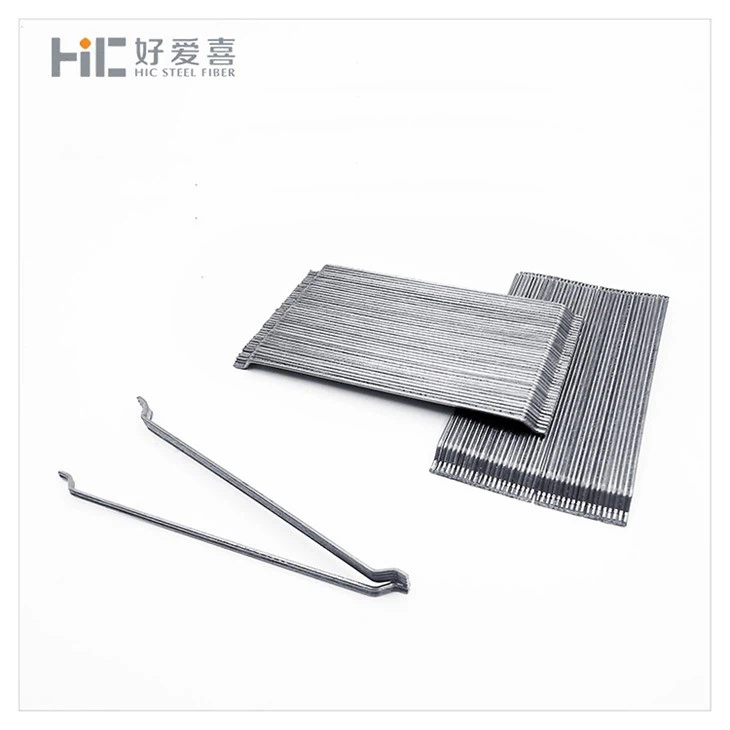
First off, let's talk about what glued steel fibres are. They're basically small, thin pieces of steel that are glued together in bundles. This gluing process makes them easier to mix into concrete. When the concrete is being mixed, the glue dissolves, and the individual fibres disperse evenly throughout the mix. These fibres come in different shapes and sizes, like hooked and straight, but the hooked ones, such as the Hooked Glued Carbon Steel Fiber, are especially popular because they provide better anchorage in the concrete.
Now, let's get into how they perform under dynamic loads. One of the key benefits of using glued steel fibres in concrete is that they significantly improve the concrete's toughness. Toughness is the ability of a material to absorb energy before it fails. In a concrete structure under dynamic loads, there's a lot of energy being transferred through the material. Without fibres, the concrete might crack and break apart relatively easily when faced with these changing forces. But when you add glued steel fibres, they act like tiny reinforcement bars throughout the concrete. They bridge the cracks that start to form, preventing them from spreading and allowing the concrete to continue to hold together and absorb more energy.
For example, in a bridge deck that experiences the constant dynamic loading from traffic, glued steel fibres can help reduce the formation and growth of cracks. This is super important because cracks can let in water and other corrosive substances, which can damage the concrete and the underlying steel reinforcement over time. By keeping the cracks in check, the lifespan of the bridge deck can be extended, saving a lot of money on maintenance and repairs.
Another aspect of their performance is in impact resistance. When a concrete structure is hit by a sudden impact, like a heavy object falling on it, the glued steel fibres can help dissipate the energy of that impact. They work to distribute the force over a larger area of the concrete, rather than having it concentrated in one spot. This means that the concrete is less likely to suffer from localized damage, such as spalling or cratering. In industrial settings where there's a lot of heavy machinery and equipment moving around, this impact resistance can be a real game - changer. It helps keep the floors and other structures in good condition, even in high - traffic and high - impact areas.
In seismic - prone regions, the performance of glued steel fibres in concrete under dynamic loads is even more critical. Earthquakes generate extremely strong and unpredictable dynamic forces. Concrete structures need to be able to withstand these forces without collapsing. Glued steel fibres can improve the ductility of the concrete. Ductility is the ability of a material to deform plastically (bend and stretch) without breaking. In an earthquake, a ductile concrete structure can absorb a lot of energy by deforming in a controlled way, rather than suddenly shattering. This can save lives and reduce the damage to buildings and infrastructure.
Let's also touch on how the fibres interact with the concrete matrix. The glued steel fibres bond well with the concrete, creating a composite material. This bond is essential for transferring the stresses between the fibres and the concrete. Under dynamic loads, the fibres are constantly being pulled and pushed as the concrete deforms. The good bond ensures that the fibres can effectively contribute to the overall strength and performance of the structure. If the bond was weak, the fibres would just slip out of the concrete, and their reinforcing effect would be lost.
Now, I want to mention a couple of our products. We offer Reinforced Concrete Steel Fiber and Reinforced Concrete Steel Fiber. These products are carefully manufactured to meet the highest quality standards. Our production process ensures that the fibres have the right shape, size, and surface properties to provide optimal performance in concrete under dynamic loads.
If you're involved in a construction project where dynamic loads are a concern, whether it's a bridge, an industrial building, or a structure in a seismic zone, using glued steel fibres can be a smart choice. They offer a cost - effective way to enhance the performance and durability of your concrete structures.
We're here to help you make the best decision for your project. Our team of experts can provide you with all the information you need about our glued steel fibres, including technical specifications, application guidelines, and case studies. We can also work with you to determine the right amount of fibres to use for your specific project requirements.
If you're interested in learning more about our products or have any questions, don't hesitate to reach out. We're eager to start a conversation and discuss how our glued steel fibres can meet your needs. Whether you're a contractor, an engineer, or an architect, we're here to support you in building stronger, more resilient concrete structures.

So, if you're looking for a reliable supplier of glued steel fibres that can perform well under dynamic loads, give us a shout. Let's work together to take your construction projects to the next level.
References
- Naaman, A. E., & Reinhardt, H. W. (Eds.). (2003). Fibre - reinforced concrete: Design and applications. CRC Press.
- ACI Committee 544. (1996). State - of - the - art report on fiber - reinforced concrete. American Concrete Institute.
- Rossi, P. (2000). Fibre reinforced concrete: new design perspectives. E & FN Spon.