

Hey there! I'm a supplier of glued steel fibres, and today I wanna chat about how these awesome fibres perform in concrete that's exposed to de - icing salts. It's a topic that's super important, especially in regions where cold winters mean lots of salt on the roads and sidewalks.
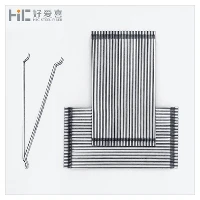
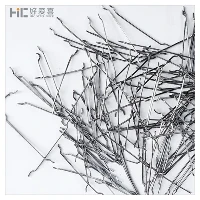
First off, let's talk a bit about what glued steel fibres are. Glued steel fibres come in different types, like the Glued Type Steel Fiber and End Hook Glued Steel Fiber. These fibres are basically small pieces of steel that are glued together in bundles. When they're added to concrete, they disperse evenly, providing reinforcement and improving the overall performance of the concrete.
Now, de - icing salts are a necessary evil in cold climates. They help melt ice and snow on roads and sidewalks, making them safer for pedestrians and vehicles. But they also have a downside. De - icing salts contain chemicals like sodium chloride and calcium chloride, which can cause corrosion in concrete and steel. When concrete is exposed to these salts, the salts can penetrate the concrete pores and react with the steel reinforcement inside. This can lead to rusting of the steel, which in turn causes the concrete to crack and spall.
So, how do glued steel fibres help in this situation? Well, one of the main benefits of using glued steel fibres in concrete is that they improve the concrete's resistance to cracking. When the concrete is under stress, the steel fibres act as bridges, holding the cracks together and preventing them from spreading. This is especially important in concrete that's exposed to de - icing salts, as the salts can cause internal stresses in the concrete due to the chemical reactions.
The SFRC Steel Fiber is a type of glued steel fibre that's commonly used in concrete exposed to de - icing salts. SFRC stands for Steel Fiber Reinforced Concrete. This type of concrete has been shown to have better durability and resistance to cracking compared to traditional concrete. The steel fibres in SFRC help to distribute the stresses more evenly throughout the concrete, reducing the likelihood of crack formation.
Another advantage of using glued steel fibres in concrete exposed to de - icing salts is that they can improve the concrete's abrasion resistance. De - icing salts can cause abrasion on the surface of the concrete due to the movement of vehicles and pedestrians. The steel fibres in the concrete can help to protect the surface, making it more resistant to wear and tear.


In addition to improving cracking and abrasion resistance, glued steel fibres can also enhance the concrete's freeze - thaw resistance. In cold climates, concrete is often subjected to freeze - thaw cycles. When water freezes inside the concrete pores, it expands, causing internal stresses. If the concrete is not resistant to these stresses, it can crack and deteriorate. The steel fibres in the concrete can help to absorb the energy from the freezing and thawing process, reducing the damage to the concrete.
But it's not all sunshine and rainbows. There are some factors that can affect the performance of glued steel fibres in concrete exposed to de - icing salts. One of these factors is the dosage of the steel fibres. If the dosage is too low, the fibres may not be able to provide sufficient reinforcement. On the other hand, if the dosage is too high, it can lead to problems with workability and segregation of the concrete.
The type of steel used in the fibres also matters. Some types of steel are more resistant to corrosion than others. For example, stainless steel fibres are more corrosion - resistant than carbon steel fibres. However, stainless steel fibres are also more expensive, so a balance needs to be struck between cost and performance.
The quality of the concrete mix itself is another important factor. A well - designed concrete mix with the right amount of cement, aggregates, and water is essential for the proper performance of the glued steel fibres. If the concrete mix is not properly proportioned, it can affect the dispersion of the fibres and the overall performance of the concrete.
To ensure the best performance of glued steel fibres in concrete exposed to de - icing salts, proper installation and curing are also crucial. During installation, the fibres need to be evenly distributed throughout the concrete. This can be achieved by using the right mixing equipment and techniques. After installation, the concrete needs to be cured properly to allow it to reach its full strength and durability.
In conclusion, glued steel fibres can play a vital role in improving the performance of concrete exposed to de - icing salts. They can enhance the concrete's resistance to cracking, abrasion, and freeze - thaw cycles. However, to get the most out of these fibres, it's important to consider factors like dosage, type of steel, concrete mix quality, installation, and curing.
If you're in the market for glued steel fibres for your concrete projects, especially those in areas exposed to de - icing salts, I'd love to have a chat with you. Whether you're a contractor, an engineer, or someone involved in the construction industry, we can discuss your specific needs and find the best solution for you. Don't hesitate to reach out and start a conversation about how our glued steel fibres can benefit your projects.
References
- ACI 544.1R - 96, “Report on the Use of Steel Fibers in Concrete,” American Concrete Institute, Farmington Hills, MI, 1996.
- Neville, A. M., “Properties of Concrete,” 4th ed., Pearson Education, Harlow, UK, 1995.
- Malhotra, V. M., and Carino, N. J., “Durability of Concrete,” E & FN Spon, London, UK, 1991.