

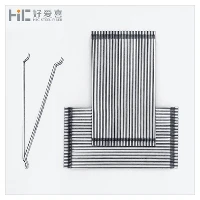

Hey there! As a supplier of Glued Steel Fibres, I've been getting a lot of questions lately about how these bad boys stack up against glass fibres in concrete. So, I thought I'd take a deep dive into this topic and share my thoughts.
Strength and Durability
Let's start with the biggie: strength. When it comes to making concrete tougher, both glued steel fibres and glass fibres have their own superpowers.
Steel fibres are like the heavy - lifters in the world of concrete reinforcement. They've got high tensile strength, which means they can take a lot of pulling force before they break. When you add glued steel fibres to concrete, they form a sort of internal web that holds everything together. This web helps to distribute stress evenly throughout the concrete, reducing the risk of cracking. Whether it's a big industrial floor that's going to be subjected to heavy loads or a bridge deck that has to withstand constant traffic, steel fibres can really make a difference.
For example, if you check out our High Density Glued Type Steel Fiber, it's designed to provide maximum reinforcement. The high - density arrangement of fibres means there's more of them working together to strengthen the concrete.
On the other hand, glass fibres are also pretty strong, but they work in a slightly different way. Glass fibres are great at improving the flexural strength of concrete. That's the ability of the concrete to bend without breaking. They're often used in applications where the concrete needs to be more flexible, like in precast panels or thin - section concrete products. However, glass fibres are more brittle than steel fibres. If they're exposed to harsh chemicals or high temperatures, they can start to degrade over time.
Workability
Workability is another important factor to consider when choosing between glued steel fibres and glass fibres.
Steel fibres can sometimes be a bit of a pain in the neck when it comes to workability. They tend to clump together if they're not glued properly. That's where our glued steel fibres come in handy. The glue holds the fibres together in bundles, which makes them easier to mix into the concrete. Once the concrete is mixed, the glue dissolves, and the fibres disperse evenly throughout the mix. Our High Length Glued Type Steel Fiber is a prime example. The longer length of the fibres provides more reinforcement, and the glued bundle design ensures a smooth mixing process.
Glass fibres, on the other hand, are generally easier to mix into concrete. They're lighter and don't clump as easily as steel fibres. But this also means that they might not distribute as effectively in the concrete if the mixing isn't done right.
Cost - effectiveness
Cost is always a big deal in any construction project.
Steel fibres are usually more expensive than glass fibres on a per - pound basis. But when you think about the long - term benefits, they can actually be more cost - effective. Steel - reinforced concrete is more durable, which means less maintenance and repair work over the life of the structure. So, even though you're spending more upfront, you're likely to save money in the long run.
Glass fibres are a more budget - friendly option upfront. But because they're more prone to degradation, you might end up spending more on maintenance and replacement down the road.
Aesthetic Considerations
Sometimes, how the concrete looks is just as important as how strong it is.
Steel fibres don't really affect the appearance of the concrete all that much. Once they're mixed in, they're invisible to the naked eye. So, if you're going for a clean, smooth finish, steel fibres won't mess that up.


Glass fibres can sometimes cause a bit of an issue with the finish. If too many fibres reach the surface of the concrete, it can give it a rough or speckled look. This might not be a problem for some applications, but if you're aiming for a high - end aesthetic, it could be a deal - breaker.
Chemical Resistance
In concrete applications, exposure to various chemicals is a real concern.
Steel fibres are generally resistant to most common chemicals found in concrete environments. However, if they're exposed to highly acidic or alkaline substances for a long time, they can start to rust. That's why our glued steel fibres are treated to enhance their chemical resistance.
Glass fibres have decent chemical resistance, but they can be more affected by alkaline substances, which are commonly found in concrete. Over time, the alkaline environment can cause the glass fibres to lose their strength.
Fire Resistance
Fire is another factor that needs to be considered in construction.
Steel fibres have good fire resistance. They can withstand high temperatures without losing their strength too quickly. This makes them a great choice for structures where fire safety is a priority, like commercial buildings or industrial facilities.
Glass fibres, on the other hand, can start to soften and lose their strength at relatively low temperatures. So, in a fire situation, concrete reinforced with glass fibres might not hold up as well as steel - reinforced concrete.
Conclusion
In conclusion, both glued steel fibres and glass fibres have their pros and cons when it comes to concrete reinforcement. If you're looking for maximum strength, durability, and fire resistance, and you're willing to pay a bit more upfront, glued steel fibres are the way to go. Our Glued Steel Fibres offer a wide range of options to suit different construction needs.
On the other hand, if you're on a tight budget and you need a material that's easy to mix and doesn't require extreme strength, glass fibres might be a better fit.
Ultimately, the choice between glued steel fibres and glass fibres depends on the specific requirements of your construction project. If you're still not sure which one is right for you, don't hesitate to reach out. We're here to help you make the best decision for your project. Whether you're a contractor, an engineer, or a DIY enthusiast, we can provide you with the information and support you need. So, if you're interested in learning more about our Glued Steel Fibres or want to discuss your project requirements, just drop us a line. We're looking forward to working with you!
References
- Neville, A. M. (2011). Properties of Concrete. Pearson Education.
- ACI Committee 544. (1988). Report on Fiber - Reinforced Concrete. American Concrete Institute.